Study Shockingly Finds That Certain Fiber Types Actually Increase Intestinal Cancer Risk
Nikhil Prasad Fact checked by:Thailand Medical News Team Nov 28, 2026 1 day, 1 hour, 9 minutes ago
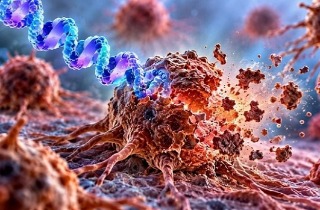
Dietary fiber is widely recommended for digestive health and colorectal cancer prevention. However, surprising new research suggests that certain fiber supplements could produce unexpected effects, including increased intestinal tumor development under specific experimental conditions.
 New mouse research reveals that certain fiber supplements, particularly psyllium husk, may unexpectedly increase intestinal
tumor development under specific conditions.
Researchers from Singapore, Hong Kong, and China discovered that psyllium husk supplementation increased tumor burden in genetically susceptible mice, challenging assumptions that all dietary fibers provide similar protection against cancer.
The institutions involved were Nanyang Technological University, Tan Tock Seng Hospital, The Chinese University of Hong Kong, National University of Singapore, and Fudan University.
Different Fibers Produce Unexpected Results
The study investigated psyllium husk, apple pectin, and potato starch, examining how these substances influence intestinal tumors and gut bacteria.
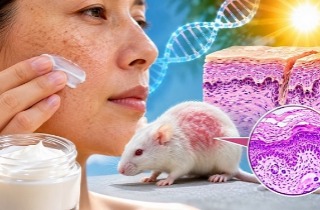
Researchers conducted three experiments involving 146 male mice. One experiment used genetically predisposed mice, while two others used chemically induced colorectal cancer models.
The animals received diets containing different fiber preparations, including 10% psyllium husk, pectin, or potato starch. Additional experiments examined lower psyllium concentrations of 2.5% and 5%.
Scientists assessed tumor numbers, tumor size, intestinal microbial communities, and metabolic changes.
Psyllium Husk Linked to Increased Tumor Burden
The most striking findings emerged from genetically predisposed mice receiving 10% psyllium husk for six weeks.
These animals developed significantly more small intestinal tumors than untreated controls. Their overall tumor load, representing the combined area occupied by tumors, also increased substantially.
Both differences were highly statistically significant, with p-values below 0.0001. Further analyses accounting for experimental groups and shared housing conditions confirmed the association.
Importantly, neither pectin nor potato starch significantly increased tumor numbers or tumor load in this model.
However, researchers observed no significant differences in colon tumor outcomes, demonstrating that the effects varied between intestinal regions.
Lower Psyllium Levels Also Raised Concerns
A separate experiment produced another unexpected finding. Mice receiving diets containing 5% psyllium husk experienced significantly higher colon tumor incidence than controls.
The association remained significant after researchers accounted for experimental cohort and cage effects, with an adjusted p-value of 0.0185.
However, supplementation at 2.5% did not significantly increase tumor incidence. Although some initial analyses suggested greater tumor burden at 5%, differences in tumor number and overall load were not statistically
significant after adjustment.
Interestingly, another experiment comparing 10% fiber preparations found no significant differences in colon tumor outcomes.
These contrasting results suggest that supplementation levels, experimental conditions, and cancer models may influence outcomes.
Gut Bacteria and Metabolites Reveal Additional Clues
According to this
Thailand Medical News report, researchers also identified substantial changes in intestinal microbial communities.
Psyllium supplementation increased bacterial diversity in both major fiber-comparison experiments.
However, greater microbial diversity did not consistently correspond with reduced tumor development.
In genetically predisposed mice, psyllium increased the relative abundance of Bacteroides caecimuris. Other fibers produced distinct bacterial changes. Researchers also examined microbial metabolic pathways involved in nutrient processing and cellular metabolism.
In the lower-dose experiment, mice receiving 5% psyllium showed significantly reduced intestinal concentrations of acetate and butyrate, compounds produced through microbial fermentation.
These substances help maintain intestinal health and regulate inflammation. Several bile acids also decreased significantly. However, researchers could not establish whether these metabolic changes directly contributed to tumor development.
What the Findings Mean for Human Health
The findings require careful interpretation because the experiments involved mice rather than humans.
The researchers also emphasized that fiber preparations differ considerably in composition, fermentability, and biological activity.
Consequently, the results should not be interpreted as evidence that ordinary dietary fiber consumption increases cancer risk.
Conclusion
The study highlights important differences between fiber preparations and their effects on intestinal tumor development. Although psyllium produced concerning results in certain mouse experiments, further human research is essential before drawing conclusions about cancer risks or changing established dietary recommendations.
The study findings were published in the peer-reviewed journal: Nutrients.
https://www.mdpi.com/2072-6643/18/22/3798
Read Also:
https://www.thailandmedical.news/articles/cancer




 Share
 Tweet
 Share