Nikhil Prasad Fact checked by:Thailand Medical News Team Mar 18, 2026 6 months, 2 weeks, 3 days, 2 hours, 49 minutes ago
Medical News: For years, large portions of human DNA were dismissed as useless “junk.” But a new breakthrough study is turning that idea on its head, revealing that these overlooked genetic regions may actually help protect the body from colorectal cancer—one of the most common and deadly cancers worldwide.
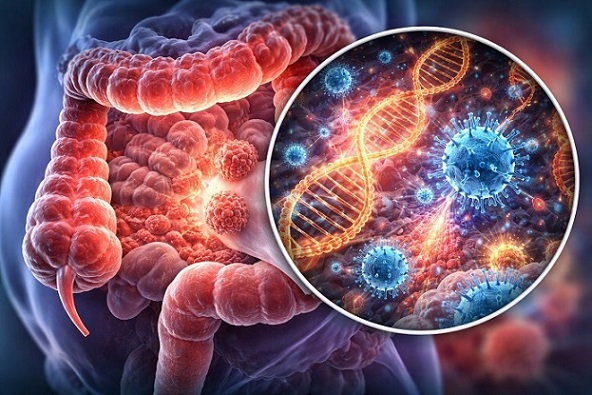 Hidden DNA once thought useless may actually help the body fight and prevent colorectal cancer naturally
Researchers from Western University’s Schulich School of Medicine & Dentistry, London Health Sciences Centre (LHSC), and the London Health Sciences Centre Research Institute (LHSCRI), Canada, have discovered that so-called junk DNA can activate powerful anti-cancer defenses, especially in people suffering from inflammatory bowel disease (IBD).
Understanding the Link Between Inflammation and Cancer
IBD, which includes conditions like ulcerative colitis and Crohn’s disease, causes long-term inflammation in the colon. Over time, this constant irritation damages the lining of the intestine, increasing the risk of colorectal cancer.
However, not all IBD patients develop cancer, and scientists have long struggled to understand why.
To investigate, the research team led by Dr. Samuel Asfaha closely examined colon tissue samples from healthy individuals and patients with IBD, both with and without early signs of cancer. Their goal was to uncover what happens deep inside cells during chronic inflammation.
Junk DNA Awakens a Hidden Defense System
Surprisingly, the researchers found that inflammation can “wake up” normally silent sections of DNA. These regions, known as transposable elements, are scattered throughout the genome and were previously thought to serve no purpose.
When activated, these DNA segments produce signals that mimic a viral infection. This tricks the body into launching a powerful immune response, known as viral mimicry.
In simple terms, the body believes it is under viral attack and switches on defense mechanisms that can destroy abnormal or potentially cancerous cells before they grow into tumors.
This
Medical News report highlights how this natural response could act as a built-in cancer prevention system.
Strong Evidence from Human and Lab Studies
The team analyzed biopsy data from 41 healthy individuals, 22 IBD patients without cancer, and 7 patients with early cancer changes. They found that those without cancer showed strong activation of this viral-like immune response, while those with early cancer did not.
To confirm their findings, scientists conducted further experiments by disabling this viral mimicry response in preclinical models. The results were striking. When the protective response was turned off, tumors began to develop more easily.
This clearly showed that the viral mimicry mechanism plays a direct role in preventing c
ancer formation.
How This Discovery Could Change Cancer Prevention
The study also explored how certain treatments might enhance this natural defense. Drugs that reduce DNA methylation—essentially loosening control over DNA—were found to increase the activity of these protective DNA elements.
This led to stronger immune signaling and reduced tumor growth. Importantly, the researchers identified a key protein called MAVS, which is essential for this antiviral response. When MAVS was removed, the protective effect disappeared, and cancer risk increased.
These findings suggest that future therapies could focus on activating or enhancing this viral mimicry system, especially in high-risk patients such as those with IBD.
A New Direction for Future Treatments
Scientists are now exploring ways to safely trigger this response in humans. If successful, it could lead to new treatments that prevent cancer before it even starts, rather than trying to cure it after it develops.
It may also improve existing therapies, including chemotherapy and immunotherapy, by making cancer cells more vulnerable to attack.
Conclusion
This groundbreaking research changes how we view so-called junk DNA, showing it is far from useless. Instead, it may serve as a powerful natural defense against cancer by activating immune responses that stop tumor growth at its earliest stages. The findings open exciting possibilities for new prevention strategies, especially for people at high risk. However, more research is needed to fully understand how to safely harness this mechanism for medical use and to determine whether different types of these DNA elements may have varying effects in cancer development.
The study findings were published in the peer reviewed journal: Nature Communications.
https://www.nature.com/articles/s41467-026-68850-1#
For the latest on colon cancer, keep on logging to Thailand
Medical News.
Read Also:
https://www.thailandmedical.news/articles/cancer




 Share
Share
 Tweet
Tweet
 Share
Share

































