Nikhil Prasad Fact checked by:Thailand Medical News Team Dec 08, 2025 8 months, 3 weeks, 4 days, 20 hours, 40 minutes ago
Medical News: Scientists Discover Compound That Attacks Virus Shells and Stops Infection
In a groundbreaking discovery, researchers from Kumamoto University and Kyushu University in Japan have found that a specialized chemical compound called 2,6-di-O-methyl-3-acetyl-β-cyclodextrin—shortened as DMA-β-CyD—can stop deadly viruses like SARS-CoV-2 (the virus behind COVID-19) and Japanese encephalitis virus (JEV) from infecting human cells.
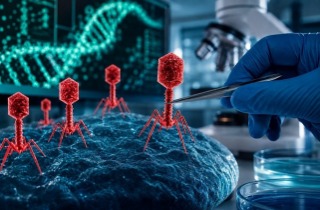
 A new compound called DMA beta cyclodextrin blocks virus infectivity by attacking their lipid envelopes
This compound works by targeting the outer fatty layer of these viruses, which is essential for their ability to infect. Unlike other treatments that go after virus proteins like the spike, DMA-β-CyD disables the virus by breaking apart its protective outer coating, known as the lipid envelope.
This
Medical News report highlights that this method is different from vaccines or traditional drugs, offering a new strategy to fight viral infections quickly, even before a vaccine or drug is developed.
How the Compound Works
Viruses like SARS-CoV-2 and JEV are surrounded by a special fatty layer that includes molecules called aminophospholipids. One of these is phosphatidylserine (PS), which helps viruses sneak into human cells by mimicking damaged cells. The new compound, DMA-β-CyD, binds to these phospholipids and prevents the virus from using this trick.
When viruses were pre-treated with DMA-β-CyD for just three hours, their ability to infect dropped by up to 99.7 percent. The treatment damaged their envelopes and even interfered with the clotting problems caused by these viruses in human blood.
Unlike other similar compounds, DMA-β-CyD was not toxic even at very high doses (over 100 mM), making it a safer option.
Effective Against Multiple Virus Types
While the compound showed strong results against several COVID-19 variants like Wuhan, Beta, and Delta, it also worked on Japanese encephalitis virus. Even though JEV is harder to target because of its tightly packed outer proteins, DMA-β-CyD still managed to reduce its infection rate by interacting with exposed lipid molecules.
It also prolonged blood clotting time induced by these viruses, meaning it could potentially help with blood-related symptoms seen in severe infections.
Why This Discovery Matters
This approach could revolutionize how we respond to new viral outbreaks. Instead of waiting months or years for vaccines, doctors could use compounds like DMA-β-CyD early on to block infection. Because the compound targets a virus's outer shell, which many viruses share, it could lead to a new class of broad-spectrum antivirals that work against many different viruses—not just one.
These findings are especially important in a world where new viral threats are constantly emer
ging, and drug resistance is becoming a bigger problem.
Conclusion
The discovery of DMA-β-CyD opens the door to a powerful new way to block infections from viruses like SARS-CoV-2 and JEV by attacking their lipid envelopes. It works quickly, safely, and in ways that current antivirals do not. This could lead to faster responses in future pandemics and more versatile treatment options against viral threats.
The study findings were published in the peer reviewed Journal of Virology.
https://journals.asm.org/doi/10.1128/jvi.01357-25
For the latest COVID-19 News, keep on logging to Thailand
Medical News.
Read Also:
https://www.thailandmedical.news/articles/coronavirus
https://www.thailandmedical.news/articles/covid19-drugs




 Share
Share
 Tweet
Tweet
 Share
Share