Phytochemical from Maerua Angolensis Plant Shows Powerful Effects Against Aggressive Breast Cancer
Nikhil Prasad Fact checked by:Thailand Medical News Team Jun 12, 2026 3 months, 3 weeks, 1 day, 4 hours, 46 minutes ago
Medical News: Triple-negative breast cancer has long been one of the most difficult forms of breast cancer to treat. Unlike other breast cancers, it lacks the common hormone receptors and HER2 protein that many modern targeted therapies are designed to attack. As a result, patients often have fewer treatment options and face a higher risk of recurrence and spread. Now, researchers have identified a naturally occurring compound from an African medicinal plant that may offer a promising new direction in the fight against this aggressive disease.
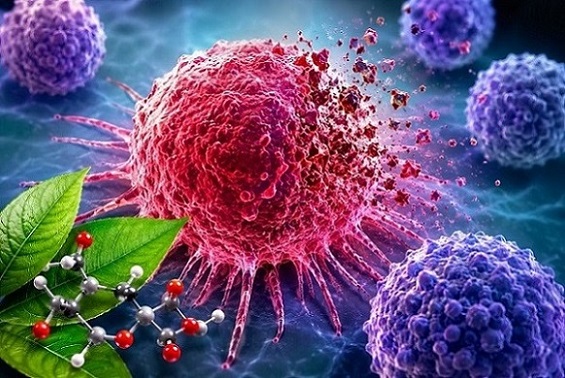 Scientists discover a plant-derived compound that selectively kills aggressive triple-negative breast cancer
cells through multiple cell-death mechanisms
Traditional African Plant Reveals a Potential Cancer Fighter
Scientists from Morgan State University in the United States, Bayero University in Nigeria, Gombe State University in Nigeria, and İstinye University in Türkiye investigated the medicinal plant Maerua angolensis, a species widely used in traditional African medicine for treating a variety of illnesses, including inflammatory conditions and cancer.
The research team isolated a phytochemical compound known as 7-hydroxymaltol-3-O-β-D-glucoside from the leaves of the plant and tested its effects on triple-negative breast cancer cells. The compound belongs to a class of natural substances called pyrone glucosides and was purified and analyzed using advanced chemical techniques before being subjected to cancer testing.
Strong Cancer-Killing Activity Seen in Laboratory Tests
The researchers focused on MDA-MB-468 cells, a widely used laboratory model of triple-negative breast cancer. The results were striking.
Both the crude plant extract and the purified phytochemical compound were able to kill cancer cells in a dose-dependent manner. However, the purified compound proved especially potent, requiring far lower concentrations to achieve the same effect. Importantly, when tested against normal breast epithelial cells, the compound showed substantially lower toxicity, suggesting that it may preferentially target cancer cells while sparing healthy tissue.
This selective activity is particularly important because one of the biggest challenges in cancer treatment is destroying tumor cells without causing severe damage to normal cells.
Triggering Cancer Cells to Self-Destruct
One of the most significant findings was that the compound appeared to activate apoptosis, a natural process often described as programmed cell death.
Cancer cells frequently evade apoptosis, allowing them to survive and multiply uncontrollably. The researchers found that treatment with the plant-derived compound activated important cell death proteins known as caspase-9 and caspase-7. These proteins act like molecular executioners, initiating a chain reaction that ultimately dismantles and destroys damaged or unwanted cells.
The study also found evidence of PARP-1 cleavage, another hallmark of apoptosis. Interestingly, caspase-7 appeared to play a particularly important role in t
he death of the cancer cells, suggesting a specific pathway through which the compound exerts its effects.
This
Medical News report notes that activating these self-destruct mechanisms is a highly sought-after strategy in cancer drug development because it allows therapies to eliminate malignant cells in a controlled manner.
Damage to Cellular Recycling Centers
Using advanced confocal microscopy, the scientists observed dramatic changes inside the treated cancer cells.
The compound disrupted lysosomes, tiny structures that function as the cell’s waste disposal and recycling centers. Treated cells displayed a marked increase in acidic vesicles, indicating severe lysosomal stress.
At the same time, researchers observed major alterations in the cell nucleus. Chromatin became redistributed, nuclei condensed, and fragmented nuclear structures appeared. These are classic signs of cells undergoing irreversible damage and preparing for death.
The combined evidence suggests that the compound does not rely on a single mechanism. Instead, it appears to attack cancer cells through multiple stress pathways simultaneously.
Multi-Target Action Could Be a Major Advantage
Computer-based molecular docking studies revealed that the compound interacts strongly with several important cancer-related proteins, including AKT1, PARP-1, and caspase-7.
These proteins are involved in regulating cell survival, DNA repair, and cell death. By affecting several targets at once, the compound may reduce the likelihood that cancer cells can develop resistance, a major problem with many existing therapies.
Interestingly, gene expression studies showed that the compound did not significantly alter the PI3K/AKT/mTOR signaling pathway at the transcriptional level, indicating that its cancer-fighting effects may occur through direct protein interactions and cellular stress mechanisms rather than broad genetic reprogramming.
Conclusion
The findings provide compelling early evidence that 7-hydroxymaltol-3-O-β-D-glucoside, a phytochemical compound isolated from Maerua angolensis, possesses significant activity against triple-negative breast cancer cells. The phytochemical demonstrated strong cancer-selective toxicity, triggered apoptosis through activation of key caspases, disrupted lysosomal integrity, damaged nuclear structures, and interacted with multiple cancer-related proteins. While these results were obtained in laboratory cell studies and much more research is needed before any human use can be considered, the discovery highlights the enormous untapped potential of medicinal plants as sources of future cancer therapies. If subsequent animal and clinical studies confirm these findings, this plant-derived molecule could eventually serve as a valuable lead compound for developing new treatments for one of the most aggressive forms of breast cancer.
The study findings were published in the peer reviewed journal: Biomolecules.
https://www.mdpi.com/2218-273X/16/6/861
For the latest on breast cancer research, news, keep on logging to Thailand
Medical News.
Read Also:
https://www.thailandmedical.news/articles/cancer




 Share
Share
 Tweet
Tweet
 Share
Share

































