Nikhil Prasad Fact checked by:Thailand Medical News Team Feb 09, 2026 6 months, 3 weeks, 15 hours, 15 minutes ago
Medical News: A new experimental study has revealed disturbing evidence that exposure to an inactivated form of the SARS-CoV-2 virus can still trigger intense inflammation that disrupts fertility, damages sperm quality, and impairs pregnancy outcomes, even without active viral replication. The findings raise fresh concerns about how viral components alone may affect reproductive health.
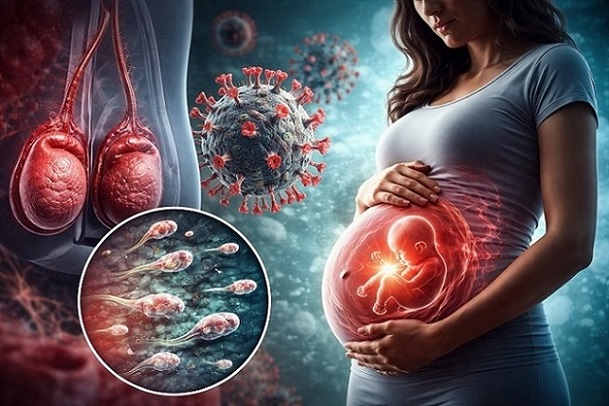 Inactivated coronavirus particles spark inflammation that damages fertility and pregnancy outcomes in laboratory models
Study Explores Effects Beyond Active Infection
Inactivated coronavirus particles spark inflammation that damages fertility and pregnancy outcomes in laboratory models
Study Explores Effects Beyond Active Infection
Researchers from the Universidade Federal do Rio de Janeiro, Fundação Oswaldo Cruz (FIOCRUZ), Universidade Federal de Minas Gerais, and Universidade do Estado de Minas Gerais investigated how inactivated SARS-CoV-2 particles influence reproduction using K18-hACE2 transgenic mice. These mice carry human ACE2 receptors, making them highly relevant for studying COVID-related biological responses.
The study exposed both male and female mice to the inactivated virus through the nasal route, mimicking respiratory exposure. Importantly, the virus used could not replicate, allowing scientists to isolate the effects of immune activation alone. This
Medical News report highlights that inflammation, not infection itself, was the main driver of damage.
Pregnancy Loss and Inflammatory Lung Damage
Female mice exposed during early pregnancy showed a significant reduction in viable fetuses and a sharp rise in embryonic resorptions. Researchers also noted reduced placental efficiency, meaning fetuses received less nourishment despite normal placental structure. These changes were accompanied by strong lung inflammation, including elevated levels of TNF, IL-6, and interferon-gamma, key inflammatory molecules linked to tissue damage.
Microscopic analysis revealed thickened lung tissue and inflammatory cell infiltration, resembling viral pneumonia. These findings suggest that immune signals triggered in the lungs may indirectly disrupt the maternal-fetal environment.
Male Fertility Severely Affected
Male mice exposed to the inactivated virus experienced an 18 percent drop in total sperm count. Even more concerning was a dramatic reduction in healthy, forward-moving sperm, alongside a rise in immobile and abnormally shaped sperm. Structural defects in sperm heads and tails were significantly more common, despite testicular tissue appearing largely normal under the microscope.
When these males were paired with healthy females, mating was delayed, fewer pregnancies occurred, and pregnancies that did succeed showed higher fetal loss. This indicates that sperm damage translated directly into poorer reproductive outcomes.
Inflammation As the Central Culprit
The researchers concluded that viral structural proteins likely activate Toll-like receptor 4 pathways, triggering excessive immune responses. This inflammatory cascade appears sufficient to harm r
eproductive systems and fetal viability without live virus present.
Conclusions And Broader Implications
The study demonstrates that exposure to inactivated SARS-CoV-2 can compromise fertility in both sexes and disrupt pregnancy through inflammation-driven mechanisms. These findings underscore the need to better understand immune-mediated reproductive risks associated with viral exposure and highlight inflammation as a critical target for protecting reproductive health in future pandemics.
The study findings were published on a preprint server and are currently being peer reviewed.
https://www.researchsquare.com/article/rs-8681768/v1
For the latest COVID-19 news, keep on logging to Thailand
Medical News.
Read Also:
https://www.thailandmedical.news/articles/coronavirus
https://www.thailandmedical.news/articles/long-covid




 Share
Share
 Tweet
Tweet
 Share
Share