Nikhil Prasad Fact checked by:Thailand Medical News Team Jan 14, 2026 8 months, 3 weeks, 5 hours, 48 minutes ago
Medical News: A Common Cough Medicine Reveals Powerful Antiviral Activity
A new study by researchers from Universidad de Talca, Universidad Católica del Maule, Universidad de Concepción, and the Center for Nanomedicine ND3 and CEDENNA has uncovered surprising antiviral power in bromhexine, a widely used cough medication. According to this
Medical News report, the drug appears to significantly reduce the ability of SARS-CoV-2 Omicron and other variants to infect human cells, offering fresh hope for low-cost therapies that work even as the virus evolves.
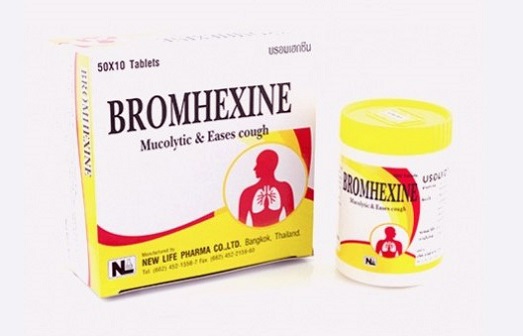 Researchers find bromhexine significantly blocks coronavirus entry into human cells
How the Researchers Tested Bromhexine
Researchers find bromhexine significantly blocks coronavirus entry into human cells
How the Researchers Tested Bromhexine
Scientists used a specially engineered human cell line called HEK293ACE2, which carries the ACE2 receptor that the coronavirus uses to enter cells. Infection was simulated safely using pseudoviruses that carry the SARS-CoV-2 spike protein along with fluorescent markers, making infected cells easy to detect under a microscope.
Before testing, the team confirmed through immunofluorescence and Western blot analyses that the cells strongly expressed human ACE2, ensuring the model was reliable. They then exposed these cells to different concentrations of bromhexine.
Major Findings Show Strong Antiviral Effects
The key discovery was that bromhexine reduced Omicron pseudovirus infection with an IC50 of just 17.3 micromolar, meaning it cut viral entry by half at relatively low concentration. At 100 micromolar, infections dropped by about 60 percent.
Even more striking, bromhexine also worked against Alpha, Beta and Delta pseudoviruses, reducing infection by about 40 percent at 40 micromolar. This suggests the drug’s antiviral effect is broad and not limited to one strain.
How Bromhexine Blocks the Virus
Using advanced computer modeling and 500 nanosecond molecular dynamics simulations, the researchers showed that bromhexine binds tightly to key sites on the ACE2 receptor. Three amino acids—Phe40, Phe390, and Asn394—played important roles in holding the drug in place through hydrophobic contacts, pi–cation interactions, and hydrogen bonding.
By attaching to ACE2 in this way, bromhexine appears to destabilize the spike–ACE2 interface, blocking the virus from latching onto cells. This mechanism is particularly valuable because it targets the earliest step of infection, reducing the chance for viral replication or mutation.
Why This Matters
Bromhexine is inexpensive, widely available, and already approved for human use as a mucolytic drug. If its antiviral activity can be confirmed in real virus experiments and eventually in clinical trials, it could become an accessible treatment option, especially in countries with limited resources.
Conclusion
The study strongly supports bromhexine as a
promising antiviral candidate capable of blocking SARS-CoV-2 entry across multiple variants. Its dual action—interfering with host protease activity and directly disrupting spike-ACE2 binding—gives it unique therapeutic potential. However, more work in animal models and human trials is essential before turning these laboratory findings into clinical solutions. Overall, the research highlights how an affordable repurposed drug may help strengthen global defenses against ongoing and future coronavirus threats.
The study findings were published in the peer reviewed journal: Frontiers in Pharmacology.
https://www.frontiersin.org/journals/pharmacology/articles/10.3389/fphar.2025.1745277/full
For the latest COVID-19 News, keep on logging to Thailand
Medical News.
Read Also:
https://www.frontiersin.org/journals/pharmacology/articles/10.3389/fphar.2025.1745277/full
https://www.thailandmedical.news/news/bromhexine-shows-promise-as-prophylactic-shield-against-flu-infections
https://www.thailandmedical.news/news/covid-19-news-randomized-clinical-trial-shows-that-n-acetylcysteine-and-bromhexine-prevents-covid-19-disease-severity




 Share
Share
 Tweet
Tweet
 Share
Share

































