Nikhil Prasad Fact checked by:Thailand Medical News Team Sep 03, 2026 15 minutes ago
Researchers in Germany have identified a pattern of proteins on circulating extracellular vesicles that could help distinguish people with post-COVID-19 syndrome from those who recovered completely, raising hopes for a future blood-based biomarker.
 Scientists have identified a multivariable plasma extracellular-vesicle signature that may help distinguish Long COVID from complete recovery
The research was conducted by scientists from the Department of Neurology, Ulm University Hospital, and the Institute of Molecular Virology, Ulm University Medical Center, both in Ulm, Germany.
Researchers Search for a Long COVID Signature
Post-COVID-19 syndrome, often called Long COVID, can involve fatigue, cognitive difficulties and numerous systemic symptoms. Because patients can present very differently, finding a reliable biological marker has proved difficult.
For this
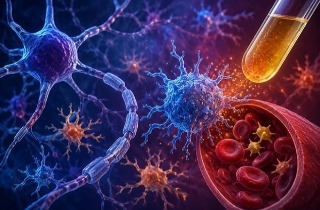
Thailand Medical News report, researchers investigated extracellular vesicles (EVs), tiny membrane-bound particles released by cells that carry molecular information reflecting their cells of origin.
The study included 61 people with post-COVID syndrome, 80 fully recovered COVID-19 controls and 10 people with post-viral syndromes unrelated to SARS-CoV-2. Researchers profiled 37 EV surface markers using two detection approaches targeting tetraspanins (TSPN) and phosphatidylserine (PS).
Single Markers Failed, but a Wider Pattern Emerged
Importantly, no individual marker passed the researchers' stringent 1% false-discovery-rate threshold. Instead, the strongest finding emerged when multiple EV signals were analyzed together using L1-regularized logistic regression and nested cross-validation.
The full TSPN model achieved an average area under the receiver operating characteristic curve, or AUC, of 0.788, with a 95% confidence interval of 0.715–0.852. The PS model achieved an AUC of 0.716, with a 95% confidence interval of 0.636–0.792.
An AUC approaching 0.8 indicates potentially useful discriminatory ability, although the researchers stressed that these results represent internal validation rather than proof of a clinically usable diagnostic test. Reduced models performed less strongly, suggesting that the relevant biological information may be spread across numerous EV markers rather than concentrated in a small panel.
Among individual markers, PS-detected CD2 produced the strongest result, meeting a conventional 5% false-discovery threshold but not the study's stricter 1% threshold. TSPN-detected CD62P also showed a notable signal, but neither marker was considered sufficiently discriminatory by itself.
EV Pattern Changed After One Year
One particularly intriguing finding came from 29 Long COVID participants tested again approximately one year later. Classification scores declined across all six models.
For example, scores fell in 23 of 29 participants in each TSPN model and in 27 of 29 using the PS
All and PS CV-selected models.
However, these changes did not directly correspond with improvements in fatigue, cognition or other symptoms. Researchers therefore cautioned against interpreting falling EV scores as evidence of recovery.
Conclusions
The findings suggest Long COVID may be associated with a distributed, measurable alteration in plasma EV surface characteristics rather than one definitive molecular marker. Larger independent and multicenter studies are now essential to determine whether this intriguing biological signature can eventually become a reliable diagnostic or patient-stratification tool.
The study findings were published on a preprint server and have yet to be peer reviewed.
https://www.medrxiv.org/content/10.64898/2026.08.27.26361498v1
Read Also:
https://www.thailandmedical.news/articles/long-covid




 Share
Share
 Tweet
Tweet
 Share
Share