Nikhil Prasad Fact checked by:Thailand Medical News Team Jul 02, 2026 3 months, 1 day, 15 hours, 46 minutes ago
Medical News: Researchers are proposing a bold new approach that could transform the way doctors treat Alzheimer’s disease, Parkinson’s disease, long COVID, and other neurological disorders. Instead of relying only on drugs, they suggest using advanced, noninvasive brain stimulation combined with sophisticated brain imaging to boost the brain’s natural waste-removal system, known as the glymphatic system.
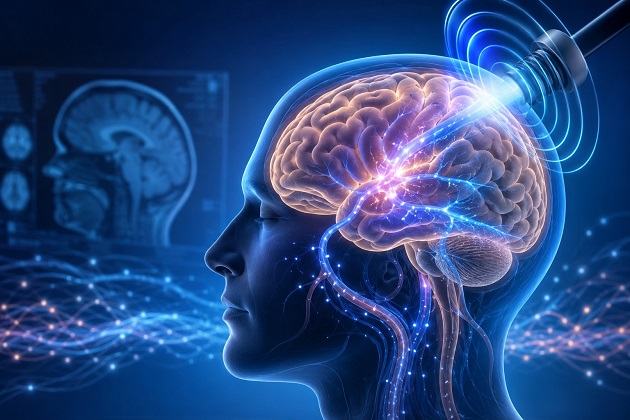 Researchers propose precision brain stimulation to strengthen the brain’s natural waste-clearing system and potentially
combat major neurological diseases
A New Target for Brain Health
The research team includes scientists from the Universidad de La Laguna and the Instituto Universitario de Neurociencias in Spain, University College London in the United Kingdom, Aalto University in Finland, Massachusetts General Hospital and Harvard Medical School in the United States, Albert Einstein College of Medicine in the United States, and the Institute for Neuroscience in Florence, Italy.
Their work focuses on the glymphatic system, a network that acts like the brain’s sanitation service. It removes harmful waste products, including proteins such as amyloid-beta and tau, which are strongly linked to Alzheimer’s disease. When this cleaning system slows down, toxic materials accumulate, increasing inflammation and contributing to nerve cell damage.
Scientists say the glymphatic system works best during deep sleep and is also influenced by exercise. However, aging, chronic insomnia, long COVID, Parkinson’s disease, and Alzheimer’s disease can all reduce its efficiency, allowing waste to build up over time.
Combining Brain Imaging with Precision Stimulation
Rather than stimulating the brain using traditional methods, the researchers propose a personalized strategy. Advanced MRI scans would first identify the exact brain circuits that control glymphatic activity. Doctors would then use multi-locus transcranial magnetic stimulation (mTMS), together with electroencephalography (EEG), to activate those precise networks while monitoring the brain’s response in real time.
Unlike conventional brain stimulation, which targets fixed locations, this technique could continuously adjust stimulation intensity, direction, and location according to each patient's individual brain activity, making treatment far more precise.
Earlier Findings Offer Encouraging Clues
Although the current publication is a scientific perspective rather than a clinical trial, it builds upon recent studies showing that transcranial magnetic stimulation can improve glymphatic function.
One study found that stimulating the left parietal region improved memory in older adults with mild cognitive impairment while increasing markers of glymphatic waste clearance. Another investigation involving patients with insomnia also reported improved glymphatic activity after repetitive magnetic stimulation.
This
t;>Medical News report highlights that the researchers believe combining stimulation of multiple connected brain networks simultaneously could produce even greater benefits than stimulating a single region alone.
Why the Brain’s Cleaning System Matters
The glymphatic system depends on the movement of cerebrospinal fluid through specialized channels surrounding blood vessels. This fluid carries away damaged proteins, inflammatory molecules, and metabolic waste before draining into the body's lymphatic system.
The researchers explain that the sympathetic and parasympathetic nervous systems may regulate this process. During restful sleep, lower levels of stress-related chemicals allow supporting brain cells to relax, widening the spaces through which fluid flows. Better circulation means more efficient removal of harmful waste products.
If scientists can safely influence these pathways using targeted magnetic stimulation, they believe it may become possible to improve waste clearance while also reducing inflammation that drives many neurodegenerative and autoimmune diseases.
Potential Benefits Beyond Alzheimer’s Disease
The proposed approach could eventually benefit people with Parkinson’s disease, multiple sclerosis, traumatic brain injury, glioblastoma, stroke, Huntington’s disease, amyotrophic lateral sclerosis, and neurological complications associated with long COVID.
The researchers also note that even modest improvements in delaying disease progression could significantly reduce healthcare costs while improving quality of life for millions of patients worldwide.
However, they emphasize that this remains a future-oriented treatment framework. More clinical studies are still needed to confirm exactly how magnetic stimulation affects the autonomic nervous system and whether the proposed biological mechanisms operate as expected in patients.
Conclusion
The researchers believe that combining personalized brain imaging, advanced magnetic brain stimulation, and real-time EEG monitoring could represent an entirely new generation of precision medicine for neurological disease. While the proposal remains theoretical and requires extensive clinical testing, it is supported by growing evidence that improving glymphatic function may enhance waste clearance, reduce harmful inflammation, and slow disease progression. If future trials confirm these ideas, this strategy could eventually provide a safe, noninvasive way to complement existing treatments for several devastating brain disorders while opening an entirely new field of personalized neurotherapeutics.
The study findings were published in the peer reviewed journal: Applied Sciences.
https://www.mdpi.com/2076-3417/16/13/6593
For the latest research on the glymphatic system, keep on logging to Thailand
Medical News.
Read Also:
https://www.thailandmedical.news/articles/alzheimer,-dementia-




 Share
Share
 Tweet
Tweet
 Share
Share

































