Nikhil Prasad Fact checked by:Thailand Medical News Team Mar 04, 2026 7 months, 1 day, 13 hours, 44 minutes ago
Medical News: A new scientific review is shedding light on why so many women in their 40s and 50s find themselves waking up repeatedly at night to urinate, especially during colder months. The study suggests that a combination of falling estrogen levels, chilly indoor temperatures, and caffeine intake may be quietly working together to worsen bladder symptoms during the menopause transition.
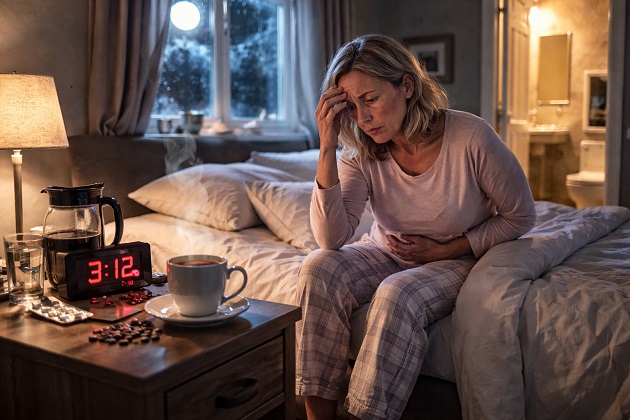 Cold bedrooms and late-day caffeine may team up with falling estrogen to worsen nighttime bladder symptoms during
menopause.
Researchers Dong Hee Lee from the Department of Obstetrics and Gynecology at Kangbuk Samsung Hospital, Sungkyunkwan University School of Medicine in Seoul, Republic of Korea, and Jeong Jun Park from the Department of Anesthesiology and Pain Medicine at CHA Bundang Medical Centre, CHA University School of Medicine in Seongnam, Republic of Korea, conducted the review.
Why Bladder Problems Increase During Menopause
Many women experience lower urinary tract symptoms during the menopause transition. These can include urgency, frequent urination, leakage, and nocturia, which is waking up at night to pass urine. While these symptoms are often blamed on aging alone, the researchers argue that hormonal changes during this stage of life may make the bladder more sensitive to everyday triggers.
As estrogen levels fluctuate and gradually decline, the body’s balance of water regulation and bladder control can shift. The review highlights that this period may represent a “susceptibility window,” meaning women may become more sensitive to environmental and dietary factors that previously caused little trouble.
The Hidden Impact of Cold Bedrooms
One of the most intriguing findings involves cold exposure. Studies have shown that colder indoor environments are linked to higher rates of nocturia and overactive bladder symptoms. When the body is exposed to cold, it can trigger a process known as cold-induced diuresis, meaning increased urine production.
The researchers explain that cold temperatures may influence a hormone called vasopressin, which normally helps the kidneys conserve water at night. If this system is less efficient during menopause, even mild bedroom cold could shift more urine production into nighttime hours, leading to more awakenings.
Interestingly, some studies suggest that passive body heating before bed, such as a warm bath or using heating devices, may reduce nighttime urination during colder seasons.
Caffeine Timing Matters More Than You Think
Caffeine, found in coffee, tea, and energy drinks, also plays a significant role. It can increase urine output and make the bladder more sensitive. Because caffeine’s effects can last several hours, drinking coffee in the afternoon or evening may extend into sleep time, increasing nighttime awakenings.
The researchers emphasize that it is not just the amount of caffeine that matters, but also the timing. Women who consume caffeine later in the day may unknowingly worsen nocturia and urgency, especially during winter months when cold exposure is greater.
&a
mp;nbsp;
This
Medical News report highlights the authors’ proposed “cold × caffeine” interaction model. They suggest that repeated nighttime cold exposure combined with caffeine intake may amplify urine production and bladder sensitivity in menopausal women.
A Possible Estrogen–Cold Sensor Connection
The review also explores the role of a cold-sensitive channel in the body called TRPM8. This sensor responds to cold temperatures. The authors propose that declining estrogen levels may heighten sensitivity in this pathway, making women more prone to cold-triggered urgency.
Although much of the detailed biological evidence comes from laboratory and animal studies, the researchers believe the theory is strong enough to justify clinical trials in midlife women.
Practical Takeaways for Women
The researchers suggest several simple strategies that could help:
-Shifting caffeine intake to earlier in the day and reducing or avoiding it after about 2 p.m.
-Gradually lowering caffeine doses rather than stopping abruptly.
-Keeping bedrooms comfortably warm during colder months.
-Trying passive warming methods before bedtime.
-Tracking symptoms alongside caffeine timing and room temperature.
Conclusion
The menopause transition may be a critical window when hormonal shifts make the bladder more vulnerable to everyday triggers such as caffeine and cold exposure. The evidence suggests that even modest changes in bedroom temperature and caffeine timing could meaningfully reduce nighttime urination and urgency in some women. While more menopause-stage-specific clinical trials are needed, the proposed model offers a practical, low-risk starting point for improving quality of life during this stage. Understanding the combined effects of hormones, environment, and diet may allow women to regain better sleep and bladder control without immediately turning to medication.
The study findings were published in the peer reviewed journal: Nutrients.
https://www.mdpi.com/2072-6643/18/5/825
For the latest news, keep on logging to Thailand
Medical News.
Read Also:
https://www.thailandmedical.news/articles/menopause




 Share
Share
 Tweet
Tweet
 Share
Share