Nikhil Prasad Fact checked by:Thailand Medical News Team Sep 13, 2026 1 hour, 5 minutes ago
Modern antiretroviral therapy (ART) has transformed HIV into a manageable chronic condition, but evidence suggests that successfully suppressing the virus in the blood does not necessarily eliminate its effects on the brain.
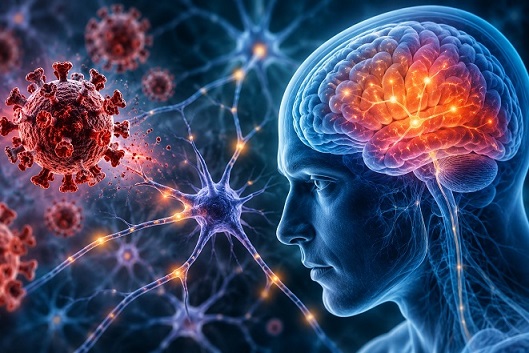 HIV may continue affecting neuronal health and brain function even when antiretroviral therapy
successfully suppresses the virus
A new scientific review reports that people with HIV can experience persistent neuronal stress, neuroinflammation, and cognitive difficulties despite effective ART. Importantly, neurons are not normally infected by HIV. Instead, damage appears to arise largely from the biological environment created around them by persistent viral products, inflammation, and dysfunction of supporting brain cells.
Brain Problems Can Continue After Viral Suppression
The researchers report that neurocognitive impairment affects an estimated 10% to 30% of people with HIV, depending on the diagnostic criteria used. Severe HIV-associated dementia has become uncommon with ART, but milder problems involving attention, memory retrieval, executive function, processing speed, and everyday functioning remain important concerns.
For this
Thailand Medical News report, a particularly important finding is that neuronal abnormalities can persist even when systemic viral replication is suppressed. Researchers describe chronic changes affecting synapses, dendrites, axons, brain metabolism, and neural networks.
How HIV May Harm Neurons Indirectly
The review highlights HIV proteins including Tat, gp120, and Nef. These can disrupt glutamate signaling, calcium regulation and mitochondrial function while promoting oxidative damage and cellular stress. Low-level viral proteins or transcripts remaining within the central nervous system could therefore maintain neuronal stress even during successful treatment.
Supporting brain cells are also involved. Persistent activation of microglia and other inflammatory pathways may create conditions that damage neuronal connections. Synaptic and dendritic injury can reduce the efficiency of neural networks before widespread neuron loss occurs.
Researchers also point to neurofilament light chain, or NfL, as a marker of neuroaxonal injury. Imaging studies have identified white-matter abnormalities, while cerebrospinal-fluid biomarkers indicate continuing immune and glial activation in some ART-treated people. However, these measurements are not specific to HIV and can be influenced by aging and other illnesses.
Researchers and Institutions
The review was written by Thomas A. Angelovich, Jessica J. Kivinen, Sarah J. Byrnes, Paul R. Gorry, and Melissa J. Churchill. Their institutions include RMIT University’s ATRACT Centre and School of Health and Biomedical Sciences; the Burnet Institute; and the Peter Doherty Institute for Infection and Immunity and University of Melbourne, all in Australia.
t;
Conclusions
The evidence indicates that ART provides substantial neurological protection but may not completely restore brain health. Future HIV treatment and cure research should therefore measure neuronal health alongside viral suppression and determine which neurological changes are reversible, persistent, or driven by other conditions.
The study findings were published in the peer reviewed journal: Viruses.
https://www.mdpi.com/1999-4915/18/9/999
Read Also:
https://www.thailandmedical.news/articles/hiv-aids 



 Share
Share
 Tweet
Tweet
 Share
Share

































