Nikhil Prasad Fact checked by:Thailand Medical News Team Nov 23, 2025 10 months, 1 week, 3 days, 23 hours, 44 minutes ago
Medical News: A New Understanding of How Omicron Damages the Nose
A new study by researchers from The University of Queensland, the Australian Infectious Diseases Research Centre, QIMR Berghofer Medical Research Institute and the Australian Institute for Bioengineering and Nanotechnology has uncovered alarming details about how newer Omicron lineages such as BA.5 and XBB have evolved a stronger preference for attacking the ciliated cells that line the human nasal passages. These tiny hairlike cells are responsible for sweeping away mucus and invading germs. As this
Medical News report explains, disruption of these cells could make it easier for the virus to spread deeper into the lungs and cause more persistent or severe illness.
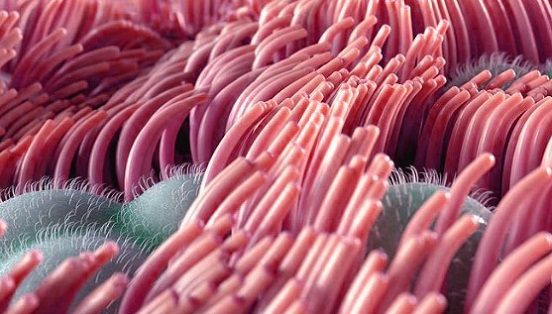 New data reveals that BA.5 and XBB variants more aggressively target and disrupt the ciliated cells that
protect the nasal passages
Stronger Replication and Deeper Damage
The study compared the ancestral QLD02 strain with Omicron BA.1 BA.5 and XBB using primary human nasal epithelial cells grown in advanced laboratory models. According to the researchers, BA.1 and BA.5 already showed higher replication inside nasal cells than the original strain. But BA.5 and XBB went even further by triggering dramatic suppression of genes that are essential for building and maintaining cilia. This included genes responsible for cilium assembly and movement as well as important motor and structural components like DNAH5, DNAI1, IFT88 and CFAP43.
At the same time BA.5 and XBB activated intense inflammatory and cell death responses. The team found that BA.5 caused a sharp rise in proapoptotic pathways including both intrinsic and extrinsic cell death triggers. Microscopy images from the study showed that BA.1 and BA.5 caused more infected cells more apoptotic cells and a significantly higher number of infected ciliated cells compared to the ancestral strain.
Ciliated Cells Become a Major Target
One of the most concerning findings was that BA.5 infected nearly nine times more ciliated cells than the ancestral virus while BA.1 infected more than seven times as many. These ciliated cells also showed widespread signs of stress and damage even when they were not directly infected indicating that bystander cell death may be occurring. This suggests the virus now disrupts the nasal barrier more efficiently without needing to destroy the entire ciliated cell population outright.
Conclusion
The research shows that Omicron is not only mutating to escape immunity but also to more aggressively target the first line of defense in the human airway. The combination of stronger ciliated cell tropism widespread apoptosis and major suppression of cilia related genes in BA.5 and XBB suggests a shift toward more efficient nasal colonization and potentially easier spread. Understanding these changes is crucial because even if symptoms appear mild the long-term effects of ciliary dysfunction could be significant especially for people with repeated infections. Continued monitoring of Omicron evolution remains essential as newer lineages may fu
rther enhance these damaging traits.
The study findings were published on a preprint server and are currently being peer reviewed.
https://www.biorxiv.org/content/10.1101/2025.11.19.689397v1
For the latest COVID-19 news keep on logging to Thailand
Medical News.
Read Also:
https://www.thailandmedical.news/news/microbes-may-fuel-nasal-tumors
https://www.thailandmedical.news/news/covid-19-triggers-development-of-nasal-polyps




 Share
Share
 Tweet
Tweet
 Share
Share