Nikhil Prasad Fact checked by:Thailand Medical News Team Feb 28, 2026 7 months, 4 days, 3 hours, 55 minutes ago
Thailand Medical News: A natural compound long used in traditional Asian medicine is now gaining serious scientific attention for its potential to protect the brain from devastating diseases like Alzheimer’s and Parkinson’s. Researchers from the Laboratory of Neuronal Physiology and Pathology, Department of Molecular and Cellular Biology, Institute of Biology, Fluminense Federal University; the Graduate Program of Neurosciences, Institute of Biology, Fluminense Federal University; the Graduate Program of Biomedical Sciences, Biomedical Institute, Fluminense Federal University; and the Laboratory of Retinal Neurobiology, Department of Neurobiology, Institute of Biology, Fluminense Federal University, all in Niterói, Rio de Janeiro, Brazil, have published an extensive review examining how a plant compound called icariin may slow or even prevent neurodegeneration.
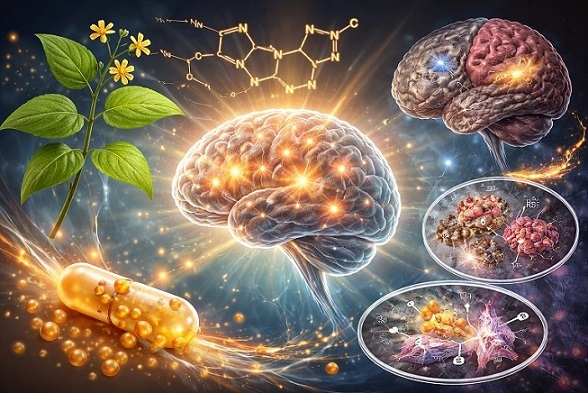 Natural icariin shows powerful multi-pathway protection against brain inflammation, oxidative stress, and neuron loss
Their findings, detailed in this
Thailand Medical News report, bring together years of fragmented research to explain how this natural molecule works at the cellular level.
What Is Icariin?
Icariin is the main active ingredient in Herba Epimedii, a traditional herbal remedy often used for fatigue, bone weakness, and aging-related conditions. Chemically, it belongs to a group of plant compounds known as flavonoids, which are widely recognized for their antioxidant properties. However, icariin appears to do far more than simply neutralize harmful molecules.
How Brain Cells Die in Disease
In conditions such as Alzheimer’s disease, Parkinson’s disease, multiple sclerosis, stroke, and even epilepsy, brain cells are damaged by a combination of inflammation, oxidative stress, and programmed cell death known as apoptosis.
Oxidative stress occurs when harmful molecules called reactive oxygen species build up faster than the body can neutralize them. These unstable molecules damage DNA, proteins, and cell membranes. At the same time, chronic inflammation in the brain activates immune cells that release toxic substances, worsening the damage. Eventually, this toxic environment pushes neurons toward self-destruction.
Icariin’s Anti-Inflammatory Power
The review shows that icariin consistently reduces inflammatory signals in animal and cellular models of neurodegenerative diseases. It lowers levels of inflammatory chemicals such as TNF-alpha, IL-1 beta, and IL-6, while calming overactive brain immune cells called microglia.
Importantly, icariin activates a protective pathway involving proteins known as SIRT1 and Nrf2. This pathway turns on genes that help cells defend themselves against stress. When this protective system is blocked in experiments, icariin’s benefits largely disappear, confirming its central role.
In models of Alzheimer’s disease, icariin reduced amyloid-beta buildup, limited plaque formation, and improved memory performance in treated ani
mals. In stroke models, it reduced brain swelling and preserved neurological function. In Parkinson’s models, it protected dopamine-producing neurons from inflammatory damage.
A Strong Antioxidant Shield
Beyond controlling inflammation, icariin strengthens the brain’s antioxidant defenses. Studies showed that it increases protective enzymes such as superoxide dismutase, catalase, and glutathione peroxidase. These enzymes act as the body’s internal cleanup crew, removing harmful reactive molecules.
Icariin also stabilizes mitochondria, the energy-producing structures inside cells. By preventing calcium overload and maintaining mitochondrial membrane integrity, it helps prevent energy failure and cell collapse.
Interestingly, icariin also reduces iron accumulation in the brain, limiting a destructive chemical reaction that generates highly toxic radicals.
Blocking Cell Suicide Pathways
Another major finding is icariin’s ability to regulate apoptosis. In Alzheimer’s models, it lowered pro-death proteins like Bax and caspase-3 while increasing protective proteins such as Bcl-2. It also restored balance in the PI3K/Akt signaling pathway, which supports cell survival.
By intervening at multiple levels, icariin does not just target one problem but instead tackles the interconnected processes driving neurodegeneration.
Challenges and Hope
Despite promising results, icariin has limitations. It is rapidly metabolized in the body and has relatively low brain penetration. However, researchers note that its metabolites and indirect immune-modulating effects may still produce meaningful benefits.
The comprehensive analysis suggests that icariin acts through a coordinated network of anti-inflammatory, antioxidant, and anti-apoptotic mechanisms. Rather than functioning as a simple supplement, it behaves more like a multitarget protective agent. While human clinical trials are still needed, the accumulating preclinical evidence positions icariin as a compelling candidate for future therapies aimed at slowing or preventing brain degeneration.
The study findings were published in the peer reviewed International Journal of Molecular Sciences.
https://www.mdpi.com/1422-0067/27/5/2247
In conclusion, the research strongly indicates that icariin works on several critical biological pathways involved in brain aging and neurodegenerative disease. By calming inflammation, boosting antioxidant defenses, stabilizing mitochondria, and preventing programmed cell death, it offers a multi-layered protective strategy. Although further human studies are necessary, the depth and consistency of existing laboratory data suggest that icariin may represent a promising natural foundation for future neuroprotective treatments.
For the latest on brain health, keep on logging to
Thailand Medical News.
Read Also:
https://www.thailandmedical.news/articles/herbs-and-phytochemicals




 Share
Share
 Tweet
Tweet
 Share
Share

































