Paracetamol and Metformin May Help Breast Cancer Evade Immune Attack by NK Cells
Nikhil Prasad Fact checked by:Thailand Medical News Team Aug 13, 2026 50 minutes ago
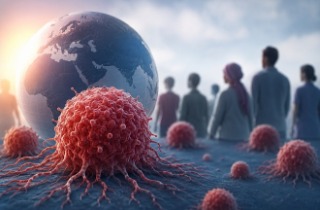
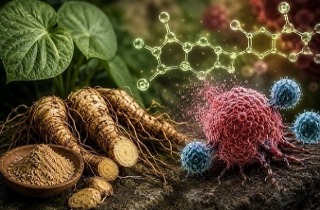
Two commonly used medicines, paracetamol and metformin, may unexpectedly help surviving breast cancer cells become harder for Natural Killer (NK) immune cells to destroy, according to a new laboratory study. The findings reveal a striking treatment paradox: both drugs slowed cancer-cell growth but also promoted changes associated with immune escape.
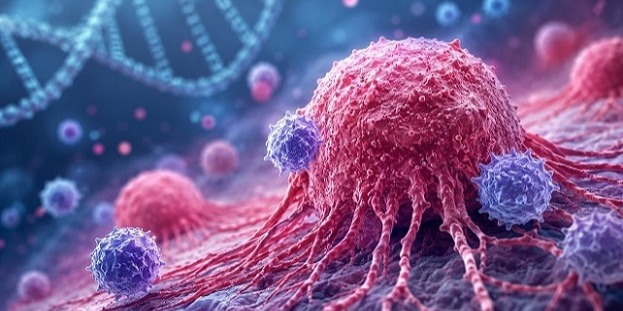
 Paracetamol and metformin altered breast cancer cells in laboratory experiments, leaving surviving
populations less susceptible to attack by NK immune cells.
NK cells form part of the body's natural defenses against cancer. Unlike some other immune cells, they can recognize and attack abnormal cells without needing previous exposure to them.
Researchers and institutions
The study was conducted by researchers are from the VNUHCM-US Stem Cell Institute, University of Science, Ho Chi Minh City, Vietnam, and the Stem Cell Institute, Vietnam National University of Ho Chi Minh City, Ho Chi Minh City, Vietnam.
Drugs slowed growth but changed surviving cells
Researchers treated MCF-7 cells, a widely used laboratory model of Luminal A breast cancer, with paracetamol or metformin and examined how the surviving cancer cells responded to NK cells.
Both medicines inhibited cancer-cell growth. At 48 hours, the concentration required to reduce cell growth by half was 11.86 millimolar for paracetamol and 21.11 millimolar for metformin.
However, slowing growth did not make surviving cancer cells more vulnerable to immune attack. Instead, researchers observed substantial enrichment of CD44+CD24− cells, a population displaying cancer stem-like characteristics.
These cells accounted for only 11 percent of untreated cancer cells. After paracetamol treatment, they increased dramatically to 75.31 percent, while metformin increased them to 68.31 percent.
NK cells unexpectedly selected tougher survivors
An especially interesting finding in this Thailand
Medical News report was that NK cells themselves appeared to contribute to the selection process.
NK-cell treatment alone produced the greatest enrichment of CD44+CD24− cells, which reached 83.2 percent. Researchers concluded that NK cells preferentially eliminated non-stem cancer cells, effectively leaving behind a population increasingly dominated by harder-to-kill stem-like cells.
When NK cells were combined with paracetamol, the stem-like population was 23.89 percent. With metformin and NK cells, it remained substantially elevated at 49.70 percent.
Immune-related genes changed dramatically
Researchers also discovered major changes in genes involved in regulating immune responses. Paracetamol increased PD-L1 gene expression by approximately 19.9-fold, while metformin increased PD-L2 expression by around 16.4-fold at tested concentrations.
Both drugs additionally increased transcription of MICA, MI
CB, CD80 and CD86. These changes could potentially contribute to the altered interaction between cancer cells and NK cells, although the researchers stressed that increased gene activity does not necessarily mean equivalent increases in functional proteins.
The drugs also produced distinctly different effects on NK cells. Paracetamol directly reduced NK-cell survival and decreased the proportion of CD3−CD56+ NK cells at higher experimental concentrations. Metformin produced minimal adverse effects on NK-cell viability.
Cancer-cell death was sharply altered
NK cells alone increased late apoptosis, a controlled form of cell death, from 4.94 percent to 30.20 percent and increased necrosis to 58.90 percent.
Adding paracetamol reduced late apoptosis to 7.99 percent and necrosis to 8.56 percent. Metformin reduced these figures to 16.60 percent and 25.10 percent respectively, demonstrating reduced susceptibility to NK-mediated killing under these laboratory conditions.
Conclusions and important caution
These findings do not mean cancer patients should stop taking either medicine. The experiments were conducted in cells, not patients, and used drug concentrations above typical levels circulating in human blood. The results instead identify possible biological mechanisms requiring confirmation using clinically relevant doses, additional breast cancer models, animal studies and eventually human research.
The study findings were published in the peer reviewed International Journal of Molecular Sciences.
https://www.mdpi.com/1422-0067/27/16/7211
Read Also:
https://www.thailandmedical.news/articles/cancer




 Share
Share
 Tweet
Tweet
 Share
Share