Nikhil Prasad Fact checked by:Thailand Medical News Team Apr 19, 2026 5 months, 2 weeks, 1 day, 1 hour, 14 minutes ago
Medical News: A new scientific discovery is shining a spotlight on a simple mineral with powerful healing potential. Researchers have found that magnesium—already known for its role in bone and heart health—may also play a key role in repairing damaged lymphatic vessels, offering hope for conditions like chronic wounds and post-surgical swelling.
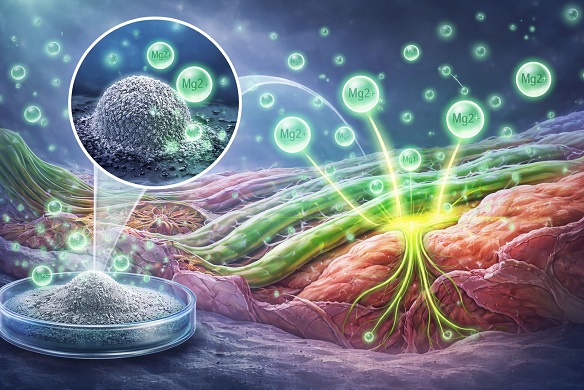 Magnesium ions show powerful potential to accelerate lymphatic repair and tissue healing
Why the Lymphatic System Matters
Magnesium ions show powerful potential to accelerate lymphatic repair and tissue healing
Why the Lymphatic System Matters
The lymphatic system is one of the body’s most overlooked networks. It helps remove excess fluid, supports immune defense, and clears waste from tissues. When it is damaged, fluid buildup and inflammation can persist, leading to conditions such as lymphedema that severely affect quality of life.
Despite its importance, repairing lymphatic vessels has remained difficult. Existing treatments often rely on expensive growth factors or complex cell therapies, which come with limitations.
A New Role for Magnesium
Scientists from Nanjing Medical University, the Jiangsu Province Engineering Research Center of Stomatological Translational Medicine, the State Key Laboratory Cultivation Base of Research, Prevention and Treatment for Oral Diseases, Savaid Stomatology School of Hangzhou Medical College, and the Institute of Technical Sciences of the Serbian Academy of Sciences and Arts explored whether magnesium could offer a simpler solution.
Their approach focused on magnesium powders that release magnesium ions when they break down. These ions were introduced into a controlled lab environment containing lymphatic endothelial cells—the building blocks of lymphatic vessels.
Strong Boost to Cell Growth and Movement
The findings were striking. At specific concentrations, magnesium ions significantly boosted the growth and multiplication of these cells. More importantly, they enhanced the cells’ ability to move—an essential step in forming new lymphatic vessels.
In lab tests mimicking wound healing, cells exposed to magnesium closed gaps faster than untreated cells. This suggests magnesium could accelerate the natural repair process in damaged tissues.
This
Medical News report highlights that not all concentrations worked equally well. Moderate levels delivered the best results, while extremely high or low doses were less effective, pointing to a “sweet spot” for therapeutic use.
Building Better Vessel Networks
The research went further by examining how well these cells could organize into vessel-like structures. Magnesium-treated cells formed stronger, more connected networks, indicating improved lymphangiogenesis—the process of creating new lymphatic vessels.
According to images and data presented in Figure 5 on page 12, these networks were denser and more structured compared to untreated sam
ples, suggesting real potential for tissue regeneration.
Reduced Cellular Stress
Another key finding was magnesium’s impact on oxidative stress. Cells exposed to optimal magnesium levels showed lower levels of harmful reactive oxygen species. As seen in Figure 6 on page 13, this reduction in cellular stress likely helped cells survive and function better.
Lower stress levels create a healthier environment for healing, making this effect particularly important in chronic wounds and inflammatory conditions.
Activation of Healing Signals
On a molecular level, magnesium triggered important growth signals. It increased the activity of proteins like VEGFA, VEGFC, and VEGFR3—well-known drivers of lymphatic vessel formation.
These signals act like biological “on switches,” telling cells to grow, migrate, and organize into functioning vessels. Their activation provides a strong explanation for the improved healing effects observed in the experiments.
Limitations and Future Outlook
While the results are promising, the study was conducted in a laboratory setting. Real human tissues are far more complex, and further research is needed to confirm safety and effectiveness in living organisms.
Still, the findings open the door to a new class of biodegradable, magnesium-based materials that could be used in wound care, reconstructive surgery, and regenerative medicine.
Conclusion
The study demonstrates that magnesium ions can significantly enhance lymphatic cell growth, migration, and vessel formation when used at the right concentrations. By reducing oxidative stress and activating key healing pathways, magnesium creates an environment that supports efficient tissue repair. Although more research is needed, especially in human models, these findings suggest a promising, cost-effective alternative to current therapies. If successfully translated into clinical use, magnesium-based treatments could revolutionize how doctors approach lymphatic damage and chronic healing conditions.
The study findings were published in the peer reviewed journal: Biomedicines.
https://www.mdpi.com/2227-9059/14/4/913
For the latest research of ways to treat or improve the lymphatic system, keep on logging to Thailand
Medical News.
Read Also:
https://www.thailandmedical.news/articles/supplements




 Share
Share
 Tweet
Tweet
 Share
Share

































