Nikhil Prasad Fact checked by:Thailand Medical News Mar 12, 2026 6 months, 3 weeks, 2 days, 2 hours, 47 minutes ago
Medical News:
Scientists Turn Food Waste into Potential Brain Protector
Researchers have discovered that compounds extracted from almond skins may help protect brain cells affected by Parkinson’s disease. The study highlights how a food industry by-product, normally discarded during almond processing, could contain natural compounds capable of protecting neurons linked to movement and coordination.
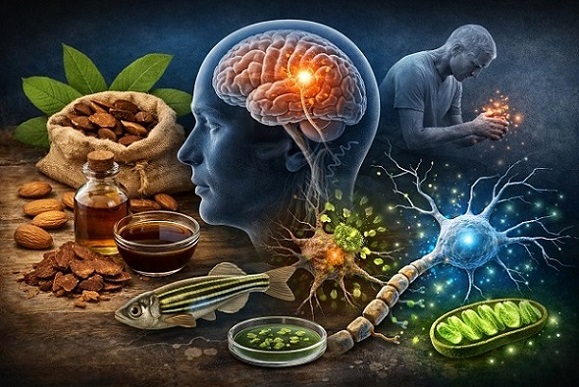 Almond skin compounds demonstrate protective effects on dopamine neurons in a Parkinson’s disease research model
The research was conducted by scientists from the School of Life and Environmental Sciences (ECVA), the Centre for the Research and Technology of Agro-Environmental and Biological Sciences (CITAB) at the Institute for Innovation, Capacity Building and Sustainability of Agri-Food Production (Inov4Agro), and the Animal and Veterinary Research Centre (CECAV), all at the University of Trás-os-Montes and Alto Douro (UTAD) in Vila Real, Portugal. According to this Medical News report, the discovery highlights how overlooked agricultural by-products may hold important medical value.
Understanding Parkinson’s Disease
Parkinson’s disease is a progressive neurological disorder that mainly affects movement. It develops when neurons in the brain that produce dopamine begin to degenerate. Dopamine is a chemical messenger responsible for controlling muscle movement, balance, and coordination.
As dopamine levels fall, patients may experience tremors, stiffness, slow movement, and difficulties maintaining balance. Scientists believe the disease is linked to several biological problems occurring inside brain cells, including oxidative stress, mitochondrial dysfunction, and the activation of cellular pathways that lead to neuron death.
Because these mechanisms are complex, researchers are exploring natural plant-based compounds that might help slow the damage or protect vulnerable neurons.
Almond Skins Rich in Protective Polyphenols
Almond skins contain large amounts of polyphenols, which are plant compounds known for their strong antioxidant activity. These compounds help neutralize harmful molecules that can damage cells and tissues.
In the study, scientists created an acetonic extract from almond skins and tested it using a zebrafish model designed to mimic Parkinson’s disease. Zebrafish are widely used in neurological research because their dopaminergic system shares many similarities with that of humans, and their behavior allows scientists to easily observe neurological changes.
Laboratory Experiments Reveal Neuron Protection
To trigger Parkinson’s-like symptoms, the researchers exposed zebrafish larvae to a neurotoxin called 6-hydroxydopamine. This chemical selectively damages dopamine-producing neurons and is commonly used in laboratory models of Parkinson’s disease.
Exposure to the toxin reduced the activity of tyrosine hydroxylase, a key enzyme involved in dopamine production and an important marker for healthy dopaminergic neurons. However, when the almond
skin extract was introduced, the decline in this enzyme activity was significantly reduced.
At higher concentrations, the almond extract restored tyrosine hydroxylase signals to levels comparable with healthy control groups, suggesting that the extract helped preserve dopamine-producing neurons.
Improvements in Movement and Cellular Protection
The researchers also analyzed the movement behavior of the zebrafish larvae. Fish exposed only to the toxin swam more slowly and traveled shorter distances, reflecting impaired motor control similar to Parkinson’s symptoms.
When the almond extract was present, some improvements in locomotor performance were observed. In addition, biochemical tests showed that the extract increased the activity of glutathione S-transferase, an enzyme that helps protect cells from toxic molecules and oxidative damage.
The extract also appeared to stabilize mitochondrial membrane potential. Since mitochondria are responsible for producing energy inside cells, their stability is essential for maintaining healthy neurons and preventing cellular stress.
Conclusions
The study suggests that almond skin extracts contain bioactive compounds capable of protecting dopamine-producing neurons and reducing some of the harmful effects caused by neurotoxins in experimental Parkinson’s disease models. While the findings are promising, the research was conducted in zebrafish and further studies will be required before similar benefits can be confirmed in humans. Scientists will need to identify the exact compounds responsible for the protective effects, examine how these compounds are absorbed and metabolized in the body, and determine whether they can effectively reach the brain. If future studies confirm these early results, almond skin-derived compounds could represent an unexpected and sustainable source of neuroprotective therapies.
The study findings were published in the peer reviewed International Journal of Molecular Sciences.
https://www.mdpi.com/1422-0067/27/6/2590
For the latest on Parkinsons, keep on logging to Thailand
Medical News.
Read Also:
https://www.thailandmedical.news/articles/alzheimer,-dementia-
Medical Disclaimer: All content published by Thailand Medical News is based on scientific research and is intended for informational and educational purposes only. It is not medical advice, diagnosis, or treatment. Readers must not attempt to use, apply, or experiment with any protocols, compounds, or therapies mentioned without first consulting a qualified and licensed medical doctor. Many findings discussed are experimental or preliminary, and only a licensed healthcare professional can determine what is safe and appropriate for an individual’s specific medical condition.




 Share
Share
 Tweet
Tweet
 Share
Share

































