Nikhil Prasad Fact checked by:Thailand Medical News Team Apr 15, 2026 5 months, 2 weeks, 5 days, 2 hours, 47 minutes ago
Medical News: A growing body of research is uncovering a surprising and potentially dangerous link between how well we breathe and how our blood pressure behaves. A new large-scale analysis suggests that reduced lung function and high blood pressure are closely connected - and the relationship may go both ways.
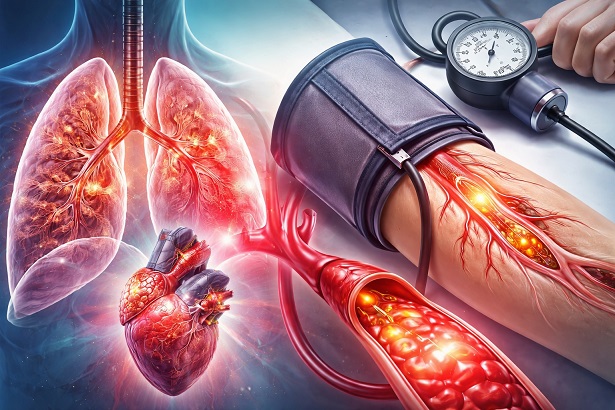 New research reveals a strong two-way link between declining lung function and rising blood pressure risks
A Hidden Link Between Lungs and Blood Pressure
High blood pressure, also known as hypertension, is often called a “silent killer” because it can develop without obvious symptoms. At the same time, declining lung function is also a gradual process that many people may not notice until it becomes severe. Now, scientists are finding that these two silent conditions may be interacting more than previously believed.
The research analyzed data from 28 studies involving hundreds of thousands of adults across multiple countries. The investigators came from the Department of Public Health, Faculty of Medicine at the University of Kelaniya in Sri Lanka; the Centre for Non-communicable Diseases and Nutrition at BRAC University in Bangladesh; the School of Public Health at Imperial College London in the United Kingdom; and the Lee Kong Chian School of Medicine at Nanyang Technological University in Singapore.
What the Study Found
The results revealed a clear pattern. People with impaired lung function were significantly more likely to develop high blood pressure. Even after adjusting for factors like age, smoking, and body weight, the risk remained about 40 percent higher compared to those with normal lung function.
Interestingly, the reverse was also true. Individuals who already had hypertension were found to have a much higher likelihood - nearly double - of experiencing reduced lung function.
The findings also showed that different types of lung problems play different roles. Restrictive lung conditions, where the lungs cannot fully expand, appeared to have a stronger association with hypertension than obstructive conditions like asthma or chronic obstructive pulmonary disease (COPD).
Why This Connection Matters
The connection between the lungs and the cardiovascular system is not entirely new, but this study strengthens the evidence that the relationship is deeper and more complex than previously understood. The lungs help oxygenate blood, while the heart pumps it throughout the body. When lung function declines, it may place extra strain on the heart and blood vessels.
This
Medical News report highlights that reduced oxygen levels, inflammation, and changes in blood vessel function could all be contributing factors linking these two conditions. Over time, these changes may trigger or worsen hypertension.
A Global Health Concern
Hypertension already affects over a billion people worldwide and is responsible for millions of deaths each yea
r. At the same time, lung diseases such as COPD are rising globally, especially in regions with high pollution and smoking rates.
The study suggests that doctors may need to start looking at lung health earlier when assessing cardiovascular risk. Simple breathing tests, such as spirometry, could potentially help identify people at risk of developing hypertension before symptoms appear.
What This Means for Everyday People
For the average person, the findings reinforce the importance of maintaining both heart and lung health. Lifestyle choices such as avoiding smoking, staying physically active, and reducing exposure to air pollution can benefit both systems simultaneously.
Regular health check-ups that include blood pressure monitoring and, when needed, lung function tests may help catch problems early.
Conclusion
The study provides strong evidence that impaired lung function and hypertension are closely linked in a two-way relationship. While lung problems appear to increase the risk of high blood pressure, hypertension may also contribute to worsening lung health. This dual interaction suggests that both conditions may share underlying biological mechanisms such as inflammation, vascular damage, and reduced oxygen exchange. Recognizing this connection could lead to earlier diagnosis, better prevention strategies, and more integrated treatment approaches that address both respiratory and cardiovascular health together.
The study findings were published in the peer reviewed journal: PLOS One
https://journals.plos.org/plosone/article?id=10.1371/journal.pone.0346569
For the latest on lung damage and high blood pressure, keep on logging to Thailand
Medical News.
Read Also:
https://www.thailandmedical.news/articles/coronavirus




 Share
Share
 Tweet
Tweet
 Share
Share

































