Nikhil Prasad Fact checked by:Thailand Medical News Team Apr 12, 2026 5 months, 3 weeks, 1 day, 7 hours, 59 minutes ago
Medical News:
New Research Reveals Overlapping Brain Damage Pathways
Scientists have uncovered striking biological links between COVID-19 and Parkinson’s disease, raising concerns that the viral infection could increase the risk of long-term neurological damage. The findings come from a detailed genetic and cellular analysis that reveals how both conditions may share similar pathways of brain inflammation and neuron dysfunction.
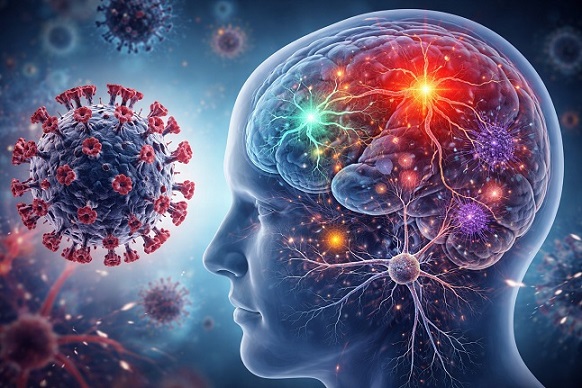 COVID-19 may trigger brain changes linked to Parkinson’s disease through inflammation and neuron damage
How the Study Was Conducted
Researchers from the Department of Anesthesiology, The Second Affiliated Hospital of Dalian Medical University, Dalian, China, analyzed large datasets of gene activity from patients with COVID-19 and Parkinson’s disease. They combined bulk RNA sequencing with advanced single-cell RNA sequencing to examine how individual brain cells behave during infection. Their goal was to identify overlapping genes and biological processes that could explain why some COVID-19 patients develop neurological symptoms resembling Parkinson’s.
Shared Genetic Signals Discovered
The team identified hundreds of genes that behaved abnormally in both diseases, with 77 genes overlapping between COVID-19 and Parkinson’s. These shared genes were strongly linked to inflammation, immune responses, and damage to dopamine-producing neurons, which are essential for movement control. Loss of these neurons is a hallmark of Parkinson’s disease.
Further analysis showed that inflammatory pathways, including cytokine signaling and immune cell activation, were highly active in both conditions. This suggests that COVID-19 may trigger or accelerate processes that are already known to drive neurodegeneration.
A Key Molecule Takes Center Stage
Among all the genes studied, one stood out: CHI3L1. This molecule appears to act as a central switch linking COVID-19 infection to brain inflammation and neuronal damage. Researchers found that CHI3L1 levels were significantly elevated in brain cells called astrocytes in COVID-19 patients.
Astrocytes play a crucial role in supporting neurons, regulating brain activity, and controlling inflammation. However, when overactivated, they can contribute to harmful immune responses. The study showed that CHI3L1-rich astrocytes were far more common in COVID-19 brains, suggesting a possible mechanism for long-term neurological complications.
Brain Cell Communication Disrupted
The research also revealed major changes in how brain cells communicate. Astrocytes were found to interact intensely with microglia, neurons, and other supporting cells through complex signaling networks. These interactions involved molecules such as SPP1, CADM1, NCAM1, and NRXN1, all of which influence brain function and structure.
This
Medical News report highlights that these communication disrupti
ons may affect synaptic plasticity, the brain’s ability to adapt and learn. Over time, such disturbances could contribute to cognitive decline, motor symptoms, and increased vulnerability to neurodegenerative diseases.
Metabolic Changes Mirror Parkinson’s Disease
Another important finding involved cellular metabolism. In COVID-19 patients, astrocytes showed increased energy activity, particularly in oxidative phosphorylation. Meanwhile, neurons displayed reduced tyrosine metabolism, a process directly linked to dopamine production.
These metabolic shifts closely resemble those seen in Parkinson’s disease, suggesting that COVID-19 may create a brain environment that favors neurodegeneration. The study also observed that inflammation-related pathways became more active over time, while dopamine-related functions declined.
Why This Matters for Long-Term Health
The implications of these findings are significant. COVID-19 is already known to cause a wide range of neurological symptoms, from brain fog to stroke. This new research suggests that the virus may also have lasting effects on brain health, potentially increasing the risk of Parkinson’s disease in some individuals.
While more research is needed, especially in clinical settings, the identification of CHI3L1 as a key player opens the door to new treatment strategies. Targeting this molecule could help reduce inflammation and protect brain cells from damage.
Conclusion
In conclusion, this study provides compelling evidence that COVID-19 and Parkinson’s disease share critical biological mechanisms, particularly involving inflammation and dopamine neuron dysfunction. The discovery of overlapping genes and disrupted brain cell communication highlights how viral infections may have long-term neurological consequences. Importantly, the identification of CHI3L1 as a central factor offers a promising target for future therapies.
Continued research is essential to confirm these findings and to develop interventions that could prevent or reduce the risk of neurodegenerative diseases following COVID-19 infection.
The study findings were published in the peer reviewed journal: mSphere.
https://journals.asm.org/doi/10.1128/msphere.00908-25
For the latest COVID-19 news, keep on logging to Thailand
Medical News.
Read Also:
https://www.thailandmedical.news/articles/coronavirus
https://www.thailandmedical.news/articles/long-covid
https://www.thailandmedical.news/articles/alzheimer,-dementia-




 Share
Share
 Tweet
Tweet
 Share
Share

































