Nikhil Prasad Fact checked by:Thailand Medical News Team May 07, 2026 4 months, 3 weeks, 6 days, 16 hours, 20 minutes ago
Medical News: Scientists in Argentina had identified a dangerous new hantavirus strain linked to a fatal human infection in 2025, raising concerns that previously overlooked regions may now be emerging as new hotspots for hantavirus pulmonary syndrome (HPS). The newly discovered virus, now named Guachipas virus, was detected in northwestern Argentina after the sudden death of a 16-year-old girl in Salta Province.
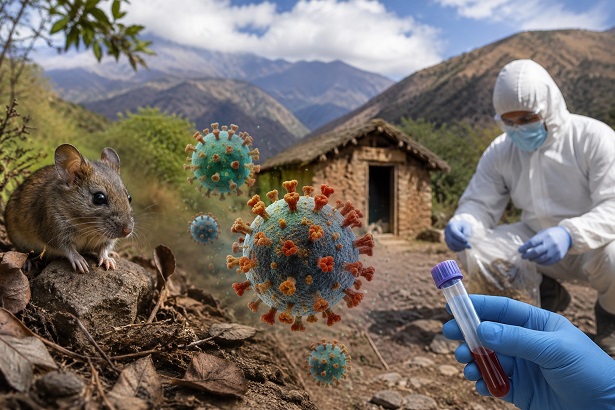 Scientists discover a deadly new hantavirus strain in Argentina after a fatal teenage infection triggers urgent investigations
The research was conducted by scientists from the Instituto Nacional de Enfermedades Infecciosas (INEI)-Administración Nacional de Laboratorios e Institutos de Salud (ANLIS) Malbran in Buenos Aires, the Universidad Nacional de Salta, the Consejo Nacional de Investigaciones Científicas y Técnicas (CONICET), the Universidad Nacional de Jujuy, Hospital Señor Del Milagro in Salta, the Instituto de Investigaciones en Energía No Convencional (INENCO), and the Dirección General de Coordinación Epidemiológica of the Salta Ministry of Health.
Teenager Died Within Hours of Hospital Admission
The case that triggered the investigation involved a 16-year-old girl from Alemanía, a tiny rural settlement in the Guachipas Department of Salta Province. She developed fever, headache, abdominal pain and respiratory symptoms before rapidly deteriorating. Researchers said she died less than 24 hours after hospital admission due to respiratory failure and shock.
Laboratory tests revealed classic warning signs of hantavirus infection including dangerously low platelet counts, elevated white blood cells and severe blood concentration abnormalities. Doctors initially confirmed hantavirus exposure using antibody testing before advanced genetic analysis uncovered that the virus involved was unlike previously known strains in the region.
A Completely New Viral Variant
Using next-generation sequencing technology, scientists analyzed fragments of the virus from the patient’s serum sample. They discovered major genetic differences when compared with all previously identified hantaviruses circulating in South America.
The newly identified virus showed more than 10 percent genetic divergence from known hantaviruses, a level considered high enough to classify it as a distinct pathogenic variant. Phylogenetic analysis revealed that the virus belongs to the Orthohantavirus andesense species group, which also includes Andes virus, one of the deadliest hantaviruses in South America.
Researchers named the strain “Guachipas virus” after the region where the fatal infection occurred.
The virus appeared most closely related to the Lechiguanas virus lineage but still formed its own separate branch in evolutionary analyses. Scientists warned that the actual genetic differences may be even greater once the complete genome is fully sequenced.
Rodents Remain the Main Suspected Source
Hantaviruses are carried naturally by wild rodents and spread to humans mainly thr
ough inhalation of virus-contaminated dust from rodent urine, saliva or droppings.
Following the fatal case, researchers trapped rodents around the patient’s residence and nearby areas. Several rodent species were identified, including Oligoryzomys flavescens occidentalis, a species already known to carry hantaviruses in Argentina. Scientists believe one of these rodent species is likely the natural reservoir host of the newly discovered virus.
The investigation found that the patient had likely been exposed while cleaning an abandoned cabin surrounded by dense native vegetation. Such enclosed spaces may allow hantaviruses to survive longer in dust particles, increasing the risk of inhalation.
This
Medical News report highlights how environmental changes and human activities in rural areas may be helping hantaviruses expand into new geographic regions that were previously not considered high-risk.
Scientists Warn About Hidden Spread
One of the most worrying findings from the study is that the infection occurred outside Argentina’s traditionally recognized hantavirus endemic zone. Researchers believe this could mean the disease is underdiagnosed in many regions.
The Guachipas area lies at the intersection of several ecological zones including the Yungas Forest, Dry Chaco and High Monte desert. Scientists suspect this unique ecological transition may support multiple rodent hosts and potentially several different hantavirus strains circulating simultaneously.
Researchers also warned that when multiple hantaviruses circulate together, they may exchange genetic material through a process known as reassortment. This can potentially create new viral strains with altered transmissibility or virulence.
Currently, at least five orthohantaviruses are now believed to circulate in northwestern Argentina: Laguna Negra virus, Orán virus, Bermejo virus, Buenos Aires virus and the newly identified Guachipas virus.
Growing Need for Surveillance
The scientists stressed that more extensive rodent surveillance and human testing are urgently needed in the region. They also emphasized the importance of raising clinical awareness so doctors can quickly recognize potential hantavirus infections before patients rapidly deteriorate.
The findings suggest that even regions with relatively few reported cases may still harbor dangerous hantaviruses capable of causing severe and fatal disease in humans. Public health officials may now need to revise existing hantavirus risk maps for Argentina and neighboring regions.
In conclusion, the discovery of Guachipas virus represents a major development in hantavirus research and highlights the ongoing evolution of these deadly rodent-borne pathogens. The study demonstrates that dangerous new viral variants may already be circulating silently in overlooked rural areas. Scientists are especially concerned that ecological disturbances, changing rodent habitats and the co-circulation of multiple hantavirus strains could increase opportunities for the emergence of even more pathogenic variants in the future. Increased surveillance, public awareness and rapid diagnosis will be essential to prevent additional fatalities.
The study findings were published in the peer reviewed journal: Viruses.
https://www.mdpi.com/1999-4915/17/5/717
For the latest on hantavirus, keep on logging to Thailand
Medical News.
Read Also:
https://www.thailandmedical.news/articles/hantavirus-news




 Share
Share
 Tweet
Tweet
 Share
Share