Nikhil Prasad Fact checked by:Thailand Medical News Team Jun 04, 2026 1 month, 2 weeks, 5 days, 16 hours, 46 minutes ago
Medical News: A surprising new study from Spain has raised fresh concerns about the possible long-term effects of COVID-19 on the digestive system. Researchers investigating an unusual cluster of colorectal cancers in patients with inflammatory bowel disease (IBD) discovered that all of the tumors examined contained SARS-CoV-2 proteins, the virus responsible for COVID-19. While scientists stress that the findings do not prove that the virus causes cancer, the results have sparked important questions about whether lingering viral remnants could contribute to cancer development in certain vulnerable individuals.
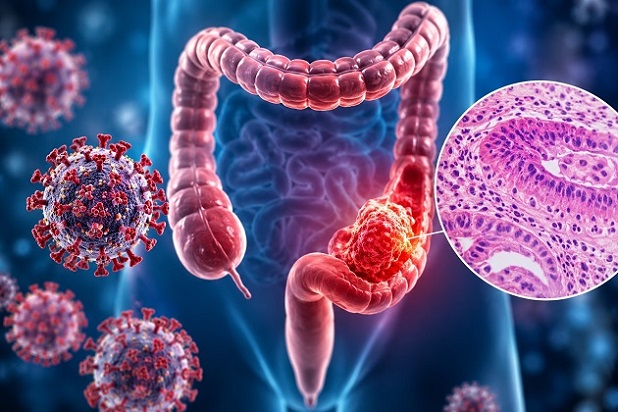 Spanish researchers found SARS-CoV-2 proteins in every tumor sample from a cluster of rare colorectal cancers in
inflammatory bowel disease patients
Unusual Rise in Colorectal Cancer Cases
The research team became concerned after noticing what they described as a sudden increase in colorectal cancer cases among their IBD patients. Between June 2022 and May 2024, six patients developed ano-rectal cancers, an unusually high number for a single center during such a short period.
Inflammatory bowel disease, which includes Crohn’s disease and ulcerative colitis, is already known to increase the risk of colorectal cancer because of chronic inflammation in the digestive tract. However, the characteristics of these new cancer cases caught the attention of physicians because of their unusual locations and tumor types.
The six patients were all men between the ages of 38 and 62. Three had Crohn’s disease and three had ulcerative colitis. Most of them were considered to have their bowel disease under good control, with five of the six patients showing endoscopic remission at the time their cancers were discovered.
Researchers Search for Hidden Coronavirus
The study was conducted by researchers from the University of Valencia, Hospital Clínico Universitario of Valencia, INCLIVA Research Institute, the Digestive Medicine Department, Pathology Department, Medical Oncology Department, Endoscopy Unit, Surgery Department, and Microbiology Department in Valencia, Spain.
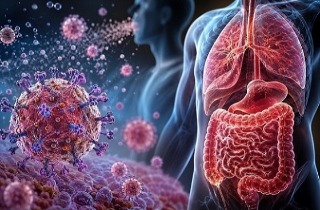
Because previous studies had suggested that SARS-CoV-2 can affect tissues that express the ACE2 receptor, including the intestines, the investigators decided to perform an additional analysis on cancer biopsy samples. They specifically searched for the presence of coronavirus proteins within the tumor tissues.
Using advanced immunohistochemical testing techniques, they examined the biopsies for evidence of SARS-CoV-2 proteins.
The findings were remarkable.
Every single cancer sample tested positive for coronavirus proteins. The viral proteins appeared throughout the tumor cells in a diffuse granular pattern, suggesting widespread presence within the cancer tissue. Notably, testing for other common viruses came back negative in all cases.
A Distinctive Pattern of Tumors
Another striking observation was the type of cancers identified. Four of the six tumors were mucinous adenocarcinomas, a relatively uncommon subtype that produces l
arge amounts of mucus and is often associated with more aggressive behavior.
Two of these mucinous cancers were located in the perianal region, while the remaining tumors were found in the lower rectum and anal canal. The researchers considered both the tumor locations and pathological characteristics unusual enough to warrant further investigation.
Interestingly, all six patients had received COVID-19 vaccinations and had also experienced confirmed COVID-19 infections at some point before their cancer diagnosis. The vaccine types varied among the patients, making it impossible to draw any conclusions regarding vaccination itself.
Could the Virus Be Playing a Role?
Scientists have previously proposed that SARS-CoV-2 may influence cancer-related biological pathways through inflammation rather than directly causing genetic mutations. The virus is known to interact with ACE2 receptors, which are found in high concentrations within the gastrointestinal tract and are often overexpressed in certain cancers, including rectal adenocarcinoma.
This
Medical News report highlights that the presence of viral proteins in every tumor sample raises the possibility that persistent coronavirus remnants may continue affecting tissues long after the initial infection has resolved.
Researchers emphasized that they cannot yet determine whether the coronavirus proteins found in the tumors are simply harmless leftovers, markers of previous infection, contributors to cancer growth, or even potential triggers in susceptible individuals. Another possibility is that some IBD patients may experience prolonged retention of viral material in intestinal tissues as part of a form of long COVID affecting the gastrointestinal tract.
Important Questions Remain Unanswered
The investigators caution that the study involved only six patients and therefore cannot establish a direct cause-and-effect relationship. Larger prospective studies will be needed to determine whether SARS-CoV-2 truly influences colorectal cancer development in IBD patients or whether the findings represent an unexpected coincidence.
Conclusion
Although preliminary, these findings have generated significant interest because they reveal a consistent presence of SARS-CoV-2 proteins in a series of unusual colorectal cancers arising in patients with inflammatory bowel disease. The study does not prove that COVID-19 causes cancer, but it highlights a potential biological connection that deserves urgent investigation. Researchers now face important questions about whether persistent viral proteins can influence chronic inflammation, alter cancer-related pathways, or contribute to long-term disease processes within the gastrointestinal tract. Future studies involving larger patient populations will be essential to determine whether coronavirus acts as an innocent bystander or an active participant in the development of these cancers.
The study findings were published in the peer reviewed Journal of Crohn's and Colitis.
https://academic.oup.com/ecco-jcc/article/19/Supplement_1/i757/7967367
For the latest COVID-19 news, keep on logging to Thailand
Medical News.
Read Also:
https://www.thailandmedical.news/articles/coronavirus
https://www.thailandmedical.news/articles/cancer




 Share
Share
 Tweet
Tweet
 Share
Share