New Hope for Alzheimer as Scientists Discover Receptors Controlling Key Beta-Amyloid Clearing Enzyme
Nikhil Prasad Fact checked by:Thailand Medical News Team Nov 30, 2025 10 months, 4 days, 8 minutes ago
Medical News: A New Breakthrough in Understanding Alzheimer’s Disease
Scientists from the Karolinska Institutet in Sweden and the RIKEN Center for Brain Science in Japan have made a major discovery that could reshape how Alzheimer’s disease is treated. Their newly published findings show that two specific brain receptors play an essential role in controlling neprilysin, a natural enzyme responsible for clearing harmful amyloid beta from the brain. This
Medical News report highlights how this breakthrough gives fresh hope for future treatments that could be safer, cheaper, and more effective than today’s options.
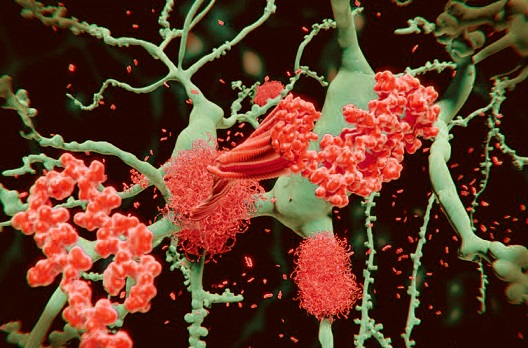 Scientists identify brain receptors that control a key enzyme that clears amyloid beta, offering fresh
hope for future Alzheimer’s treatments
Why Neprilysin Matters in Alzheimer’s Disease
Alzheimer’s disease is driven by the buildup of amyloid beta, a sticky protein that forms destructive plaques in the brain. Neprilysin acts like the brain’s clean-up enzyme, breaking down amyloid beta before it forms these plaques. However, neprilysin levels naturally drop with age and even more sharply in Alzheimer’s, making its regulation a key focus for scientists.
The new discovery reveals that two somatostatin receptors—known as SST1 and SST4—work together to control neprilysin activity in the hippocampus, the region responsible for memory formation. When these receptors function properly, they help keep amyloid beta levels in balance. When they fail, plaque formation accelerates.
How the Researchers Uncovered the Mechanism
The teams at Karolinska Institutet and RIKEN used advanced mouse models, including mice genetically altered to mimic Alzheimer’s disease. When both SST1 and SST4 receptors were removed, neprilysin levels dropped significantly, especially in the hippocampus, leading to increased amyloid beta buildup and worsening memory issues.
They then tested an experimental compound that activates both receptors. The results were striking. Neprilysin increased, harmful amyloid beta decreased, and the Alzheimer-like mice showed improved behavior without dangerous side effects. This suggests that activating these receptors could strengthen the brain’s own natural defenses.
A Potential Shift Away from High-Cost Antibody Drugs
Current Alzheimer’s treatments rely heavily on expensive antibody therapies that must be given by infusion and carry risks such as inflammation and brain swelling. By contrast, SST1 and SST4 are G protein-coupled receptors, a family of receptors that can be targeted by affordable small-molecule drugs—possibly even in pill form.
Scientists believe that drugs targeting these receptors could one day offer a more accessible treatment option for millions of patients worldwide.
What This Means for Future Therapies
This new research provides a clear path for developing drugs that reactivate the body’s own ability to remove amyloid beta. If successful in humans, such therapies could delay disease progression, preserve memory for longer, and reduce treatment costs dramatically. The findings also show how crucial receptor-based regulation is for brain health, opening the door for more focused and safer treatment approaches. If future studies confirm these results, medicine may gain an entirely new class of Alzheimer’s therapies that enhance natural brain cleaning processes rather than depending solely on synthetic antibodies.
The study findings were published in the peer reviewed Journal of Alzheimers Disease.
https://journals.sagepub.com/doi/10.1177/13872877251392782
For the latest on Alzheimer’s disease, keep on logging to Thailand
Medical News.
Read Also:
https://www.thailandmedical.news/articles/alzheimer,-dementia-




 Share
Share
 Tweet
Tweet
 Share
Share

































