Nikhil Prasad Fact checked by:Thailand Medical News Team Aug 10, 2026 1 month, 3 weeks, 3 days, 17 hours, 33 minutes ago
Changing to a vegan diet could begin altering how certain genes behave within just four weeks, according to intriguing new research showing surprisingly rapid molecular changes linked to inflammation, metabolism, cancer-related pathways and biological aging.
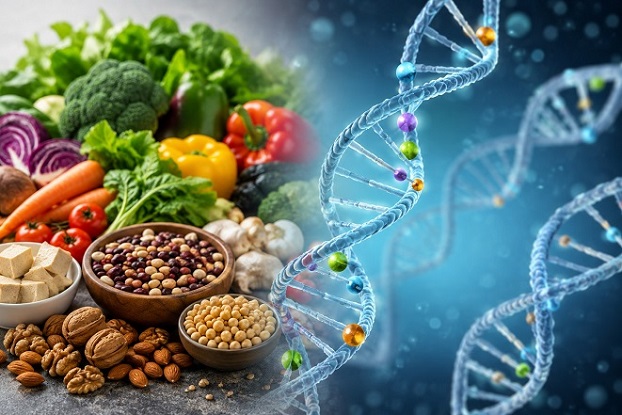 A one-month vegan diet triggered measurable changes in DNA methylation linked to inflammation, metabolism,
cell growth and biological aging
Importantly, the diet does not change a person's DNA sequence. Instead, researchers detected changes in DNA methylation, a biological process involving chemical tags attached to DNA that can influence whether particular genes become more or less active.
Researchers Put Two Diets Head-to-Head
The research involved scientists from the University of California, San Diego School of Medicine in the United States and the University of Freiburg Medical Center in Germany.
Researchers analyzed blood samples from 48 healthy adults who participated in a controlled dietary intervention. After initially consuming the same standardized diet for one week, participants were assigned to either a vegan diet or a meat-rich diet for one month.
Both diets were designed to provide similar amounts of energy, helping researchers separate changes associated with dietary composition from those caused primarily by calorie restriction or weight loss.
The scientists examined more than 800,000 DNA methylation sites across the genome, searching for coordinated changes in biological pathways.
Immune System Showed an Anti-Inflammatory Shift
One striking finding involved immune cells. The vegan group showed methylation patterns predicting fewer neutrophils and increased proportions of CD4+ T cells.
Neutrophils are vital for fighting infections, but persistently elevated activity can contribute to inflammation. CD4+ T cells, meanwhile, have important roles in coordinating and regulating immune responses.
Crucially, these methylation-based predictions closely agreed with actual blood-cell measurements from the original clinical trial, providing additional evidence that the molecular signals represented genuine biological changes.
As highlighted in this Thailand
Medical News report, the findings suggest that even a relatively short dietary intervention can produce measurable changes across numerous biological systems.
Cancer And Cell-Growth Pathways Also Changed
Researchers found greater methylation around gene-promoter regions associated with cancer-related and cell-growth pathways, particularly the mTOR and Hippo signaling systems.
These pathways are important because they regulate processes including cellular growth, proliferation and tissue homeostasis. Genes belonging to the mTOR signaling pathway were hypermethylated, or more strongly silenced, in the vegan group compared with participants consuming the meat-rich diet.
The analysis additionally identified chang
es involving lipid metabolism, insulin signaling, DNA repair and cellular responses to stress, suggesting that the effects were not confined to one isolated molecular pathway.
Biological Aging Produced an Intriguing Result
Researchers also examined epigenetic clocks, which estimate aspects of aging from DNA methylation patterns.
Two health-outcome-focused clocks, PhenoAge and GrimAge, indicated deceleration of biological aging among vegan participants. However, the Blood&Skin clock, designed more closely around chronological aging, produced the opposite signal.
This difference is important because epigenetic clocks measure different biological features and cannot be treated as interchangeable measures of aging.
Conclusions
The results suggest that diet can reshape measurable epigenetic patterns remarkably quickly, potentially influencing inflammation, metabolism, cell-growth pathways and markers associated with biological aging. However, with only 48 participants and a one-month intervention, larger and longer studies are essential before these molecular changes can be translated into firm dietary recommendations or claims about long-term disease prevention.
The study findings were published in the peer reviewed journal: MedComm.
https://onlinelibrary.wiley.com/doi/10.1002/mco2.70899
Read Also:
https://www.thailandmedical.news/articles/diets-and-nutrition
https://www.thailandmedical.news/articles/health-news




 Share
Share
 Tweet
Tweet
 Share
Share

































