Nikhil Prasad Fact checked by:Thailand Medical News Team Jun 17, 2026 3 months, 2 weeks, 2 days, 18 hours, 13 minutes ago
Medical News: Kidney disease remains one of the world’s fastest-growing health concerns, affecting millions of people and often progressing silently until serious damage has occurred. Now, a new scientific review suggests that a phytochemical compound called esculetin could one day emerge as a powerful tool in protecting the kidneys from a wide range of injuries.
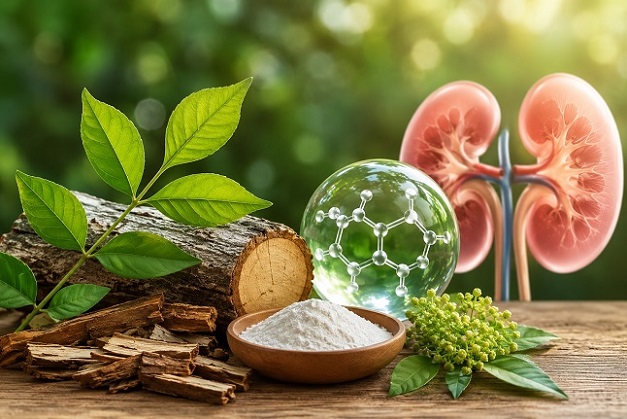 Natural plant-derived esculetin demonstrates strong kidney-protective effects in multiple experimental disease models
Researchers from the College of Pharmacy at Heilongjiang University of Chinese Medicine in Harbin, China, and the Yunnan Key Laboratory of Southern Medicine Utilization, Yunnan Branch of the Institute of Medicinal Plant Development, Chinese Academy of Medical Sciences & Peking Union Medical College in Jinghong, China, examined all available evidence on esculetin and its potential role in preventing and treating kidney injury.
A Natural Compound with Multiple Protective Actions
Esculetin is a natural substance found in Cortex Fraxini, a traditional medicinal plant derived from several Fraxinus tree species. Scientists have become increasingly interested in the compound because of its strong antioxidant and anti-inflammatory properties.
According to the review, kidney damage is often driven by a combination of harmful processes including inflammation, oxidative stress, mitochondrial dysfunction, cell death, and tissue scarring. Esculetin appears to act on many of these pathways at the same time, making it a particularly attractive candidate for future therapies.
Protecting Kidneys from Acute Injury
One of the most impressive findings involved acute kidney injury caused by cisplatin, a widely used chemotherapy drug known for its toxic effects on the kidneys.
Animal studies showed that esculetin reduced markers of kidney damage, lowered inflammation, decreased oxidative stress, and helped preserve healthy kidney tissue. Researchers found that the compound also reduced several forms of cell death that commonly occur during severe kidney injury.
In diabetic animals suffering from ischemia-reperfusion injury, a condition caused when blood supply returns to tissue after a period of oxygen deprivation, esculetin improved kidney function and helped maintain healthier mitochondria, the tiny energy-producing structures inside cells.
Fighting Long-Term Kidney Scarring
The review also highlighted encouraging findings in chronic kidney disease models. Long-term kidney damage often leads to fibrosis, a process in which excessive scar tissue gradually replaces healthy kidney tissue.
Studies found that esculetin reduced inflammation, limited collagen buildup, and slowed the development of fibrosis. Researchers observed improvements in kidney structure and function, suggesting the compound may help interrupt the progression from acute injury to chronic disease.
This
Medical News report notes
that one of the most important discoveries is esculetin’s ability to influence several biological pathways simultaneously rather than targeting just one mechanism. Such broad activity could be especially valuable because kidney diseases are usually driven by multiple overlapping causes.
Major Challenges Remain
Despite the promising results, researchers stress that esculetin is still far from clinical use. Nearly all evidence currently comes from laboratory and animal studies. No human clinical trials have yet confirmed whether the compound is effective or safe for patients.
The review also identified several obstacles, including low oral bioavailability, rapid metabolism in the body, limited long-term safety data, and uncertainty regarding optimal dosing. Scientists say future studies must determine how the compound behaves in humans and whether improved formulations can increase its effectiveness.
Conclusions
The growing body of evidence suggests that esculetin may be one of the more promising natural compounds being investigated for kidney protection. Its ability to reduce oxidative stress, suppress inflammation, protect mitochondria, limit cell death, and slow fibrosis makes it an intriguing multi-target therapeutic candidate. However, important questions regarding safety, dosage, long-term effects, and clinical effectiveness remain unanswered. Large-scale studies and carefully designed human trials will be essential before esculetin can be considered a genuine treatment option for kidney disease. For now, it represents an exciting area of research that could eventually lead to new strategies for protecting kidney health and preventing disease progression.
The study findings were published in the peer reviewed International Journal of Molecular Sciences.
https://www.mdpi.com/1422-0067/27/12/5465
For the latest on herbs and phytochemicals, keep on logging to Thailand
Medical News.
Read Also:
https://www.thailandmedical.news/articles/nephrology-(kidneys)
https://www.thailandmedical.news/articles/herbs-and-phytochemicals




 Share
Share
 Tweet
Tweet
 Share
Share

































