Nikhil Prasad Fact checked by:Thailand Medical News Team Jul 30, 2026 2 months, 5 days, 7 hours, 49 minutes ago
Medical News: Scientists from the Department of Biological Sciences, Brain Health Research Institute, and Healthy Communities Research Institute at Kent State University, Ohio, USA, have uncovered important molecular differences that may help explain why some people infected with SARS-CoV-2 develop life-threatening COVID-19 while others experience much milder illness. Their research shows that changes in a natural biological process known as RNA editing differ significantly between patients with critical and non-critical disease, opening the door to new ways of predicting disease severity and developing future treatments.
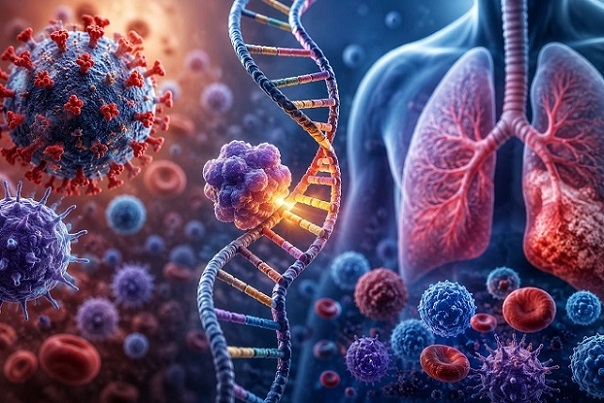 Researchers discover unique RNA editing patterns that distinguish critical COVID-19 patients from those with
milder disease, offering promising new clues for predicting severe illness.
A Closer Look at How the Body Responds to COVID-19
COVID-19 affects people in very different ways. While many recover with only mild symptoms, others rapidly develop pneumonia, acute respiratory distress syndrome, and multi-organ failure. Researchers have long suspected that the body's immune response plays a major role in determining who becomes critically ill.
The new study focused on enzymes called ADARs, which naturally edit RNA after it is produced. These enzymes change tiny chemical building blocks within RNA molecules, allowing cells to fine-tune how genes function and how the immune system reacts to infections. The researchers wanted to determine whether this RNA editing process differs between patients with severe and non-severe COVID-19.
Major Differences Found in Critical Patients
By analyzing whole-blood RNA samples from carefully matched patients with either critical or non-critical COVID-19, the research team discovered more than 4,100 genes whose activity differed between the two groups.
Patients with critical illness showed much stronger activation of genes involved in inflammation, interferon signaling, neutrophil degranulation, blood clotting, and other immune pathways. One of the most striking findings was the significantly higher activity of the ADAR1 gene, particularly one of its important forms known as ADARp110, in critically ill patients.
Interestingly, another ADAR1 form called ADARp150 did not show a statistically significant increase, suggesting that different forms of the same enzyme may play distinct roles during severe COVID-19.
RNA Editing Patterns Were Not the Same
The investigators found that RNA editing was far more complex than expected. Although patients with milder COVID-19 actually had a greater total number of RNA editing events overall, critically ill patients showed higher levels of editing within repetitive stretches of the genome known as Alu elements, suggesting that the quality and location of RNA editing may matter more than the total number of edits.
The scientists also identified severity-specific RNA editing signatures. Critical patients possessed unique editing events that were absent in milder cases, while non-critical patients carried hundreds of different unique editing sites of their own.
Some of these edits altered protein-coding regions, meaning they could potentially change how certain proteins function inside immune cells. Computer modeling suggested that several of these protein changes may reduce protein stability, potentially influencing how immune responses unfold during severe infection.
This
Medical News report highlights how these editing patterns could eventually become valuable biological markers that help doctors identify patients at greater risk of progressing to critical illness.
New Molecular Clues May Help Predict Severe Disease
Using a rigorous filtering process, the researchers identified more than 13,500 high-confidence RNA editing sites, including over 700 previously unknown editing locations.
Among these, 140 editing sites showed significant differences between critical and non-critical patients. Many were located in genes involved in immune regulation, inflammation, signal transmission, RNA metabolism, protein metabolism, and cellular stress responses.
One particularly notable editing event occurred in the NOP14 gene, where editing levels increased substantially in critically ill patients despite relatively low gene expression. This finding suggests RNA editing itself may act as an additional layer of biological regulation rather than simply reflecting changes in gene activity.
The study also found that many edited regions may influence how microRNAs regulate genes, potentially affecting inflammation and antiviral defenses throughout the course of infection.
Conclusions
The findings demonstrate that severe COVID-19 is associated with distinctive RNA editing patterns that extend well beyond ordinary changes in gene expression. These molecular differences may influence immune signaling, inflammation, protein function, and antiviral defenses, providing valuable insights into why certain patients deteriorate while others recover more easily. As research progresses, these RNA editing signatures could become useful biomarkers for identifying patients at risk of critical disease and may even serve as future therapeutic targets aimed at improving COVID-19 outcomes.
The study findings were published in the peer reviewed International Journal of Molecular Sciences.
https://www.mdpi.com/1422-0067/27/15/6809
For the latest COVID-19 news, keep on logging to Thailand
Medical News.
Read Also:
https://www.thailandmedical.news/articles/coronavirus
https://www.thailandmedical.news/articles/long-covid




 Share
Share
 Tweet
Tweet
 Share
Share

































