Nikhil Prasad Fact checked by:Thailand Medical News Team Jun 15, 2026 3 months, 2 weeks, 5 days, 1 hour, 21 minutes ago
Medical News: A medicinal plant used in traditional Chinese medicine for more than 2,000 years is attracting renewed scientific attention after researchers found growing evidence that it may help slow aging, protect bones and skin, and even show promise against certain cancers.
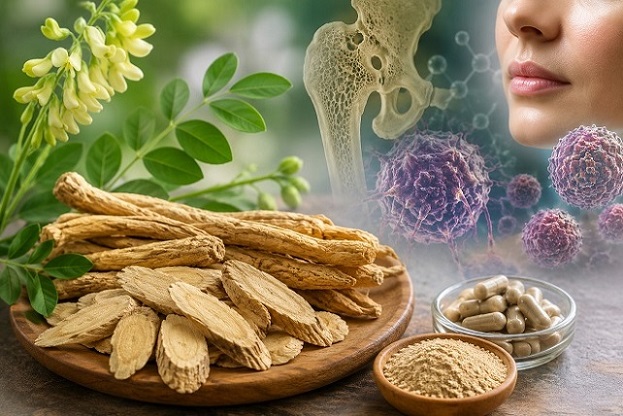 Researchers find that Astragalus membranaceus may help protect aging bones and skin while showing potential
anticancer benefits
Researchers from the Department of Biological Sciences, School of Science, The University of Jordan, Amman, Jordan, and the Department of Allied Sciences, Faculty of Arts and Sciences, Al-Ahliyya Amman University, Amman, Jordan, reviewed decades of scientific data on Astragalus membranaceus, commonly known as Huangqi. Their findings suggest that compounds found in the plant may influence some of the most important biological processes linked to aging and disease.
A Plant with Remarkable Biological Activity
Astragalus membranaceus contains hundreds of natural compounds, including astragalosides, cycloastragenol, flavonoids, polysaccharides, amino acids, and trace minerals. Among these, cycloastragenol and astragaloside IV have received the greatest attention because of their ability to activate telomerase, an enzyme involved in maintaining telomeres.
Telomeres are protective caps found at the ends of chromosomes. As people age, these caps gradually shorten. Scientists believe that excessive telomere shortening contributes to cellular aging and the development of age-related diseases.
Laboratory studies reviewed by the researchers showed that compounds derived from Astragalus could increase telomerase activity in various cell types, potentially helping cells maintain healthier telomeres for longer periods.
Benefits for Aging Bones
One of the most impressive findings involved bone health. Aging often leads to osteoporosis, a condition in which bones become weaker and more likely to fracture.
Animal and cellular studies showed that Astragalus compounds may help restore the balance between bone-building cells and bone-destroying cells. Researchers observed improvements in bone density, bone strength, and bone microarchitecture. Some studies also found reductions in inflammation and oxidative stress, two major contributors to age-related bone loss.
In aging animals, treatment with cycloastragenol increased bone mineral density and improved the overall quality of bone tissue. Clinical observations in humans also suggested that Astragalus-derived compounds may help maintain bone density, particularly in aging adults and postmenopausal women.
Healthier Skin and Reduced Signs of Aging
The review also highlighted encouraging findings for skin health. Scientists found that Astragalus compounds may protect skin cells from ultraviolet radiation, reduce collagen breakdown, improve hydration, and decrease wrinkle formation. Some studies reported that cycloastragenol selectively targeted aged and damaged cells while leaving healthy cells largely unaffected.
In human trials involving skin-care products containing Astragalus-derived ingredients, part
icipants experienced improvements in skin brightness, elasticity, hydration, and texture. Researchers believe these effects may be linked to better collagen production and reduced cellular stress.
This
Medical News report notes that the plant's anti-inflammatory and antioxidant properties appear to work alongside its telomere-supporting effects, creating multiple pathways through which skin aging may be slowed.
Potential Role in Cancer Prevention and Treatment
The review also examined evidence suggesting that Astragalus may possess anticancer properties, particularly against bone cancers such as osteosarcoma and skin cancers including melanoma.
Researchers found that Astragalus compounds could trigger cancer cell death, enhance immune responses, and suppress tumor growth in experimental models. Some studies showed increased activity of cancer-fighting immune cells and activation of molecular pathways that promote the destruction of malignant cells.
However, scientists caution that the relationship between telomerase activation and cancer is complex. While telomerase support may help healthy cells resist aging, cancer cells can also exploit telomerase to survive. As a result, more research is needed to determine the safest and most effective applications.
Conclusions
The growing body of evidence suggests that Astragalus membranaceus may offer significant benefits for healthy aging by protecting bones, improving skin health, reducing inflammation, and supporting cellular repair mechanisms. The plant also shows intriguing anticancer potential. However, most findings still come from laboratory and animal studies, with relatively limited human clinical data available. Researchers stress that larger and longer-term clinical trials are essential before Astragalus-derived products can be fully integrated into mainstream anti-aging or cancer-supportive medical strategies.
The study findings were published in the peer reviewed journal: Biomolecules.
https://www.mdpi.com/2218-273X/16/6/864
For the latest on herbs and phytochemicals, keep on logging to Thailand
Medical News.
Read Also:
https://www.thailandmedical.news/articles/herbs-and-phytochemicals
https://www.thailandmedical.news/articles/anti-aging
https://www.thailandmedical.news/articles/cancer




 Share
Share
 Tweet
Tweet
 Share
Share

































