Nikhil Prasad Fact checked by:Thailand Medical News Team Apr 04, 2026 4 months, 4 weeks, 14 hours, 54 minutes ago
Medical News: A new scientific study is drawing attention to an everyday food ingredient that may hold unexpected benefits for eye health. Researchers have found that cocoa powder - widely consumed around the world - could help reduce harmful blood vessel growth in the eye and protect against retinal damage, two key drivers of vision loss.
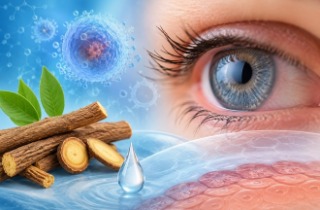
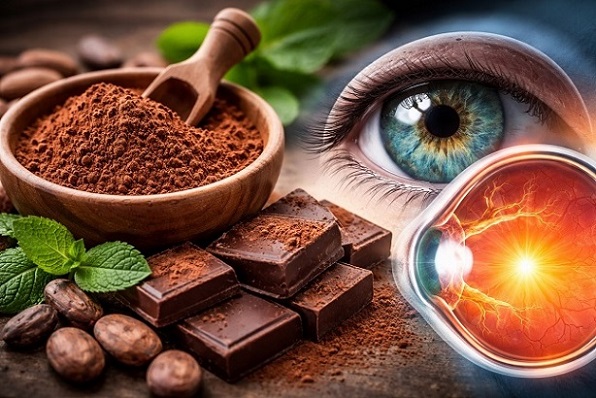 Cocoa compounds may help protect eye tissues by reducing abnormal blood vessel growth and preserving retinal structure
Understanding the Root Cause of Vision Damage
Cocoa compounds may help protect eye tissues by reducing abnormal blood vessel growth and preserving retinal structure
Understanding the Root Cause of Vision Damage
Many serious eye conditions, including age-related macular degeneration, are linked to abnormal growth of blood vessels in the eye. This process, called angiogenesis, can disrupt normal eye structure and lead to progressive vision loss. Current treatments rely heavily on repeated injections that target these blood vessels, but they can be costly and are not always fully effective.
Because of these limitations, scientists have been exploring safer, long-term approaches that could complement existing therapies. Natural compounds found in food are increasingly being studied for this purpose.
How Cocoa Interferes with Harmful Processes
Cocoa is rich in biologically active compounds such as polyphenols, theobromine, and caffeine. These compounds appear to influence a key cellular mechanism involving a protein called HIF-1α. Under low oxygen conditions, this protein becomes highly active and triggers the production of factors that promote abnormal blood vessel growth.
The study found that cocoa powder reduces the stability of HIF-1α at the protein level, effectively limiting its ability to activate damaging pathways. As a result, downstream molecules such as VEGF, EPO, and GLUT1—which are directly involved in angiogenesis—were significantly reduced.
Strong Effects Observed in Cell Experiments
In laboratory tests using human endothelial cells, cocoa powder demonstrated multiple protective effects. It slowed down cell movement and reduced the ability of cells to form tube-like structures, both of which are essential steps in new blood vessel formation.
Importantly, these effects were achieved at concentrations that did not harm the cells, highlighting cocoa’s potential as a safe intervention.
Promising Results in Animal Models
Further experiments in mice provided compelling evidence of cocoa’s protective role. In one model involving eye injury, untreated mice developed extensive abnormal blood vessels covering about 65% of the cornea. With cocoa treatment, this was reduced dramatically to around 22%.
In another model designed to mimic retinal degeneration, cocoa helped preserve the structure of the retina. The thickness of the outer nuclear layer—a key indicator of retinal health—fell to about 40% in untreated animals but improved to as high as 80% in those given cocoa.
This
Medical News&
lt;/span> report highlights how these findings suggest cocoa may offer a meaningful protective effect against both vascular and degenerative damage in the eye.
Reduction of Inflammation and Tissue Breakdown
The study also showed that cocoa significantly lowered inflammation within eye tissues. Levels of TNF-α, a major inflammatory marker, were sharply reduced. In addition, enzymes such as MMP2 and MMP9—which contribute to tissue breakdown—were also suppressed.
Markers linked to fibrosis and scarring were reduced as well, indicating that cocoa may help prevent long-term structural damage in the eye.
Supporting Key Vision Proteins
Another important finding was cocoa’s effect on rhodopsin, a protein essential for vision in low-light conditions. In untreated animals, rhodopsin levels dropped significantly, but cocoa treatment restored them close to normal levels.
The study also observed reductions in markers of retinal stress, suggesting that cocoa helps maintain the health and function of light-sensitive cells.
Conclusion
The findings from this study point to cocoa powder as a potentially valuable dietary component for supporting eye health. By targeting multiple biological pathways—including abnormal blood vessel growth, inflammation, and retinal degeneration—cocoa demonstrates a broad protective effect that could complement current treatments. While further studies in humans are needed to confirm these benefits, the results are encouraging and suggest that simple nutritional strategies may play a larger role in preventing vision loss in the future.
The researchers involved in this study were from the School of Pharmacy and the Department of Biopharmaceutical Convergence at Sungkyunkwan University, Republic of Korea, along with Nexpharm Korea Co., Ltd., Cheongju-si, Republic of Korea.
The study findings were published in the peer reviewed journal: Nutrients.
https://www.mdpi.com/2072-6643/18/7/1150
For the latest on eye health, keep on logging to Thailand
Medical News.
Read Also:
https://www.thailandmedical.news/articles/ophthalmology-(eye-diseases)
https://www.thailandmedical.news/articles/herbs-and-phytochemicals




 Share
Share
 Tweet
Tweet
 Share
Share