Nikhil Prasad Fact checked by:Thailand Medical News Team Apr 11, 2026 5 months, 3 weeks, 1 day, 20 hours, 13 minutes ago
Medical News: Long-Term Brain Changes Raise Concerns After Infection
Emerging research is revealing a concerning link between COVID-19 infections and lasting changes in brain function. Scientists have found that individuals who experienced serious illness - especially those requiring hospitalization - may continue to show reduced blood flow in the brain more than a year after recovery. These findings are helping to explain why some people report lingering mental fog and memory issues long after the infection has cleared.
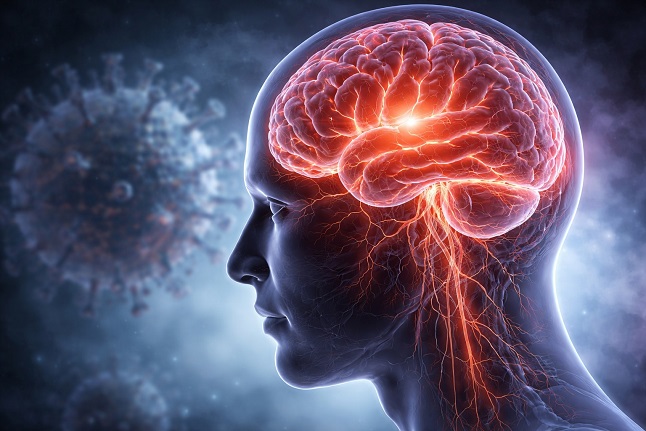 COVID-19-infections may cause long-lasting reductions in brain blood flow, affecting subtle memory functions even after recovery
The study was conducted by researchers from The University of Arizona, Tucson, Arizona, United States; the Arizona Alzheimer’s Consortium, Phoenix, Arizona, United States; the Division of Vascular Surgery at The University of Arizona; the Laboratory of FMRI Technology at the Mark and Mary Stevens Neuroimaging and Informatics Institute, University of Southern California, Los Angeles, California, United States; and the Evelyn F. McKnight Brain Institute, Tucson, Arizona, United States.
Understanding What Happens Inside the Brain
The research team examined a group of individuals with varying levels of COVID-19 severity, ranging from those who never had the infection to those who were hospitalized with significant breathing difficulties. Participants were assessed more than a year after their initial illness.
Using advanced brain imaging techniques, scientists measured how effectively blood was circulating through different regions of the brain. Blood flow is essential for delivering oxygen and nutrients, and even small disruptions can affect how the brain performs.
Severe Cases Show Lasting Impact
The most important discovery was that individuals who had been hospitalized due to COVID-19 showed noticeably lower blood flow in the brain’s gray matter. This part of the brain plays a key role in processing information, memory, and decision-making.
Interestingly, people who had milder forms of COVID-19 did not show consistent reductions in blood flow overall. However, there was significant variation among individuals, suggesting that some people may still experience hidden changes even after less severe illness.
This
Medical News report highlights that these effects are not short-lived. The reduced blood flow appears to persist well beyond the initial infection period, raising concerns about long-term brain health.
Memory Changes Are Subtle but Important
Despite the clear biological differences, most participants performed similarly on general memory tests. This suggests that the brain may compensate for some of these changes, at least in everyday situations.
However, a more sensitive measure of memory - known as pattern separation - told a different story. This ability helps people distinguish between similar experiences or details, and it was found to be
linked to brain blood flow. Individuals with better circulation in the brain performed better on this task. This indicates that while major memory problems may not always be obvious, more subtle cognitive functions could still be affected.
A Widespread Rather Than Localized Effect
Another key finding was that the reduced blood flow was not limited to one specific region. Instead, it appeared across multiple areas of the brain, suggesting a more global impact.
At the same time, the brain’s white matter - which supports communication between different regions - did not show significant long-term damage. This points toward blood flow disruption, rather than structural injury, as a major factor behind lingering symptoms.
What Could Be Causing These Changes
Researchers believe several biological mechanisms may be involved. COVID-19 is known to trigger inflammation and affect blood vessels, which can disrupt the delicate balance of blood flow in the brain. It may also interfere with the blood-brain barrier, a protective system that regulates what enters the brain.
Additionally, certain cells that help control blood vessel function may be directly affected by the virus, potentially leading to reduced circulation over time.
Conclusion
The findings provide important insight into how severe COVID-19 can leave a lasting mark on the brain. Even more than a year after recovery, individuals who experienced serious illness may continue to show reduced blood flow, which could subtly influence cognitive performance. While many people appear to recover well, others may face hidden challenges that are not immediately obvious through standard testing. These results emphasize the need for continued monitoring and further research to fully understand the long-term neurological effects of COVID-19 and to develop strategies for recovery and support.
The study findings were published in the peer reviewed journal: Frontiers in Human Neuroscience.
https://www.frontiersin.org/journals/human-neuroscience/articles/10.3389/fnhum.2026.1575787/full
For the latest COVID-19 news, keep on logging to Thailand
Medical News.
Read Also:
https://www.thailandmedical.news/articles/coronavirus
https://www.thailandmedical.news/articles/long-covid




 Share
Share
 Tweet
Tweet
 Share
Share

































