Thailand Medical Researchers Discover That a Phytochemical from a Local Fern Kills Lung Cancer Cells
Nikhil Prasad Fact checked by:Thailand Medical News Team Mar 03, 2026 7 months, 20 hours, 26 minutes ago
Thailand Medical: A traditional Thai medicinal fern may hold surprising promise in the fight against one of the world’s deadliest cancers. Scientists from Chiang Mai University and Walailak University have discovered that a phytochemical compound extracted from the fern Angiopteris evecta can aggressively block the growth of non-small cell lung cancer cells and trigger their self-destruction.
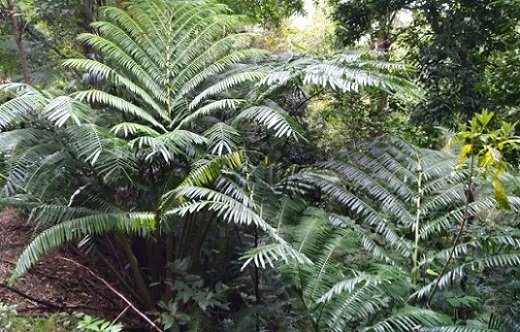 A Thai medicinal fern extract shows powerful lab-based effects against aggressive lung cancer cells
The study was conducted by researchers from the Department of Biochemistry, Faculty of Medicine; the Anticarcinogenesis and Apoptosis Research Cluster; the Department of Medical Technology, Faculty of Associated Medical Sciences; the Department of Chemistry, Faculty of Science; and the Center for Research and Development of Natural Products for Health at Chiang Mai University, Thailand, along with the Akkhraratchakumari Veterinary College and the One Health Research Center at Walailak University, Nakhon Si Thammarat, Thailand.
A Common Fern with Uncommon Power
Non-small cell lung cancer accounts for about 85 percent of lung cancer cases and is notoriously difficult to treat. Even with chemotherapy, targeted drugs, and immunotherapy, many patients eventually develop resistance to treatment.
In this
Thailand Medical News report, researchers focused on Angiopteris evecta, a large tropical fern long used in traditional Thai remedies. The team prepared different extracts from the plant’s underground stem and found that the ethyl acetate extract showed the strongest cancer-fighting activity.
They then isolated a concentrated portion rich in a phytochemicals compound called (-)-epi-osmundalactone. This “osmundalactone-rich fraction” turned out to be especially powerful against lung cancer cells grown in the laboratory.
Stopping Cancer Cell Growth in Its Tracks
The scientists tested the extracts on two types of human lung cancer cells known as A549 and H1299. The results were striking.
The fern extract significantly reduced cancer cell survival in a dose-dependent manner. The purified osmundalactone-rich fraction was even more potent, requiring much lower doses to achieve similar or stronger effects.
Further testing showed that the treatment prevented cancer cells from multiplying over the long term. In colony formation experiments, treated cells lost their ability to form new clusters, a key sign that their growth machinery had been disrupted.
Freezing the Cell Cycle
Cancer cells grow uncontrollably because they constantly move through the “cell cycle,” the process that allows cells to duplicate. The study found that the fern extract forced cancer cells into a resting phase known as G0/G1.
This happened because the treatment reduced critical proteins such as cyclin D1, cyclin E1, CDK2, and CDK4. These proteins normally act like green lights that push cells f
orward into DNA replication. Without them, the cancer cells were effectively frozen and unable to divide.
Forcing Cancer Cells to Self-Destruct
Even more importantly, the extract triggered apoptosis, often described as programmed cell death. This is the body’s natural way of eliminating damaged or dangerous cells.
The treated cancer cells showed clear signs of mitochondrial dysfunction. Their internal energy factories lost membrane stability, which is a major signal that apoptosis is underway. At the same time, protective proteins such as Bcl-2, Bcl-xL, and survivin decreased, while executioner proteins called caspase-9 and caspase-3 became activated.
This combination of events pushed the cancer cells toward irreversible self-destruction.
Blocking a Major Cancer Survival Pathway
The researchers also discovered that the fern extract shut down a key cancer-driving pathway known as MAPK signaling. This pathway, which includes ERK, JNK, and p38 proteins, helps tumors grow, survive, and resist treatment.
By significantly reducing the activation of these proteins, the extract cut off vital survival signals inside the cancer cells. This explains how the treatment was able to both halt growth and activate apoptosis at the same time.
Safety Signals and Future Promise
Preliminary safety tests showed that while the extract did affect normal human fibroblast cells, it appeared to be somewhat more selective toward cancer cells. Importantly, it did not cause damage to human red blood cells in short-term testing.
The researchers conclude that Angiopteris evecta and its (-)-epi-osmundalactone-rich fraction demonstrate strong anti-cancer effects by blocking cell division, shutting down survival pathways, and activating intrinsic apoptosis. These findings suggest that this traditional Thai medicinal plant could serve as a valuable source of new plant-based therapies for lung cancer. However, further studies in animals and eventually humans will be essential to confirm its safety, optimal dosing, and real-world effectiveness before any clinical use can be considered.
The study findings were published in the peer reviewed journal: Plants.
https://www.mdpi.com/2223-7747/15/5/764
For the latest on herbs and phytochemicals for cancer, keep on logging to
Thailand Medical News.
Read Also:
https://www.thailandmedical.news/articles/cancer
https://www.thailandmedical.news/articles/herbs-and-phytochemicals
Medical Disclaimer: All content published by Thailand Medical News is based on scientific research and is intended for informational and educational purposes only. It is not medical advice, diagnosis, or treatment. Readers must not attempt to use, apply, or experiment with any protocols, compounds, or therapies mentioned without first consulting a qualified and licensed medical doctor. Many findings discussed are experimental or preliminary, and only a licensed healthcare professional can determine what is safe and appropriate for an individual’s specific medical condition.




 Share
Share
 Tweet
Tweet
 Share
Share

































