Nikhil Prasad Fact checked by:Thailand Medical News Team Oct 24, 2026 47 minutes ago
New research suggests that male and female sex hormones influence how the body responds to SARS-CoV-2, potentially helping explain why men have historically experienced more severe COVID-19 complications.
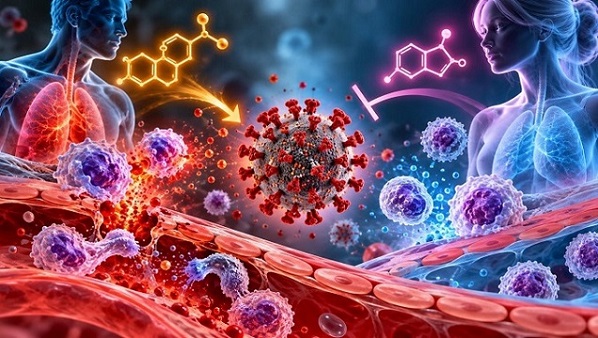 New research reveals how sex hormones influence COVID-19 inflammation, immune cell activity, and blood
vessel damage, potentially explaining differences in disease severity
Scientists discovered that androgen signaling can intensify immune inflammation and disrupt blood vessel integrity, while estrogen often suppresses inflammatory activity. These findings offer new insights into the biological mechanisms behind severe COVID-19.
The research involved scientists from the University Clinical Center of Serbia, University of Belgrade's Institute for Medical Research, and Institute of Virology, Vaccines and Sera “Torlak,” all in Belgrade, Serbia.
How Sex Hormones Influence COVID-19
The study examined how dihydrotestosterone (DHT), a potent androgen, and beta-estradiol, an estrogen, influence inflammatory responses triggered by SARS-CoV-2.
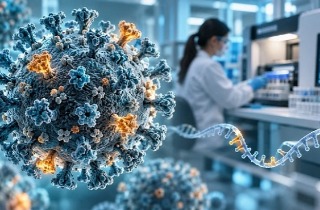
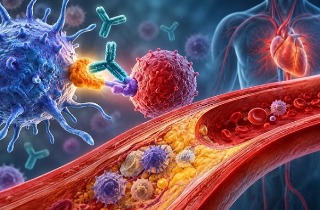
Researchers exposed laboratory-grown human lung endothelial cells and immune cells obtained from COVID-19 patients to the virus. They examined inflammatory signaling, hormone receptor expression, and immune cell movement across blood vessel barriers.
This
Thailand Medical News report highlights how these hormonal differences could influence both immune activity and vascular damage during infection.
SARS-CoV-2 Changes Hormone Receptors
Researchers discovered that SARS-CoV-2 altered hormone receptor expression differently across cell types.
After 24 hours, estrogen receptor gene expression decreased significantly in endothelial cells. However, estrogen receptor expression increased in neutrophils and monocytes.
Androgen receptor expression declined significantly in neutrophils but increased in monocytes.
These contrasting changes suggest that infection modifies how individual cells respond to circulating sex hormones, potentially influencing inflammation and vascular injury.
Androgens Amplify Inflammatory Signals
Three important inflammatory pathways were investigated: NF-kB, STAT3, and p38 MAPK.
In monocytic cells, SARS-CoV-2 increased inflammatory signaling by up to 1.9-fold. DHT further increased NF-kB activation by 44.6%, whereas the androgen-blocking drug flutamide reduced activation by 44.1% under the reported experimental conditions.
NF-kB regulates inflammatory molecules, including interleukin-6 and tumor necrosis factor-alpha, which are associated with excessive immune responses.
Interestingly, DHT reduced virus-associated p38 MAPK activation in endothelial cells, demonstrating that androgen effects depend heavily on the particular cell involved.
Estrogen Suppresses Inflammation in Neutrophils
One striking di
scovery involved neutrophils, immune cells that help fight infections but can also contribute to tissue damage.
Beta-estradiol reduced NF-kB signaling by approximately 2.2-fold, while DHT increased activation by approximately 4.9-fold.
SARS-CoV-2 also triggered more than a tenfold increase in neutrophil p38 MAPK activation after 24 hours.
In patient-derived monocytes, inflammatory activation was stronger after 24 hours than after 48 hours, suggesting particularly intense early signaling.
However, estrogen was not universally anti-inflammatory. At certain concentrations, it increased p38 MAPK activation in monocytes.
Testosterone-Related Hormone May Damage Blood Vessels
Another important finding concerned endothelial cells, which form the protective lining of blood vessels.
DHT significantly increased detachment of virus-exposed endothelial cells, suggesting reduced vascular integrity.
It also substantially increased the migration of monocytes across endothelial barriers.
This process could contribute to immune cell accumulation within tissues, potentially worsening inflammation and vascular complications.
The findings suggest androgen-responsive pathways deserve further investigation as potential therapeutic targets.
Conclusions and Clinical Implications
The findings provide a possible molecular explanation for sex-related differences in COVID-19 severity, particularly involving inflammation and vascular dysfunction. However, these were laboratory experiments involving limited patient-derived samples, not clinical evidence that hormone treatments improve outcomes. Larger studies must establish whether targeting androgen signaling can safely reduce severe disease.
The study findings were published in the peer reviewed journal: Frontiers in Cellular and Infection Microbiology.
https://www.frontiersin.org/journals/cellular-and-infection-microbiology/articles/10.3389/fcimb.2026.1976945/full
Read Also:
https://www.thailandmedical.news/articles/coronavirus




 Share
 Tweet
 Share