Nikhil Prasad Fact checked by:Thailand Medical News Team Apr 22, 2026 5 months, 1 week, 5 days, 5 hours, 10 minutes ago
Medical News: Liver diseases are rising at an alarming pace worldwide, driven by poor diets, alcohol use, metabolic disorders, and environmental toxins. Conditions such as fatty liver disease, hepatitis, and cirrhosis are no longer rare. A new scientific review now reveals that naturally occurring plant compounds known as flavonoids may hold the key to protecting and even repairing the liver through multiple powerful biological mechanisms.
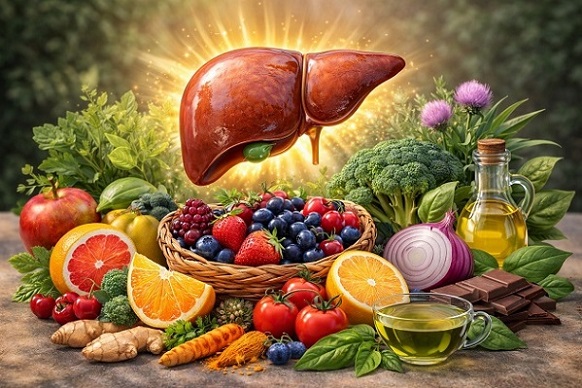 Natural flavonoids from everyday foods show powerful liver-protective effects
Understanding the Liver and Why It Fails
Natural flavonoids from everyday foods show powerful liver-protective effects
Understanding the Liver and Why It Fails
The liver plays a central role in keeping the body healthy. It processes nutrients, detoxifies harmful substances, regulates blood sugar, and produces essential proteins. However, when exposed to chronic stress from toxins, fat accumulation, or infections, the liver begins to deteriorate.
One of the main drivers of this damage is oxidative stress, where harmful molecules overwhelm the body’s natural defenses. This leads to inflammation, fat buildup, and eventually fibrosis, a condition where scar tissue replaces healthy liver cells. Over time, this can progress to liver failure or cancer.
Flavonoids Go Beyond Simple Antioxidants
Flavonoids are found in a wide variety of foods including apples, berries, citrus fruits, onions, green tea, cocoa, and even red wine. While traditionally labeled as antioxidants, scientists now understand that their real power lies in their ability to regulate complex cellular systems.
Rather than just neutralizing harmful molecules, flavonoids activate protective pathways such as Nrf2, which boosts the body’s own antioxidant enzymes. At the same time, they suppress inflammatory pathways like NF-kB, reducing the release of damaging cytokines.
They also help maintain mitochondrial function, ensuring that liver cells produce energy efficiently and resist damage.
Specific Flavonoids and How They Protect the Liver
Different flavonoids offer distinct protective benefits, making them highly versatile in combating liver disease.
Quercetin, found in apples, onions, and tea, is one of the most studied flavonoids. It reduces oxidative stress, improves fat metabolism, and lowers inflammation. Studies show that it can decrease fat accumulation in the liver and improve insulin sensitivity, making it particularly useful in fatty liver disease.
Kaempferol, present in leafy greens and broccoli, helps activate antioxidant defenses and prevents a type of cell death known as ferroptosis. It also reduces inflammation by blocking key signaling pathways, helping to protect liver tissue from long-term damage.
Naringenin, commonly found in citrus fruits like oranges and grapefruits, plays a strong role in regulating lipid metabolism. It helps reduce fat buildup in the liver and improves glucose balance, making it beneficial for metabolic liver conditions.
Epigallocatechin gallate, or EGCG, a major c
ompound in green tea, is known for its strong anti-inflammatory and anti-fibrotic effects. It helps reduce liver scarring and protects cells from toxin-induced damage.
Silymarin, derived from milk thistle, is one of the few flavonoid-based compounds already used clinically. It stabilizes liver cell membranes, promotes regeneration, and reduces inflammation and oxidative stress.
Genistein, found in soy products, has hormone-like effects that can help regulate metabolism and reduce liver inflammation, especially in individuals with metabolic disorders.
The Gut Liver Connection
A key breakthrough highlighted in the research is the role of the gut microbiome. The liver and gut are closely connected, and imbalances in gut bacteria can worsen liver disease by allowing harmful toxins to enter the bloodstream.
Flavonoids help restore balance in the gut microbiome, improving intestinal barrier function and reducing toxin leakage. This not only protects the liver but also enhances the overall effectiveness of flavonoids by converting them into more bioactive forms.
This
Medical News report emphasizes that the gut–liver axis is now considered a major target in treating liver diseases, and flavonoids play a crucial role in regulating this connection.
Strong Evidence but Some Limitations
Laboratory and animal studies consistently show that flavonoids reduce liver inflammation, improve enzyme levels, and slow disease progression. They also demonstrate the ability to reverse early-stage fibrosis and improve metabolic health.
However, challenges remain. One of the biggest issues is bioavailability. Many flavonoids are not easily absorbed by the body, and their effectiveness can vary depending on individual gut bacteria.
Researchers are now developing advanced delivery systems such as nanoparticles and liposomal formulations to improve absorption and target the liver more effectively.
Conclusion
Flavonoids are emerging as powerful multi-functional compounds that go far beyond their traditional role as antioxidants. By targeting oxidative stress, inflammation, metabolism, and the gut microbiome all at once, they offer a comprehensive approach to protecting and restoring liver health. While more human clinical trials are needed, the current evidence strongly supports their role as part of a broader strategy for preventing and managing liver diseases. With continued research and improved delivery methods, flavonoids could soon become a cornerstone in future liver therapies, offering a natural and effective way to combat one of the world’s fastest-growing health challenges.
The researchers involved in this study are from Lovely Professional University in India, the University of Florida in the United States, and Yeungnam University in the Republic of Korea.
The study findings were published in the peer reviewed journal: Biology.
https://www.mdpi.com/2079-7737/15/8/625
For the latest on liver health, keep on logging to Thailand
Medical News.
Read Also:
https://www.thailandmedical.news/articles/herbs-and-phytochemicals




 Share
Share
 Tweet
Tweet
 Share
Share

































