Scientists Probe Emerging Cancer Signals After COVID-19 Infections and Vaccination
Nikhil Prasad Fact checked by:Thailand Medical News Team Sep 14, 2026 37 minutes ago
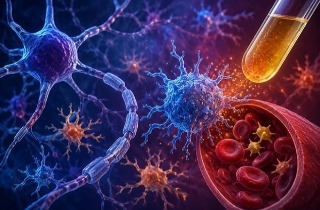
Scientists are calling for more rigorous research into possible connections between cancer, SARS-CoV-2 infection, and COVID-19 vaccination after a major review identified recurring cancer-related signals in published medical literature from around the world.
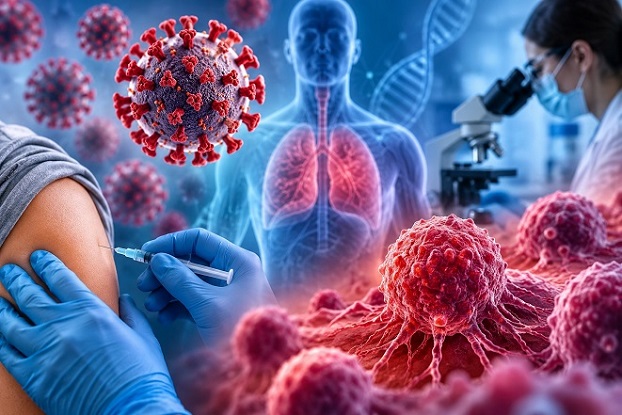 Scientists examining worldwide evidence say cancer signals reported after COVID-19 infection and vaccination
require further investigation, although a causal relationship has not been established
The researchers stress that the evidence does not establish that COVID-19 vaccines cause cancer. Instead, the findings bring together clinical observations, population studies, and proposed biological mechanisms that they believe warrant systematic investigation to determine whether the reported associations represent coincidence, previously undetected disease, changes in tumor behavior, or genuine biological effects.
The research was conducted by Charlotte Kuperwasser of the Department of Developmental, Molecular and Chemical Biology and the Laboratory for the Convergence of Biomedical, Physical, and Engineering Sciences at Tufts University School of Medicine, and Wafik S. El-Deiry of the Laboratory of Translational Oncology and Experimental Cancer Therapeutics, Department of Pathology and Laboratory Medicine; the Hematology-Oncology Division, Department of Medicine; and the Legorreta Cancer Center at Brown University, Brown University Health, and The Warren Alpert Medical School of Brown University.
A related commentary by Raphael Lataster, an independent researcher affiliated with The University of Sydney in Australia, argues that possible cancer associations involving both COVID-19 infection and vaccination should be investigated using consistent scientific standards.
Review Examines Cancer Reports from Around the World
The researchers conducted a systematic search of the scientific literature and identified 69 publications, including 66 article-level reports describing 333 patients across 27 countries. The evidence also included two retrospective population investigations involving approximately 300,000 people in Italy and 8.4 million in South Korea, together with a longitudinal analysis of approximately 1.3 million U.S. military service members.
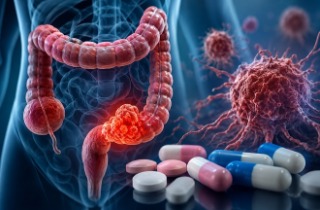
The reported malignancies were remarkably diverse. They included non-Hodgkin lymphoma, cutaneous lymphoma and leukemia, as well as solid tumors including breast, lung and pancreatic cancers, melanoma, sarcoma and glioblastoma. Virus-associated malignancies including Kaposi sarcoma and Merkel cell carcinoma were also represented.
Researchers identified several recurring patterns, including unexpectedly rapid cancer progression, recurrence or reactivation of previously controlled disease. Some reports described unusual pathological findings involving vaccination sites or nearby lymph nodes.
However, these observations largely represent temporal associations. A cancer diagnosed after infection or vaccination was not necessarily caused by that exposure.
Lymphomas and Solid Tumors Feature Prominently
Approximately 43% of the publications involved lymphoid malignancies, including lymphomas and leukemias, while 41% involved solid tumors. Some reports des
cribed unusually aggressive disease or unexpectedly rapid progression.
The review also examined timing. About half of the case reports described diagnoses occurring within two to four weeks of vaccination, with some appearing within seven to 14 days. Other diagnoses occurred several months later.
Such short intervals may be more compatible with the unmasking or acceleration of an already existing malignancy than with a completely new cancer developing from normal cells, although this remains a hypothesis rather than a demonstrated mechanism.
Millions of Patients Provide Broader Evidence
Of particular interest were the larger population studies. The South Korean investigation followed approximately 8.4 million individuals and reported statistical associations during one-year follow-up involving six cancers. Hazard ratios were 1.35 for thyroid cancer, 1.34 for gastric cancer, 1.28 for colorectal cancer, 1.53 for lung cancer, 1.20 for breast cancer and 1.69 for prostate cancer.
The associations differed according to vaccine platform, age and sex, while booster analyses produced additional signals involving gastric and pancreatic cancers.
The Italian study followed 296,015 residents for up to 30 months. Cancer hospitalization was modestly higher among vaccinated individuals in some analyses, including signals involving colorectal, breast and bladder cancers. Importantly, some associations weakened or reversed when researchers imposed a longer minimum latency period.
For this
Thailand Medical News report, these qualifications are critical: observational studies can be affected by screening practices, healthcare use, previous infections, underlying illnesses and other confounding variables. The findings therefore cannot demonstrate that vaccination caused the observed cancers.
Scientists Explore How Immune Changes Could Affect Tumors
The researchers examined biological mechanisms that might help explain some of the observations.
Both SARS-CoV-2 infection and vaccination can activate inflammatory and immune pathways. The review highlights inflammatory cytokines including IL-6, TNF-alpha and IL-1 beta, which can interact with pathways involved in cancer-cell proliferation, angiogenesis and immune surveillance.
One proposed explanation is that intense or localized inflammation could potentially alter the environment surrounding preexisting dormant, occult or premalignant cells, allowing an existing abnormal cell population to become clinically apparent or progress more rapidly.
The authors also discuss tumor immune surveillance, spike-protein biology, repeated immune activation and interactions with oncogenic viruses including Epstein-Barr virus and HHV-8. These proposed pathways remain mechanistic hypotheses requiring direct experimental confirmation.
Evidence Does Not Prove Vaccines Cause Cancer
This distinction is one of the review's most important limitations.
Most of the evidence consists of individual case reports or small case series. Such reports can reveal unexpected clinical events but cannot establish how frequently they occur or whether rates are higher than would normally be expected.
Publication bias is another concern because unusual cancers appearing shortly after vaccination may be more likely to be reported than cancers without an apparent temporal connection.
Most importantly, the authors acknowledge that no current studies have demonstrated cancer initiation or oncogenic transformation causally attributable to COVID-19 mRNA vaccines or their components, while animal studies have not demonstrated vaccine-induced tumor promotion.
Conclusions
The findings raise important questions about whether SARS-CoV-2 infection, COVID-19 vaccination, immune activation or combinations of these exposures could influence cancer behavior in certain susceptible individuals. However, the current evidence cannot establish causation or quantify an individual's cancer risk. Large, carefully controlled longitudinal studies, tumor-tissue investigations, molecular profiling, pathology studies and mechanistic experiments are now needed to distinguish coincidence from the unmasking of previously silent disease, acceleration of existing malignant clones or a genuine causal effect. Such research will be essential before firm conclusions about cancer risk following either COVID-19 infection or vaccination can responsibly be made.
The study findings were published in the peer reviewed journal: Oncotarget.
https://www.oncotarget.com/article/28824/text/
https://www.oncotarget.com/article/28918/text/
Read Also:
https://www.thailandmedical.news/articles/coronavirus
https://www.thailandmedical.news/articles/long-covid




 Share
Share
 Tweet
Tweet
 Share
Share