Canadian Study Finds That the Phytochemical Allicin from Garlic Dramatically Suppresses COVID-19 Spike Protein in Human Cells
Nikhil Prasad Fact checked by:Thailand Medical News Team Jun 13, 2025 1 year, 3 months, 2 weeks, 6 days, 23 hours, 21 minutes ago
Thailand Medical News: In a surprising and potentially game-changing discovery, scientists in Canada have uncovered that allicin—a sulfur-rich compound derived from crushed garlic—can significantly suppress the expression of the SARS-CoV-2 spike protein in human immune cells. This breakthrough adds to the growing list of health benefits attributed to garlic and suggests its possible role as a natural antiviral compound with relevance to COVID-19.
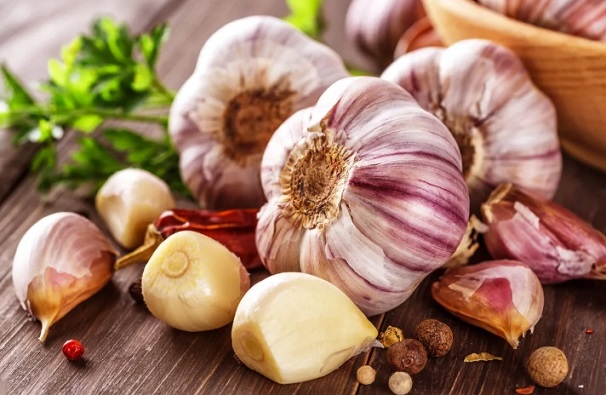 Canadian Study Finds That the Phytochemical Allicin from Garlic Dramatically Suppresses COVID-19 Spike
Protein in Human Cells
Researchers from the Department of Biology and Health Science at Kwantlen Polytechnic University in British Columbia, Canada, conducted the study using human splenic fibroblasts. These immune-related cells were genetically engineered to produce the receptor-binding domain (RBD) of the SARS-CoV-2 spike protein. The experiment introduced the spike gene into the cells along with a fluorescent tag to make protein expression visible under a microscope. This
Thailand Medical News report reveals that when the garlic compound allicin was added to the cells—either before or after the genetic modification—there was a dramatic reduction in visible fluorescence, indicating that spike protein production had dropped sharply.
Allicin’s Effects Are Powerful but Safe
What makes the findings even more encouraging is that the allicin treatment did not harm the cells. Despite its powerful antiviral effect, the splenic fibroblasts maintained their normal shape, growth patterns, and viability. This is a crucial observation, as many drugs that affect viral mechanisms often damage the host’s cells in the process. At the tested concentration of 50 µM, allicin was shown to be non-toxic, reinforcing its potential as a safe, natural compound for therapeutic exploration.
The researchers used both pre-treatment and post-treatment approaches, exposing cells to allicin either 30 minutes before or six hours after transfection with the spike gene. In both cases, spike protein expression plummeted from a 96% expression rate in untreated cells to just 4–7% in allicin-treated cells.
Mechanism Still Unknown but Effects Are Clear
While the exact mechanism remains unclear, scientists suggest allicin could be interfering at the translation or protein synthesis level, possibly altering how the viral protein is built or promoting its breakdown. Allicin is known to react with sulfur-containing groups in proteins, which might destabilize or prevent the proper folding of the spike protein. This mode of action aligns with other findings showing allicin’s capacity to disrupt proteins from bacteria, fungi, and other viruses.
Additionally, imaging analysis showed that in untreated cells, the spike protein accumulated near the nucleus, hinting at its active processing within the cellular machinery. However, in allicin-treated cells, this signal was nearly extinguished, proving that allicin
blocks the production or accumulation of the spike protein.
A Natural Tool in the COVID-19 Fight
These findings come at a time when interest in alternative, plant-based antivirals is resurging—especially compounds that can complement conventional drugs without harmful side effects. Allicin has long been recognized for its antibacterial, antifungal, anti-inflammatory, and antioxidant benefits, but its antiviral potential against COVID-19 had not been studied in this context before.
Importantly, the study did not involve live SARS-CoV-2 virus, but rather used gene delivery systems to mimic spike protein expression in a safe laboratory setting. However, the results offer strong foundational proof that allicin could reduce the levels of viral proteins that may play a role not just in acute infection, but also in long COVID symptoms and other post-viral complications.
Conclusions and Future Potential
The research presents compelling early evidence that allicin from garlic can powerfully suppress the spike protein of SARS-CoV-2 in immune-related human cells without harming the cells themselves. This unique dual feature—efficacy without toxicity—positions allicin as a promising candidate for further exploration in antiviral therapy. Future studies will need to explore whether the same suppression occurs in real viral infections and whether allicin could be adapted into a treatment for acute COVID-19 or long COVID syndromes. Investigating its effects on full-length spike protein and extending the studies to animal models and clinical settings will be critical steps forward.
The study findings were published on a preprint server and are currently being peer reviewed.
https://www.biorxiv.org/content/10.1101/2025.06.10.659002v1
For the latest COVID-19 News, keep on logging to
Thailand Medical News.
Read Also:
https://www.thailandmedical.news/news/italian-study-finds-that-aged-garlic-extract-reduces-inflammatory-genes-induced-by-covid-19-infections-or-vaccines
https://www.thailandmedical.news/news/new-study-shows-promising-anticoagulant-benefits-of-snow-mountain-garlic
https://www.thailandmedical.news/news/spanish-study-reveals-that-organosulfur-compound-from-garlic-and-onions-reduce-covid-19-disease-severity-in-the-elderly
https://www.thailandmedical.news/news/australian-peer-reviewed-study-shows-that-the-extracts-of-certain-garlic-cultivars-can-inhibit-covid-19
https://www.thailandmedical.news/news/herbs-and-phytochemicals-saponins-from-chinese-garlic-attenuates-endothelial-inflammation-and-acute-lung-injury-via-nf-kb-vcam-1-pathway
https://www.thailandmedical.news/articles/herbs-and-phytochemicals
https://www.thailandmedical.news/pages/thailand_doctors_listings




 Share
Share
 Tweet
Tweet
 Share
Share

































