Lectins from Pandanus Amaryllifolius, Narcissus Tazetta, Polygonatum Odoratum Are Antivirals Against H1N1, H3N2 and H5N1
Nikhil Prasad Fact checked by:Thailand Medical News Team Jan 03, 2026 8 months, 1 day, 13 hours, 56 minutes ago
Medical News: In a world where flu viruses like bird flu and swine flu keep making headlines, scientists are turning to nature for answers. Imagine everyday plants holding the key to fighting these sneaky germs. That's exactly what researchers have uncovered with special proteins called lectins from three Asian plants: the fragrant pandan leaf (Pandanus amaryllifolius), the Chinese daffodil (Narcissus tazetta), and the Solomon's seal (Polygonatum odoratum). These lectins act like tiny warriors, sticking to viruses and stopping them from spreading in our bodies. It's exciting stuff, especially since common flu drugs can sometimes lose their punch against resistant strains.
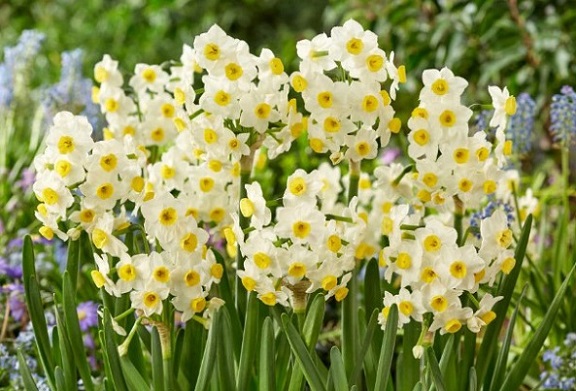 Plant lectins show promise in fighting flu viruses by blocking infection and boosting immunity.
(image of the Chinese daffodil alias Narcissus tazetta plant)
What Are Lectins and How Were They Studied?
Lectins are natural proteins found in plants that grab onto sugars on the surface of cells or viruses. Think of them as sticky hands that latch onto bad guys. The team from The Chinese University of Hong Kong, including experts like Vincent E.C. Ooi from the Department of Biology, Paul K.S. Chan from the Department of Microbiology, and others from the Department of Chemistry, dove deep into this.
They purified these lectins—named PYM2 from pandan, NTL from daffodil, and POL from Solomon's seal—and tested them in lab dishes against nasty flu strains.
Using simple cell cultures from dog kidneys (a common way to grow viruses safely), the scientists infected the cells with H1N1 (swine flu), H3N2 (seasonal flu), and H5N1 (bird flu). Then they added the lectins and watched what happened. They measured how much lectin it took to cut virus growth by half, called the IC50 value. It's like figuring out the right dose of medicine to knock out half the enemy.
Key Discoveries on Antiviral Power
The results were impressive. For the pandan lectin PYM2, it hammered H3N2 with an IC50 of just 0.13 micrograms per milliliter—super low, meaning it's very potent. Against H1N1, it needed 3.75 micrograms, and for the tougher H5N1, about 26 micrograms. Even influenza B virus got hit hard at 0.03 micrograms. The daffodil's NTL was a star performer too, blocking H1N1 at 0.20 micrograms, H3N2 at similar low levels, and H5N1 around 1.33 micrograms. It worked by messing with the virus early on, before it could copy itself inside cells. Then, there's POL from Solomon's seal, which shone against H5N1 with an IC50 of 6.23 micrograms when purified from leaves. The researchers even tried growing POL in genetically modified rice plants, and the version from rice seeds still fought H1N1 at 125 micrograms and H5N1 at 74 micrograms—not as strong as the natural one, but promising for mass production, maybe even as chicken feed to protect poultry from bird flu.
But it doesn't stop at killing viruses directly. These lectins also rev up the body's defenses. In mouse tests, injecting 5 milligrams per kilogram of PYM2 or POL boosted immune signals like IL-1β, IL-12, IFN-γ, and TNF-&
amp;alpha; in blood and white blood cells. These are like alarm bells that rally the immune system to fight harder. It's a double whammy: stop the virus and help the body clean house.
Why This Matters for Everyday Folks
Flu viruses mutate fast, making vaccines and drugs a constant chase. These plant lectins offer a fresh approach because they target sugars on the virus coat, which don't change as easily. Plus, they're from common plants—pandan is used in Southeast Asian cooking, daffodils grow in gardens, and Solomon's seal is a traditional herb.
In this
Medical News report, it's clear that nature might hold affordable, low-side-effect options for flu prevention, especially in places where fancy meds are hard to get.
Challenges and Next Steps
Of course, lab tests are one thing; real-world use is another. The lectins showed low toxicity, with a high "selective index" meaning they hurt viruses more than healthy cells. But more animal studies and human trials are needed to check safety and how well they work in people. The team also cloned the genes for PYM2 and POL into bacteria like E. coli for easier making, hinting at future sprays or pills.
In conclusion, this research opens doors to plant-based antivirals that could tackle multiple flu strains at once. By interfering with virus entry, replication, and boosting immunity, lectins like PYM2, NTL, and POL provide a multifaceted defense against H1N1, H3N2, and H5N1. If developed further, they might reduce flu outbreaks, save lives, and ease the burden on healthcare systems worldwide—especially vital as we face ongoing threats from evolving viruses.
References:
https://link.springer.com/article/10.1007/s12038-010-0012-8
https://www.sciencedirect.com/science/article/abs/pii/S135727250400024X
https://www.hkmj.org/system/files/hkm1404sp4p37_0.pdf
https://link.springer.com/article/10.1186/s43094-021-00269-5
https://onlinelibrary.wiley.com/doi/10.1155/2018/3750646
https://journals.plos.org/plosone/article?id=10.1371/journal.pone.0195525
https://www.sciencedirect.com/science/article/pii/S0166354216307999
For the latest news, keep on logging to Thailand
Medical News.
Read Also:
https://www.thailandmedical.news/articles/herbs-and-phytochemicals
https://www.thailandmedical.news/articles/influenza-or-flu




 Share
Share
 Tweet
Tweet
 Share
Share

































