Nikhil Prasad Fact checked by:Thailand Medical News Team Apr 16, 2026 5 months, 2 weeks, 4 days, 5 hours, 29 minutes ago
Medical News: Specific viral variants linked to cancers, multiple sclerosis, and immune disorders
The Epstein–Barr virus (EBV) infects most people worldwide and is usually harmless. But new research shows that not all EBV infections are the same. Scientists are now uncovering how specific genetic variations in the virus can influence whether it remains silent or contributes to serious diseases such as cancer and autoimmune disorders.
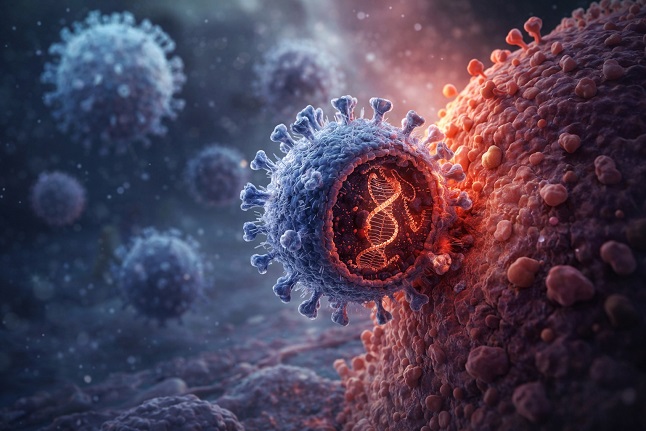 Specific EBV genetic variants are now linked to cancer, autoimmune disease, and infection severity
Researchers from the State Key Laboratory of Oncology in South China, Guangdong Key Laboratory of Nasopharyngeal Carcinoma Diagnosis and Therapy, and Sun Yat-sen University Cancer Center in Guangzhou, China, conducted a comprehensive review of EBV genome variations and their links to disease. Their findings reveal that certain viral mutations are strongly associated with particular illnesses.
EBV Variants and Cancer Risk
One of the clearest examples comes from nasopharyngeal carcinoma, a cancer common in parts of Asia. Scientists identified specific mutations in the EBV BALF2 gene that significantly increase cancer risk. Individuals carrying high-risk variants of this gene may have more than ten times the likelihood of developing this cancer compared to those with low-risk variants.
Other viral genes are also involved. Variations in LMP1, especially a well-known 30-base pair deletion, have been linked to increased tumor growth and stronger cancer-causing potential. Similarly, mutations in EBNA genes, particularly EBNA2 and EBNA3, influence how aggressively the virus transforms infected cells, contributing to lymphomas such as Burkitt lymphoma and Hodgkin lymphoma.
In some cases, entire viral lineages play a role. Type 1 EBV is more efficient at transforming immune cells and is more frequently associated with cancers, while type 2 EBV behaves differently and is more common in certain regions.
EBV and Autoimmune Diseases
Beyond cancer, EBV variants are increasingly linked to autoimmune diseases. In multiple sclerosis, researchers have identified specific changes in the EBNA2 gene that are associated with higher disease risk. Other studies found that EBV proteins can mimic human proteins, confusing the immune system and triggering attacks on the body’s own tissues.
A particular variant of the LMP1 protein has been shown to interfere with immune regulation by reducing the ability of natural killer cells to control immune responses. This may allow harmful immune cells to persist, contributing to diseases like multiple sclerosis.
In systemic lupus erythematosus, elevated EBV activity and viral genetic changes are associated with increased immune activation and disease flare-ups. These findings suggest that EBV does not just trigger infection but may actively shape immune dysfunction.
Infectious Mononucleosis and Disease Severity
Even in more common conditions like infectious mononucleosis, EBV genetic variation matters. Variants in the BZLF1 gene, which controls viral reactivation, influence how strongly
the virus replicates during infection. Certain versions of this gene are linked to more severe symptoms and prolonged illness.
Changes in EBNA1 and LMP1 have also been associated with higher liver enzyme levels in patients, indicating more intense disease activity.
How These Variants Work
The study shows that EBV mutations affect disease through several key mechanisms. Some variants enhance the virus’s ability to evade the immune system, while others increase its capacity to switch from a dormant state to an active one. This reactivation can drive inflammation, tissue damage, and even cancer development.
Geographic differences also play a role. Certain high-risk EBV strains are more common in specific populations, helping explain why diseases like nasopharyngeal cancer are more prevalent in certain regions.
This
Medical News report highlights that EBV is constantly evolving under pressure from the human immune system, leading to variants that are better adapted to survive - and in some cases, cause disease.
Implications for Diagnosis and Treatment
These findings could transform how EBV-related diseases are detected and treated. Identifying high-risk viral variants may allow earlier diagnosis of cancers and better prediction of disease outcomes.
New treatments are also being explored, including vaccines and therapies targeting specific viral genes such as EBNA1. Scientists are increasingly looking toward personalized medicine, where treatment is tailored based on the exact EBV strain a patient carries.
Conclusion
The growing evidence makes it clear that EBV genetic diversity is a major factor in human disease. Specific viral variants are now directly linked to cancers, autoimmune disorders, and even the severity of common infections.
Understanding these differences provides a more complete picture of how EBV contributes to illness and opens new pathways for targeted prevention and treatment. However, many questions remain about how these viral changes interact with human genetics and environmental factors, highlighting the urgent need for further research in this rapidly evolving field.
The study findings were published in the peer reviewed Journal of Medical Virology
https://onlinelibrary.wiley.com/doi/10.1002/jmv.70883
For the latest research on the Epstein–Barr virus (EBV), keep on logging to Thailand
Medical News.
Read Also:
https://www.thailandmedical.news/news/new-epigenetic-mechanisms-governing-epstein-barr-virus-reactivation-identified
https://www.thailandmedical.news/news/epicatechin-identified-as-potential-inhibitor-of-epstein-barr-virus-s-cancer-causing-protein-called-lmp1
https://www.thailandmedical.news/news/post-covid-era-reveals-hidden-dangers-of-ebv-virus
https://www.thailandmedical.news/news/covid-19-including-mild-infections,-raises-the-risk-of-infectious-mononucleosis




 Share
Share
 Tweet
Tweet
 Share
Share

































