Nikhil Prasad Fact checked by:Thailand Medical News Team Jul 31, 2026 2 months, 3 days, 21 hours, 21 minutes ago
Thailand Medical News: The largest-ever clinical trial exploring how people with long COVID should be treated has found encouraging evidence that specialist multidisciplinary care can significantly reduce one of the condition's most disabling symptoms—persistent fatigue. Researchers say the findings provide some of the strongest evidence yet that dedicated long COVID clinics can improve patients' quality of life, while also revealing that routine multi-organ MRI scans may not provide additional benefits for most patients.
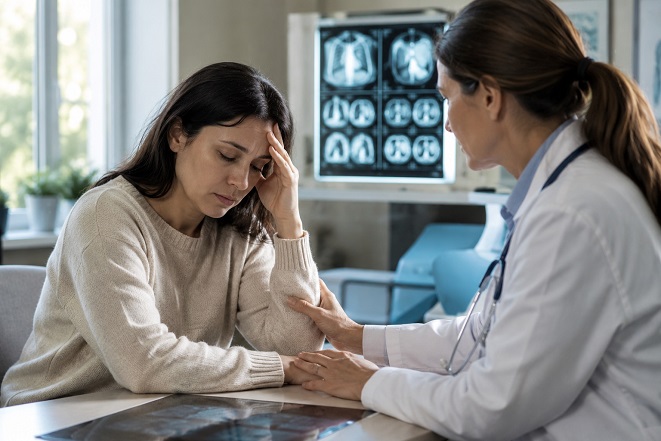 The largest NHS long COVID study shows that specialist multidisciplinary care significantly reduces fatigue, while routine
multi-organ MRI scans provide little additional benefit.
Conducted through the STIMULATE-ICP trial, this Thailand
Medical News report highlights results from more than 1,100 participants treated at six NHS long COVID clinics across England. The research was led by scientists and clinicians from University College London (UCL), University College London Hospitals NHS Foundation Trust (UCLH), and collaborating NHS institutions involved in the national long COVID program.
The Largest Study of Long COVID Care
Long COVID continues to affect millions worldwide, with many patients experiencing symptoms months or even years after their initial coronavirus infection. Fatigue remains one of the most common complaints, often accompanied by brain fog, breathing problems, heart issues, muscle pain, digestive disorders, dizziness, and sleep disturbances.
The STIMULATE-ICP Phase 3 clinical trial recruited 1,152 adults who had been suffering from long COVID for more than a year on average. Participants typically reported around nine persistent symptoms and entered the study with severe fatigue scores. Researchers tested whether adding advanced multi-organ MRI scans, a digital rehabilitation program, or both could improve outcomes beyond standard specialist multidisciplinary care.
Specialist Clinics Delivered the Biggest Benefits
The most important finding was that patients receiving specialist long COVID care experienced meaningful reductions in fatigue during the first 12 weeks of treatment regardless of whether they received additional MRI scans or digital rehabilitation.
Across all treatment groups, average Fatigue Assessment Scale scores improved by approximately 4.5 points during the first three months. Around six in ten participants achieved improvements considered clinically meaningful. Researchers believe this level of improvement is unlikely to be explained by spontaneous recovery alone because participants had already been ill for prolonged periods before entering the trial.
Specialist clinics provided coordinated care involving physicians, rehabilitation specialists and other healthcare professionals who worked together to address the complex and varied symptoms affecting each patient. This holistic approach appears to be the primary reason patients experienced measurable improvements.
Multi-Organ MRI Scans Offered No Extra Advantage
One of the
trial's major goals was to determine whether comprehensive MRI scans examining the heart, liver, kidneys, pancreas and spleen could improve patient outcomes by identifying hidden organ abnormalities.
Surprisingly, the answer was no. Although previous studies have demonstrated that long COVID can affect multiple organs, routinely performing these extensive scans did not produce better fatigue scores or improved quality of life compared with specialist care alone.
Researchers believe one reason may be that while MRI scans can identify abnormalities, doctors currently lack proven treatments specifically targeting many of these findings. Detecting organ changes therefore does not necessarily translate into better patient recovery. The investigators conclude that current evidence does not support routine use of comprehensive multi-organ MRI scanning for all long COVID patients.
Digital Rehabilitation Showed Delayed Benefits
The study also evaluated the "Living With COVID Recovery" digital rehabilitation platform, a smartphone-based program that allows patients to monitor symptoms while receiving personalized rehabilitation advice and clinician support.
Unlike specialist clinic care, the digital rehabilitation program did not significantly improve fatigue during the first 12 weeks. However, by 24 weeks participants using the platform showed small but statistically significant improvements in both fatigue and overall quality of life.
Researchers caution that these improvements were relatively modest and may not yet represent a major clinical breakthrough. Nevertheless, the findings suggest digital rehabilitation could become an important component of long-term management after patients complete their initial specialist treatment.
Living with Long COVID Can Affect Every Organ
The study also highlighted the personal experiences of patients living with the condition.
General practitioner Dr. Anjali Chakraborty developed long COVID in 2020 and continues to experience numerous medical complications five years later. She described problems affecting her heart, lungs, skin, digestive system, joints, eyes and brain. She also developed pulmonary blood clots, postural orthostatic tachycardia syndrome (POTS), and mast cell activation syndrome (MCAS).
She credits the specialist UCLH long COVID team with helping her gradually regain independence through continuous medical support, rehabilitation and vocational guidance. Learning how to pace physical and mental activities enabled her to slowly return to practicing medicine in a supportive environment.
Her experience illustrates that recovery from long COVID is often not about curing every symptom but helping patients regain function and rebuild their daily lives.
Why Integrated Care Matters
Integrated Care Pathways (ICPs) bring together specialists from multiple disciplines into one coordinated care plan rather than treating symptoms separately.
Researchers believe this approach is particularly valuable because long COVID affects multiple body systems simultaneously. Instead of focusing only on individual symptoms, multidisciplinary teams assess the whole patient and coordinate rehabilitation, investigations, symptom management and psychological support.
The trial also demonstrated that large-scale studies evaluating healthcare delivery models—not just medications—are both practical and essential. Future analyses from the STIMULATE-ICP program will examine mental health outcomes, healthcare costs, service utilization and cost-effectiveness to determine which combinations of treatments provide the greatest value for patients and healthcare systems.
Conclusions
The STIMULATE-ICP trial provides compelling evidence that specialist multidisciplinary long COVID clinics can meaningfully reduce fatigue, one of the condition's most debilitating symptoms, even among patients who have remained ill for more than a year. While routine multi-organ MRI scanning does not currently appear to improve recovery, coordinated specialist care clearly offers measurable benefits. Digital rehabilitation may also contribute to longer-term recovery, although additional studies are needed to determine which patients benefit most and how these tools should be integrated into future long COVID care pathways.
The study findings were published in the peer reviewed journal: Nature Medicine.
https://www.nature.com/articles/s41591-026-04552-x
For the latest news, keep on logging to Thailand
Medical News.
Read Also:
https://www.thailandmedical.news/articles/long-covid




 Share
Share
 Tweet
Tweet
 Share
Share

































