Nikhil Prasad Fact checked by:Thailand Medical News Team Jul 24, 2026 2 months, 1 week, 4 days, 17 minutes ago
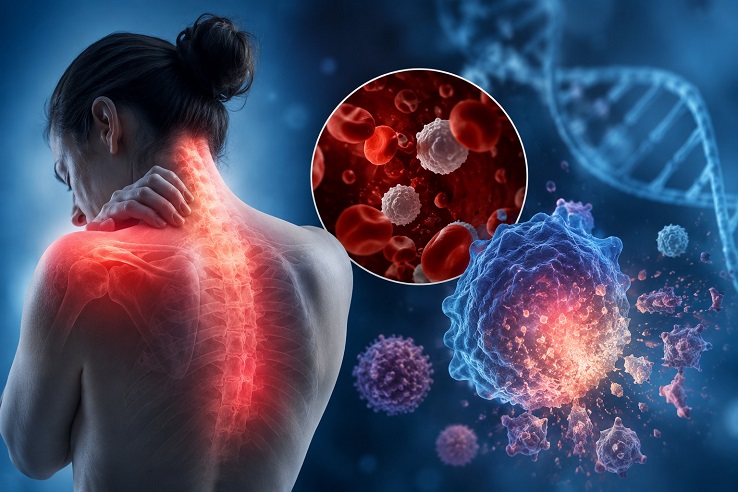
Medical News: Fibromyalgia may be far more than just a chronic pain condition, according to new research that has uncovered significant changes in blood markers linked to inflammation, immune activity, cell damage, and oxidative stress. The findings suggest that the illness involves complex biological processes that could eventually help doctors better understand and identify the condition.
R
esearchers identify multiple altered blood biomarkers that may help explain the complex biology behind fibromyalgia
The study was conducted by researchers from the Department of Physical Therapy and Rehabilitation at Acibadem University and Ataşehir Acibadem Hospital in Istanbul, the Department of Food Processing Technologies Services at Sivas Cumhuriyet University, and the Department of Biochemistry, Faculty of Medicine, Sivas Cumhuriyet University, Türkiye.
A Deeper Look at Fibromyalgia
Fibromyalgia affects millions of people worldwide and is characterized by widespread pain, persistent fatigue, poor sleep, headaches, memory problems, and difficulty concentrating. Although it has long been associated with abnormal pain processing in the brain, scientists increasingly believe that inflammation, immune dysfunction, and oxidative stress also contribute to the disease.
To investigate these biological changes, the researchers compared blood samples from 93 people with fibromyalgia and 93 healthy volunteers. They measured several proteins involved in purinergic signaling, inflammasome activity, inflammatory cell death, and the body's antioxidant defenses.
Key Biomarkers Showed Major Changes
The researchers discovered that people with fibromyalgia had significantly higher levels of CASP1, GSDME, PANX1, P2RX7, and total oxidant status (TOS). At the same time, they found lower levels of NLRP3, GSDMD, IL-18, and total antioxidant status (TAS).
Interestingly, one well-known inflammatory molecule, IL-1β, did not differ significantly between patients and healthy individuals.
These findings suggest that several biological pathways become disrupted in fibromyalgia rather than a single inflammatory process driving the disease. Increased oxidative stress combined with weakened antioxidant defenses may create conditions that promote persistent pain and abnormal immune responses.
Why These Findings Matter
One of the most striking discoveries involved the proteins PANX1 and P2RX7, which help cells communicate during stress and injury. Their elevated levels indicate that damaged or stressed cells may continuously send danger signals, potentially keeping the nervous and immune systems in an overactive state.
The study also found substantially increased levels of CASP1, an important enzyme involved in inflammatory signaling. Meanwhile, the higher GSDME and lower GSDMD levels point toward unusual patterns of inflammatory cell death, suggesting that fibromyalgia may involve previously overlooked biological mechanisms.
This
gt;Medical News report highlights that oxidative stress also emerged as a major feature of the disease. Patients had much higher oxidant levels while their antioxidant protection was greatly reduced, reinforcing growing evidence that an imbalance between damaging molecules and the body's natural defenses may contribute to long-term symptoms.
Potential for Future Diagnosis
The researchers also evaluated whether these biomarkers could distinguish patients from healthy individuals. CASP1 and TAS showed the strongest ability to separate the two groups, followed by TOS and P2RX7. Although these markers are not ready for clinical diagnosis, they offer promising leads for future research aimed at developing blood-based tests and targeted treatments.
The study further confirmed that symptoms including concentration difficulties, morning fatigue, headaches, dry mouth, and leg numbness were strongly associated with fibromyalgia.
Conclusion
The research provides compelling evidence that fibromyalgia is associated with widespread biological disturbances involving immune signaling, oxidative stress, and proteins linked to inflammatory cell damage rather than simply altered pain perception. While additional studies are needed to confirm these findings in larger populations, the newly identified biomarker patterns could eventually improve diagnosis, reveal distinct disease subtypes, and guide the development of more precise therapies for patients suffering from this debilitating condition.
The study findings were published in the peer reviewed: International Journal of Molecular Sciences.
https://www.mdpi.com/1422-0067/27/15/6579
For the latest on Fibromyalgia, keep on logging to Thailand
Medical News.
Read Also:
https://www.thailandmedical.news/news/hidden-fibromyalgia-wave-emerging-after-mild-covid-19
https://www.thailandmedical.news/news/hidden-molecular-link-between-fibromyalgia-and-eating-disorders
https://www.thailandmedical.news/news/doctors-warn-that-many-with-fibromyalgia-will-develop-cognitive-dysfunction
https://www.thailandmedical.news/news/plant-based-nutrients-and-certain-supplements-show-promise-in-fibromyalgia-relief
https://www.thailandmedical.news/news/study-finds-that-mild-covid-19-is-causing-the-sudden-new-onset-of-fibromyalgia-symptoms
https://www.thailandmedical.news/news/new-evidence-shows-that-fibromyalgia-could-be-caused-by-blood-dysfunction-and-poor-oxygen-supply-to-tissues
https://www.thailandmedical.news/news/an-updated-pharmaceutical-guide-to-treating-fibromyalgia




 Share
Share
 Tweet
Tweet
 Share
Share

































