Scientists Uncover Silent Blood Vessel Injury and Hidden Eye Damage After COVID-19
Nikhil Prasad Fact checked by:Thailand Medical News Team Jan 28, 2026 8 months, 1 week, 8 hours, 7 minutes ago
Medical News: New scientific evidence is helping explain why millions of people with long COVID continue to experience debilitating symptoms long after their initial infection. Researchers from the Technical University of Munich TUM University Hospital Germany, LMU University Hospital Munich Germany, Charité Universitätsmedizin Berlin Germany, Max Delbrück Center for Molecular Medicine Germany, Niederrhein University of Applied Sciences Germany, University Hospital Düsseldorf Heinrich Heine University Düsseldorf Germany, University of Basel Switzerland, and the German Centre for Infection Research Munich have identified persistent damage to tiny blood vessels that can be detected through the eyes. This
Medical News report is based on findings from the large All Eyes on PCS study.
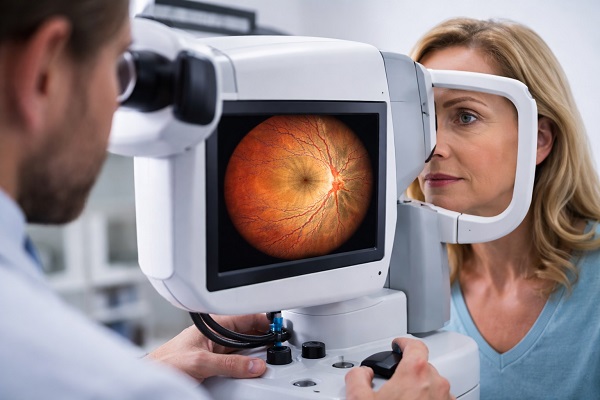 Eye scans reveal lasting blood vessel damage linked to long COVID
Why the eyes reveal hidden damage
Eye scans reveal lasting blood vessel damage linked to long COVID
Why the eyes reveal hidden damage
The retina, located at the back of the eye, contains a dense network of microscopic blood vessels that closely resemble those found in the brain and other vital organs. These vessels respond rapidly to changes in blood flow and oxygen demand. Because of this unique similarity, examining the retina offers doctors a safe, non-invasive way to assess overall microvascular and neurological health. Subtle changes in retinal vessels often reflect wider circulation problems occurring throughout the body.
How the study was conducted
The research team examined more than 100 individuals diagnosed with post COVID-19 syndrome and compared them with people who had never been infected and others who had fully recovered from COVID-19. Using a painless imaging technique known as retinal vessel analysis, scientists measured how well small blood vessels widened in response to flickering light. They also assessed vessel width and the balance between retinal arteries and veins, which are key indicators of healthy blood flow regulation.
Clear evidence of lasting vascular injury
The findings revealed that long COVID patients had significantly narrower retinal arteries and weaker vessel responses compared to healthy individuals. These abnormalities persisted even after adjusting for age, blood pressure, and cholesterol levels. This shows that COVID-19 can cause long lasting blood vessel dysfunction well beyond the acute infection. Patients who also met diagnostic criteria for myalgic encephalomyelitis or chronic fatigue syndrome displayed the most severe vascular abnormalities.
Symptoms closely match eye findings
Importantly, the study linked retinal vessel damage to symptom severity. Individuals suffering from fatigue, brain fog, headaches, and concentration difficulties consistently showed worse eye vessel function. Blood tests further supported these findings, revealing elevated inflammatory and endothelial markers such as IL-6, ICAM-1, and VCAM-1. These results indicate that ongoing inflammation continues to irritate blood vessels and may directly drive long COVID-19 symptoms.
&
nbsp;
Why this discovery matters
Many long COVID patients struggle to obtain clear diagnoses because routine medical tests often appear normal. Retinal vessel analysis is quick, non-invasive, and already widely used in eye clinics, making it a promising tool for objectively identifying long COVID related vascular damage. This approach could help doctors monitor disease severity, track recovery, and identify patients at higher risk of developing more disabling conditions.
Conclusions
This study provides strong evidence that long COVID involves real, measurable injury to the body’s smallest blood vessels rather than being a purely subjective condition. Persistent inflammation appears to disrupt normal vascular function, particularly in patients with neurological and fatigue related symptoms.
Recognizing and addressing this vascular damage may be essential for improving diagnosis, guiding targeted treatments, and developing long term care strategies for the growing global population affected by long COVID.
The study findings were published on a preprint server and are currently being peer reviewed.
https://www.medrxiv.org/content/10.64898/2026.01.22.26344661v1
For the latest COVID-19 news, keep on logging to Thailand
Medical News.
Read Also:
https://www.thailandmedical.news/articles/coronavirus
https://www.thailandmedical.news/articles/long-covid




 Share
Share
 Tweet
Tweet
 Share
Share

































