Nikhil Prasad Fact checked by:Thailand Medical News Team May 05, 2026 4 months, 4 weeks, 2 days, 2 hours, 47 minutes ago
Medical News: A newly proposed glucose-derived compound is drawing attention in the cancer research world for its potential to interfere with how tumors grow, survive, and evade the immune system. Known as glucosodiene, this experimental molecule is being studied as a possible way to disrupt cancer at multiple levels rather than attacking it through a single pathway.
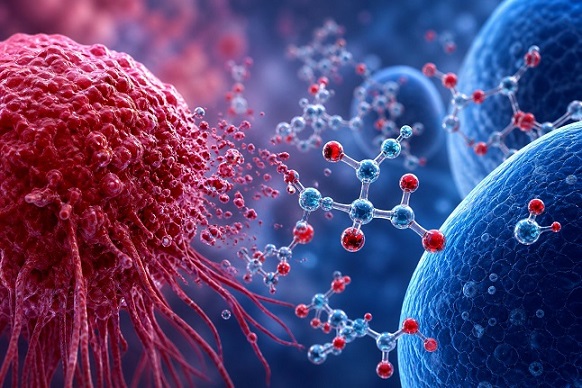 A novel sugar-like compound shows early promise in disrupting cancer growth pathways
A Different Way to Target Cancer
A novel sugar-like compound shows early promise in disrupting cancer growth pathways
A Different Way to Target Cancer
Cancer cells are known to consume large amounts of sugar, especially glucose, to fuel their rapid growth. Unlike normal cells, tumors rely heavily on a process called glycolysis, which helps them produce energy quickly and survive even in harsh conditions. However, this process also creates an acidic environment around tumors, helping them spread and avoid immune attacks.
Researchers believe glucosodiene could interfere with this system. Instead of directly killing cancer cells like traditional chemotherapy, it appears to “confuse” the tumor’s metabolism. Because glucosodiene closely resembles glucose but is slightly different in structure, cancer cells may take it up but fail to process it properly.
This subtle disruption could slow down the energy production that tumors depend on, reduce harmful acidity, and weaken the protective outer layer of cancer cells known as the glycocalyx.
How the Molecule Works
Glucosodiene is formed from glucose through a non-enzymatic process, meaning it does not rely on the body’s usual biological pathways to be created. Its structure allows it to behave like sugar while also interfering with normal cellular processes.
Scientists suggest that glucosodiene works across three key areas:
-
Energy disruption: It may reduce the amount of usable energy cancer cells can generate.
-
Acidity control: By lowering acid production, it could make the tumor environment less favorable for growth.
-
Cell surface interference: It may weaken the glycocalyx, making cancer cells more visible to the immune system.
Together, these effects could make tumors less aggressive and more vulnerable.
Promising Lab and Animal Results
Early laboratory tests showed that glucosodiene did not harm normal human cells, even at relatively high doses. This suggests it may have a favorable safety profile in its early stages.
Animal studies provided even more encouraging results. In mice with solid tumors, a specialized version of glucosodiene delivered using nanotechnology significantly reduced tumor size and weight. The treatment also improved liver health markers and reduced oxidative stress, which is often elevated in cancer.
Additionally, important biological signals linked to tumor growth were reduced, while protective systems within the body were restored. These findings suggest that the compound may not only slow tumor growth bu
t also help the body recover from cancer-related damage.
Early Human Observations
Although still very limited, early human case observations have raised interest. In a few reported cases involving breast cancer patients, individuals experienced noticeable improvements within days of starting treatment.
Patients reported reduced pain and improved mobility, while imaging scans taken within weeks showed decreased tumor activity. Some biomarkers associated with cancer also dropped significantly, indicating a possible positive response.
This
Medical News report highlights that while these findings are promising, they are based on very small numbers and require much larger clinical trials to confirm effectiveness and safety.
The Role of Nanotechnology
One of the most advanced approaches involves combining glucosodiene with tiny nanoparticles. This allows the compound to be delivered more efficiently to cancer cells. The nanostructure helps improve stability, absorption, and interaction with tumors, potentially enhancing its overall effect.
Researchers believe this combination could be key to turning glucosodiene into a practical therapy in the future.
Conclusion
Glucosodiene represents an intriguing new direction in cancer treatment because it does not follow the traditional approach of directly killing cancer cells. Instead, it targets the underlying systems that tumors rely on, including energy production, acidity balance, and protective cell structures. Early laboratory, animal, and limited human observations suggest that it may slow tumor growth while sparing normal cells, which is a major goal in oncology. However, it is still in the early research phase, and much more rigorous clinical testing is needed before it can be considered safe or effective for widespread use. If future studies confirm these findings, glucosodiene could become part of a new generation of metabolic cancer therapies.
The study findings were published on a preprint server and are currently being peer reviewed.
https://www.preprints.org/manuscript/202604.1565
For the latest cancer research, keep on logging to Thailand
Medical News.
Read Also:
https://www.thailandmedical.news/articles/cancer




 Share
Share
 Tweet
Tweet
 Share
Share

































