Scientists Warn of Lingering Lung Injury Long After COVID-19 Recovery Caused by Enzyme Imbalance
Nikhil Prasad Fact checked by:Thailand Medical News Team Dec 17, 2025 9 months, 2 weeks, 4 days, 1 hour, 37 minutes ago
Medical News: Persistent Enzyme Imbalance Linked to Post COVID Lung Fibrosis
A new scientific study has revealed that even months after recovering from COVID-19, many people may still be experiencing silent but dangerous changes inside their lungs. Researchers found that certain enzymes linked to tissue damage and scarring remain abnormally high up to a year after infection, especially in people who develop post-COVID lung fibrosis, a condition where lung tissue becomes stiff and scarred.
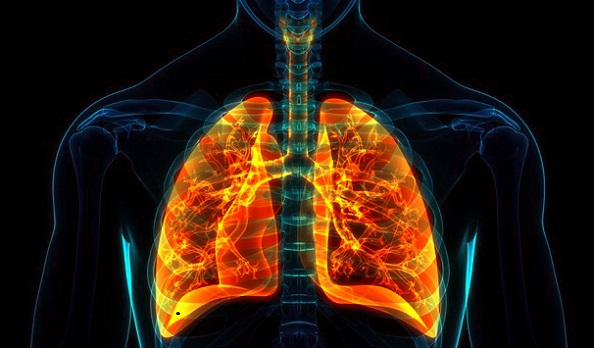 Ongoing enzyme activity and inflammation may explain why some COVID survivors develop permanent lung scarring
The research was conducted by scientists from the Centre for Biomedical Research at the Karelian Research Centre of the Russian Academy of Sciences, Petrozavodsk State University, and the Respiratory Centre of the Republic Hospital named after V.A. Baranov in Petrozavodsk, Russia. The team focused on understanding why some people heal after COVID-19 while others develop permanent lung damage.
Enzymes That Repair Tissue Can Also Cause Harm
The study examined two powerful enzymes known as MMP-2 and MMP-9. These enzymes normally help repair tissues by breaking down damaged structures so new tissue can form. However, when they remain active for too long, they can begin to destroy healthy tissue instead.
Researchers analyzed blood samples from 86 people who had COVID-19, checking enzyme levels at six months and again at twelve months after infection. Some participants had clear signs of lung fibrosis on scans, while others did not. The results showed that both MMP-2 and MMP-9 remained significantly elevated in all post-COVID patients, but levels were much higher in those with lung fibrosis. Importantly, these enzyme patterns closely resembled those seen in patients with idiopathic pulmonary fibrosis, a severe lung disease unrelated to infection.
Inflammation Persists in Patients with Lung Scarring
The study also measured inflammation in the body by tracking substances such as TNF-alpha and IL-6. Patients who recovered without lung damage showed a steady decline in these inflammatory markers, suggesting that their immune systems were calming down. In contrast, patients with post-COVID lung fibrosis continued to show high levels of inflammation even a year later.
This
Medical News report highlights that ongoing inflammation may prevent proper healing and continuously stimulate enzymes that damage lung tissue, turning temporary injury into permanent scarring.
Blood Vessel Injury Emerges Months Later
One of the most concerning findings involved damage to blood vessels. At twelve months after COVID-19, patients with lung fibrosis showed extremely high levels of endothelin-1 and sICAM-1, markers linked to blood vessel narrowing and endothelial dysfunction. Endothelin-1 is known to reduce blood flow and promote fibrosis, making lung damage worse over time.
The researchers also found strong correlations between enzyme lev
els, inflammation, and blood vessel injury, suggesting these processes work together in a vicious cycle that drives disease progression.
Why These Findings Are So Important
The conclusions of the study emphasize that post-COVID lung disease is not simply lingering symptoms but involves ongoing biological injury. Persistent inflammation, enzyme imbalance, and vascular damage appear to reinforce one another, increasing the risk of long-term lung fibrosis. The researchers suggest that targeting these pathways may help prevent or slow disease progression, offering hope for future treatments.
The study findings were published on a preprint server and are currently being peer reviewed.
https://www.preprints.org/manuscript/202512.0935
For the latest COVID-19 News, keep on logging to Thailand
Medical News.
Read Also:
https://www.thailandmedical.news/articles/coronavirus
https://www.thailandmedical.news/articles/long-covid




 Share
Share
 Tweet
Tweet
 Share
Share

































