F-FDG PET-CT Scan Study Finds That Long COVID Brain Changes Persist for Years After Initial Infection
Nikhil Prasad Fact checked by:Thailand Medical News Team Jun 13, 2026 3 months, 3 weeks, 4 hours, 32 minutes ago
Medical News: A new study is providing some of the strongest evidence yet that Long COVID can cause lasting changes in the brain that remain detectable years after the initial SARS-CoV-2 infection. Researchers using advanced brain imaging technology have discovered persistent abnormalities in brain metabolism among Long COVID patients, particularly those struggling with severe fatigue and post-exertional malaise, a condition in which even minor physical or mental activity can trigger a worsening of symptoms.
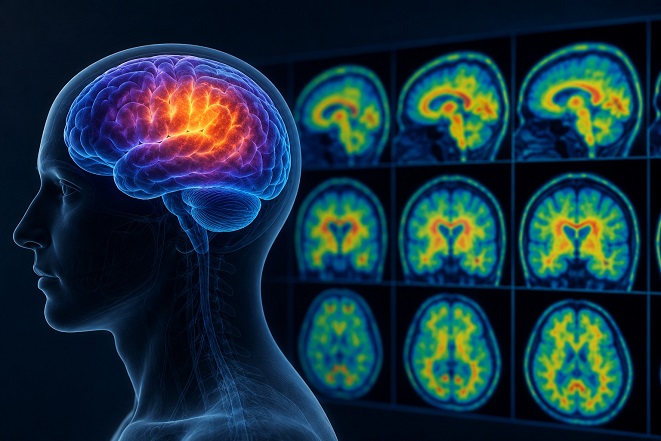 Advanced PET brain scans reveal persistent reductions in brain metabolism among Long COVID patients, with abnormalities
remaining detectable years after infection
The findings add to growing concerns that Long COVID is not merely a collection of lingering symptoms but may involve measurable biological changes in the brain that continue long after the virus has left the body.
The study was conducted by researchers from the Department of Internal Medicine, Division of General Internal Medicine at Mayo Clinic in Rochester, Minnesota; the Department of Quantitative Health Sciences at Mayo Clinic; the Division of Endocrinology, Diabetes, Metabolism and Nutrition at Mayo Clinic; and the Division of Gastroenterology and Hepatology at Mayo Clinic.
Looking for Biological Evidence of Long COVID
Long COVID, also known as Post-Acute Sequelae of SARS-CoV-2 Infection (PASC), affects millions worldwide. Symptoms can persist for months or even years after the initial infection and commonly include fatigue, shortness of breath, brain fog, memory problems, headaches, muscle pain, heart palpitations, sleep disturbances, and gastrointestinal issues.
One of the biggest challenges facing physicians has been the lack of objective biomarkers that can confirm the condition. Many patients report debilitating symptoms despite normal results on routine laboratory tests and conventional imaging scans.
To investigate whether advanced imaging could reveal hidden abnormalities, researchers recruited patients from a specialized Long COVID clinic and performed 18F-FDG PET-CT brain scans. This imaging technology measures how efficiently different parts of the brain use glucose, which serves as the primary fuel source for brain cells.
Areas using less glucose than expected are considered hypometabolic, indicating reduced activity and impaired function.
Brain Abnormalities Remain Long After Infection
The study analyzed 40 adults with confirmed Long COVID. Most participants were women, and the median age was 53 years. Researchers examined brain scans performed between 17 and 149 weeks after the initial COVID-19 infection.
Remarkably, signs of reduced brain metabolism were still present even in individuals scanned nearly three years after becoming infected.
Among the participants, 29 individuals experienced fatigue accompanied by post-exertional malaise (PEM), while 11 did not. The researchers found that those suffering from fatigue and PEM displayed significantly greater reductions in brain metabolism.
The
most prominent abnormalities were found in the left sensorimotor cortex, a region involved in movement and sensory processing. Significant hypometabolism was also detected in both sides of the primary visual cortex, an area responsible for processing visual information. Additional abnormalities were identified in parts of the parietal lobe, which plays an important role in attention, perception, and the integration of sensory information.
These findings suggest that the symptoms experienced by Long COVID patients may be linked to genuine alterations in brain function rather than psychological factors or deconditioning alone.
Possible Explanation for Brain Fog and Fatigue
Researchers noted that the brain regions showing reduced activity overlap with areas involved in cognition, concentration, attention, and sensory processing. This may help explain why many Long COVID sufferers experience persistent brain fog, difficulty concentrating, memory lapses, and overwhelming fatigue.
Interestingly, previous studies have reported similar brain abnormalities in people with myalgic encephalomyelitis/chronic fatigue syndrome (ME/CFS) and fibromyalgia. The similarities suggest that Long COVID may share common biological pathways with these chronic post-infectious illnesses.
This
Medical News report highlights that the study also extends previous research by showing that these abnormalities persist far longer than initially suspected.
Earlier studies had documented similar findings within six months of infection, but the new data demonstrates that reduced brain metabolism can remain detectable up to two years and beyond.
Why PET Scans Could Become an Important Diagnostic Tool
The findings raise the possibility that 18F-FDG PET-CT imaging could eventually serve as a valuable diagnostic biomarker for Long COVID. Such a tool would provide objective evidence of disease and could help validate symptoms experienced by patients who often face skepticism due to the lack of visible abnormalities on standard medical tests.
Researchers believe PET imaging could also be useful for monitoring treatment responses in future clinical trials. By tracking changes in brain metabolism over time, doctors may be able to determine whether specific therapies are helping restore normal brain function.
Future studies are expected to explore additional imaging techniques capable of detecting neuroinflammation and other biological processes that may contribute to Long COVID symptoms.
Conclusions
The new study provides compelling evidence that Long COVID can leave a lasting biological footprint in the brain for years after the initial infection. The discovery of persistent cerebral hypometabolism in patients suffering from fatigue and post-exertional malaise strengthens the growing body of evidence that Long COVID is associated with measurable neurological dysfunction. These findings may help explain many of the debilitating symptoms reported by patients and could pave the way for the development of objective diagnostic tests and targeted therapies. Although larger studies are needed to confirm the results and determine the exact mechanisms responsible for the observed abnormalities, the research represents an important step toward understanding one of the most challenging and misunderstood consequences of the COVID-19 pandemic.
The study findings were published in the peer reviewed Journal of Primary Care & Community Health.
https://journals.sagepub.com/doi/full/10.1177/21501319261458748
For the latest on Long COVID, keep on logging to Thailand
Medical News.
Read Also:
https://www.thailandmedical.news/articles/coronavirus
https://www.thailandmedical.news/articles/long-covid




 Share
Share
 Tweet
Tweet
 Share
Share

































