Nikhil Prasad Fact checked by:Thailand Medical New Team Oct 16, 2026 36 minutes ago
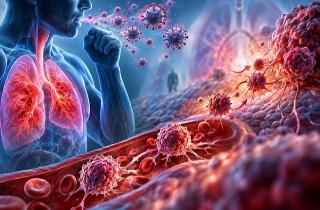
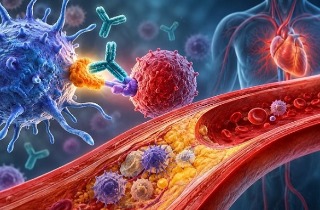
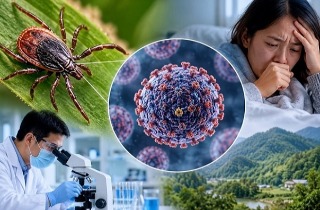
Scientists have uncovered how SARS-CoV-2 manipulates human cells to intensify inflammatory responses, revealing a previously unrecognized mechanism involving the coronavirus nucleocapsid protein and a human protein called eEF1A1.
 Researchers discover how a SARS-CoV-2 protein hijacks human gene activity and identify a potential
treatment target shared across coronavirus variants.
The discovery could open new avenues for developing COVID-19 treatments effective against multiple viral variants, including Delta and Omicron.
The research involved institutions including National Taiwan University, National Taiwan University Hospital, the Development Center for Biotechnology in Taiwan, the University of Strasbourg and the Institute of Genetics and Molecular and Cellular Biology in France, and PharmaMar S.A. in Spain.
Coronavirus Variants Disrupt Thousands of Human Genes
Researchers examined human lung epithelial cells infected with several SARS-CoV-2 variants, including Alpha, Gamma, Delta, Epsilon, and Omicron.
Genetic analysis revealed that infection altered between 2,674 and 5,614 human genes, depending on the variant and experimental conditions.
Remarkably, 3,031 genes were disrupted across six viral strains in one experiment, suggesting that genetically different variants exploit common cellular pathways.
Scientists also identified 337 genes consistently activated across the tested strains. These genes were associated with inflammatory signaling, immune regulation, and cellular transcription.
Later Omicron subvariants, including BA.2 and XBB, produced stronger genetic responses than early Omicron, demonstrating that viral evolution continues to influence cellular behavior.
Viral Protein Hijacks Cellular Machinery
The investigation identified the coronavirus nucleocapsid, or N protein, as a major driver of these changes.
Although primarily responsible for packaging viral genetic material, the N protein also interacts with eEF1A1, a human protein normally involved in manufacturing proteins.
This interaction recruits transcription factors and RNA polymerase II to inflammatory genes, including IL6, IFNB, and OASL.
Consequently, infected cells increase production of immune signaling molecules associated with inflammation and antiviral defenses.
Experiments involving isolated N protein confirmed that it could independently reproduce part of the genetic disruption observed during infection.
Experimental Drug Reverses Genetic Disruption
Importantly, this
Thailand Medical News report highlights findings involving plitidepsin, an experimental COVID-19 treatment that targets eEF1A.
At 10 nanomolar, plitidepsin reduced infectious viral particles by more than 80% across tested variants.
Depending on the experimental conditions, treatment restored approximately 21% to 57% of disrupted genes
toward normal expression levels.
The drug also suppressed inflammatory gene activation and disrupted the molecular partnership between the viral N protein and eEF1A1.
Additional experiments identified amino acids 355–363 of the N protein as critical for this interaction, providing a potential target for future antiviral development.
Conclusions
These findings reveal a conserved mechanism through which SARS-CoV-2 manipulates human gene expression, potentially contributing to inflammation and viral replication. Targeting the N protein–eEF1A1 interaction could support broader antiviral strategies, although clinical effectiveness and safety require further investigation.
The study findings were published in the peer-reviewed journal: Life Science Alliance.
https://www.life-science-alliance.org/content/9/12/e202603751
Read Also:
https://www.thailandmedical.news/articles/coronavirus
https://www.thailandmedical.news/articles/long-covid




 Share
Share
 Tweet
Tweet
 Share
Share