Nikhil Prasad Fact checked by:Thailand Medical News Team Jun 20, 2026 3 months, 2 weeks, 46 minutes ago
Medical News: Multiple sclerosis (MS) is a life-altering neurological disease that affects nearly 2.9 million people worldwide, causing symptoms ranging from fatigue and vision problems to mobility issues and cognitive decline. While current treatments can slow disease activity, they often come with significant side effects and do little to repair nerve damage. Now, a new systematic review suggests that one natural compound derived from turmeric may offer a promising complementary approach for certain MS patients.
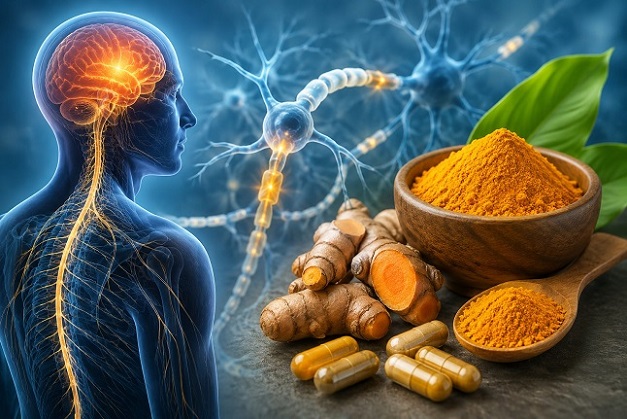 New research suggests nanocurcumin, an enhanced form of turmeric’s active ingredient, may help reduce disability
progression in people with relapsing-remitting multiple sclerosis.
Researchers from the University of Aberdeen School of Medicine, Medical Sciences and Nutrition, North Bristol NHS Trust’s Southmead Hospital, Aberdeen Royal Infirmary, The Institute of Applied Health Sciences at the University of Aberdeen, and The Rowett Institute at the University of Aberdeen conducted an extensive review of clinical trials examining the effects of polyphenols in people with multiple sclerosis.
Looking at Plant-Based Compounds for MS
Polyphenols are naturally occurring compounds found in fruits, vegetables, tea, cocoa, berries, and spices. They are widely known for their antioxidant and anti-inflammatory properties. Scientists have long suspected that these compounds could help combat the chronic inflammation and oxidative stress that drive nerve damage in multiple sclerosis.
The review analyzed 13 clinical trials involving 785 participants with different forms of MS. Researchers examined several polyphenol supplements, including green tea extracts rich in epigallocatechin gallate (EGCG), cranberry extract, silymarin from milk thistle, flavanol-rich cocoa products, and different forms of curcumin, the active ingredient in turmeric.
Nanocurcumin Emerges as the Standout
Among all the supplements evaluated, nanocurcumin produced the most encouraging results.
Three separate clinical trials found that patients with relapsing-remitting multiple sclerosis (RRMS) who took 80 mg of nanocurcumin daily for six months experienced significant improvements in disability scores. Researchers used the Expanded Disability Status Scale (EDSS), one of the most widely accepted measures of MS-related disability.
Patients receiving nanocurcumin consistently showed better outcomes than those receiving placebo treatment. The improvements were statistically significant across multiple studies, making nanocurcumin the only polyphenol supplement to repeatedly demonstrate meaningful clinical benefits.
Scientists believe the success of nanocurcumin may be linked to its enhanced bioavailability. Traditional curcumin is poorly absorbed by the body, but nanocurcumin uses tiny carrier particles that improve absorption and allow more of the active compound to reach target tissues.
Why Curcumin May Help
Multiple sclerosis involves an overactive immune system attacking the protective myelin coating around nerve fibers. This process triggers inflammation, oxidative
stress, and progressive nerve damage.
Curcumin appears to act on several of these pathways simultaneously. Laboratory and clinical evidence suggests it can reduce inflammatory cytokines such as TNF-alpha, IL-6, and IL-1 beta while promoting regulatory immune cells that help calm autoimmune reactions.
Researchers also noted that curcumin can neutralize harmful reactive oxygen species that contribute to nerve injury and degeneration. By addressing both inflammation and oxidative stress, curcumin may help slow disability progression in MS patients.
This
Medical News report highlights that the reviewed studies also found nanocurcumin capable of improving certain immune regulatory mechanisms that are often disrupted in people with multiple sclerosis. These findings provide biological support for the observed improvements in disability scores.
Other Polyphenols Failed to Deliver Consistent Results
Not all polyphenols performed equally well. Green tea extract EGCG, despite showing theoretical anti-inflammatory benefits, failed to significantly improve disability scores, relapse rates, or MRI measures of disease activity in several trials.
Similarly, cranberry extract and BCM-95 curcumin formulations did not demonstrate meaningful benefits in disability progression, relapse prevention, or brain imaging outcomes. Researchers found little evidence that these supplements could alter the course of the disease in a consistent manner.
MRI scans also revealed disappointing results overall. Across studies, polyphenol supplementation generally failed to reduce the formation of new brain lesions or prevent brain tissue loss, both key indicators of disease progression.
A Potential Bonus for Liver Health
One interesting finding involved silymarin, a polyphenol-rich extract from milk thistle.
Although silymarin did not significantly improve MS disability scores, several studies suggested it may help protect the liver. Researchers observed improvements in liver enzyme levels among patients taking silymarin, indicating possible hepatoprotective effects.
This could be important because many MS medications place additional strain on the liver and require regular monitoring.
Safety Findings Mostly Reassuring
The review found that most polyphenol supplements were generally well tolerated. Common side effects included mild digestive complaints, respiratory symptoms, and urinary tract issues.
However, one green tea extract formulation known as Polyphenon E raised concerns after causing significant liver-related adverse effects, leading to the termination of one study. This finding emphasizes the importance of carefully evaluating dosage, formulation, and long-term safety before recommending widespread use.
Conclusions
The findings suggest that nanocurcumin currently stands out as the most promising polyphenol supplement for people with relapsing-remitting multiple sclerosis. Unlike other plant-derived compounds evaluated, nanocurcumin repeatedly demonstrated significant improvements in disability measures, likely because its specialized formulation improves absorption and delivery throughout the body. Nevertheless, the evidence remains limited by relatively small study sizes, differences in trial design, and varying patient populations. Researchers stress that nanocurcumin should not yet be viewed as a replacement for established MS therapies. Instead, it may eventually become a useful complementary strategy alongside standard treatments. Larger international clinical trials are now urgently needed to confirm its effectiveness, establish optimal dosing regimens, evaluate long-term safety, and determine whether its benefits extend beyond disability improvement to include relapse reduction and protection against ongoing nerve damage.
The study findings were published in the peer reviewed journal: Nutrients.
https://www.mdpi.com/2072-6643/18/12/1875
For the on latest on herbs and phytochemicals, keep on logging to Thailand
Medical News.
Read Also:
https://www.thailandmedical.news/articles/herbs-and-phytochemicals




 Share
Share
 Tweet
Tweet
 Share
Share

































