Nikhil Prasad Fact checked by:Thailand Medical News Team Jun 27, 2026 1 month, 3 weeks, 1 day, 23 hours, 7 minutes ago
Medical News: For decades, clogged arteries were widely blamed on excess cholesterol. Now, a major new scientific review is reinforcing a dramatic shift in how experts understand cardiovascular disease. Researchers say chronic inflammation inside blood vessels is not simply a consequence of artery disease—it is one of its primary driving forces. The findings suggest that targeting inflammation alongside cholesterol may be the key to preventing millions of heart attacks and strokes.
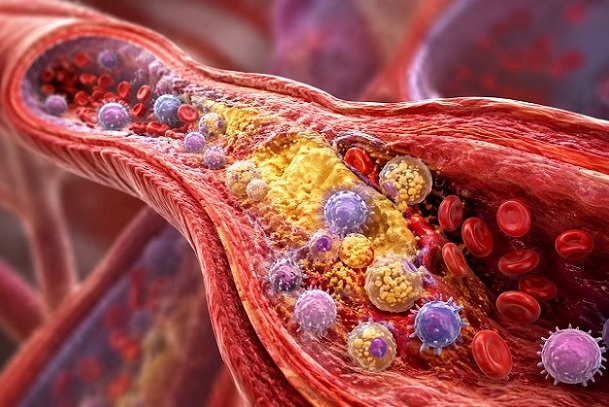 Scientists say chronic inflammation, working alongside cholesterol, is a major force driving artery-clogging
cardiovascular disease
The review was conducted by researchers from the Department of Endocrinology and Metabolism, Centre for Leading Medicine and Advanced Technologies of IHM, The First Affiliated Hospital of the University of Science and Technology of China, the Division of Life Sciences and Medicine, University of Science and Technology of China, and the Anhui Provincial Key Laboratory of Metabolic Health and Panvascular Diseases, all based in Hefei, China.
Inflammation Starts the Damage Long Before Symptoms Appear
Scientists explain that atherosclerosis is far more than a disease caused by fat accumulating inside arteries. Instead, it develops through years of ongoing inflammation that damages blood vessel walls and attracts immune cells into the arteries.
Conditions such as high cholesterol, diabetes, obesity, smoking, high blood pressure and unhealthy eating habits continuously trigger inflammatory signals. These signals make the inner lining of arteries more permeable, allowing harmful cholesterol particles to enter the vessel wall where they become chemically altered. The body's immune system mistakes these altered particles for dangerous invaders, launching an inflammatory response that never completely switches off.
Over time, immune cells engulf these cholesterol particles and transform into foam cells. These foam cells accumulate, forming plaques that gradually narrow arteries and increase the risk of heart attacks and strokes.
A Complex Chain Reaction Inside Blood Vessels
The review describes how numerous cells work together to worsen artery damage. Endothelial cells lining blood vessels become dysfunctional, macrophages release inflammatory chemicals, neutrophils produce damaging extracellular traps, while vascular smooth muscle cells change their normal behavior and contribute to unstable plaques.
Researchers also highlight the growing importance of inflammatory pathways involving IL-1β, IL-6 and the NLRP3 inflammasome. Once activated, these pathways continuously amplify inflammation, encouraging plaques to grow larger while weakening the protective fibrous cap that normally prevents rupture.
The scientists also discuss emerging discoveries showing that cholesterol crystals, abnormal fat molecules called ceramides, age-related mutations in blood stem cells, and trained immunity can all intensify chronic vascular inflammation and accelerate disease progression.
Cholesterol Is Only Part of the Story
One of the most significant
conclusions from the review is that lowering LDL cholesterol alone cannot eliminate cardiovascular risk.
Major clinical studies have shown that many patients continue suffering heart attacks despite achieving recommended cholesterol levels with statin therapy. According to the researchers, high-sensitivity C-reactive protein (hsCRP), a marker of inflammation, often predicts future cardiovascular events even better than LDL cholesterol among treated patients.
This
Medical News report highlights why many cardiologists are now viewing inflammation as an equally important treatment target alongside cholesterol reduction.
New Treatments Are Changing the Future of Heart Disease
The review summarizes growing evidence supporting therapies that directly reduce inflammation. Clinical trials involving IL-1β inhibitors and low-dose colchicine have demonstrated reductions in cardiovascular events in carefully selected patients, although researchers caution that excessive immune suppression can increase infection risks.
The scientists also describe exciting future approaches including stem cell-derived vascular organoids that closely mimic human arteries, high-throughput drug screening technologies that accelerate new drug discovery, and therapies designed to strengthen the body's own natural inflammation-resolving mechanisms rather than broadly suppressing immunity.
Conclusion
This comprehensive review provides one of the clearest summaries to date showing that inflammation lies at the center of atherosclerosis rather than acting as a secondary consequence of cholesterol buildup. The findings bring together decades of research demonstrating how immune cells, damaged blood vessels, metabolic disorders and lifestyle factors interact to drive plaque formation and cardiovascular events. By combining cholesterol-lowering therapies with precisely targeted anti-inflammatory treatments, future medical care could substantially reduce the remaining cardiovascular risk that persists even after cholesterol is successfully controlled. The review also points toward promising next-generation therapies that may protect arteries more effectively while minimizing unwanted side effects.
The study findings were published in the peer reviewed journal: Acta Pharmaceutica Sinica B.
https://www.sciencedirect.com/science/article/pii/S2211383526004041
For the latest on atherosclerosis, keep on logging to Thailand
Medical News.
Read Also:
https://www.thailandmedical.news/news/thailand-medical-study-discover-photochemical-from-orchids-that-can-stop-atherosclerosis
https://www.thailandmedical.news/news/covid-19-infection-quietly-speeds-up-artery-damage-or-atherosclerosis
https://www.thailandmedical.news/news/covid-19-is-driving-a-silent-health-crisis-as-it-rapidly-causes-a-unique-form-of-lethal-atherosclerosis-in-many




 Share
Share
 Tweet
Tweet
 Share
Share