Nikhil Prasad Fact checked by:Thailand Medical News Team Oct 14, 2026 51 minutes ago
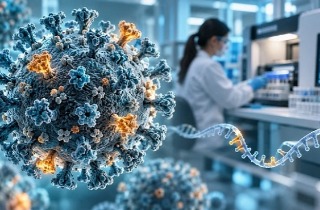
International health authorities have issued an urgent advisory regarding the dengue virus (DENV), warning that a series of recent genetic mutations has significantly altered the virus’s behavior, transmission efficiency, and clinical severity. Epidemiologists track these accelerating genetic shifts with growing concern, noting that the virus is adapting rapidly to both its mosquito vectors and human hosts.
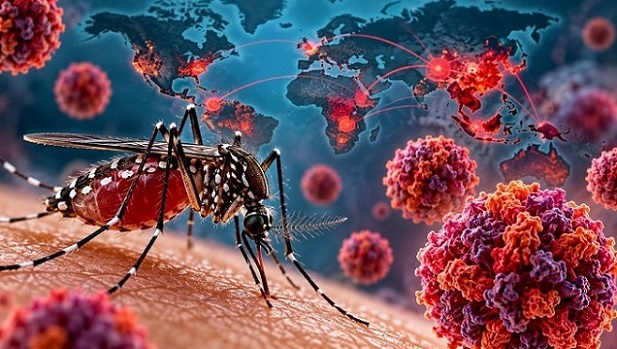 Scientists warn that the dengue virus is mutating rapidly
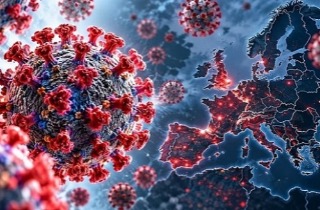
The warning comes on the heels of a massive surge in global dengue cases over the past year. Decades of predictable seasonal patterns are giving way to unpredictable, year-round outbreaks. Experts warn that the changing genetic landscape of the virus could soon undermine current vaccine strategies and diagnostic tools, plunging global public health infrastructure into unchartered territory.
The Mechanism of Mutation: An Unchecked RNA Virus
Dengue is caused by an RNA virus that exists as four distinct serotypes: DENV-1, DENV-2, DENV-3, and DENV-4. Because it is an RNA virus, it relies on an enzyme called RNA-dependent RNA polymerase to replicate. Unlike DNA viruses, this replication mechanism lacks a "proofreading" function to correct errors during copying.
Consequently, every time the virus replicates inside a human host or an Aedes mosquito, it introduces minor genetic mistakes. Over time, these mistakes accumulate into major structural variations. What health agencies are witnessing today is the natural byproduct of this high mutation rate, supercharged by dense urban populations and global travel, which provide the virus with billions of opportunities to replicate, mutate, and select for more resilient strains.
Shifting Structures: The Battle at the Cellular Level
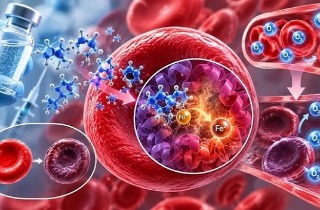
Genomic sequencing of recent viral samples has identified critical mutations within the virus’s Envelope (E) protein—the outer structure the virus uses to latch onto human cells. Specific structural adjustments have effectively streamlined the virus’s entry mechanism. By increasing its binding affinity, the mutated virus can infect human cells much faster and more efficiently than ancestral strains.
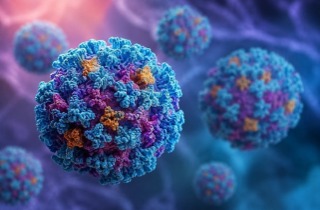
Furthermore, these structural shifts allow the virus to undergo rapid physical transformations inside the host. Scientists have observed that mutated strains display an enhanced ability to shift from a smooth particle configuration to a "bumpy" surface structure when exposed to the high temperatures of a human fever. This structural shape-shifting makes it incredibly difficult for the human immune system to recognize and neutralize the pathogen, leading to prolonged infections and higher viral loads in the bloodstream.
The Double-Edged Sword of Immune Escape
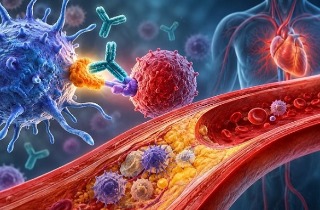
One of the most perilous aspects of dengue virus mutations is the phenomenon known as immune escape. Traditionally, a person infected with one serotype of dengue develops lifelong immunity to that specific serotype, and temporary, partial immunity to the others. However, if a person is infected with a second serotype later in life, they face a severe risk of Antibody-Dependent Enhancement (ADE)—a condition where existing antibodies acci
dentally help the new viral serotype enter cells, resulting in severe disease.
The newly detected mutations are complicating this dynamic. Genetic drifts in the E and Non-Structural 1 (NS1) proteins mean that even antibodies generated against the same serotype are proving less effective. The virus is effectively changing its disguise, allowing it to bypass existing immunity. This development raises major red flags for global vaccine distribution, as current inoculations engineered around older viral sequences may see reduced efficacy against these newly dominant, mutated lineages.
Escalating Clinical Severity and Plasma Leakage
Medical professionals on the front lines of recent outbreaks report a disturbing shift in patient symptoms. Numerous reports of dengue outbreaks in various geolocations monitored by
Thailand Medical News in the last 8 months have shown increasing numbers of severe cases. Genomic surveillance data linking specific outbreaks to mutated lineages show a direct correlation with increased clinical severity. Patients are progressing from standard dengue fever to severe dengue—historically known as dengue hemorrhagic fever—at a faster rate than previously recorded.
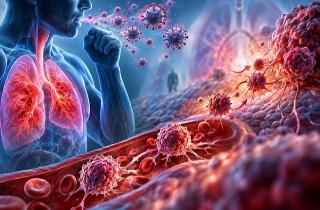
The mutations within the NS1 gene are particularly implicated in this trend. The NS1 protein is secreted by infected cells and plays a direct role in damaging the endothelial lining of human blood vessels. The mutated variants appear to trigger a significantly more aggressive inflammatory response, accelerating endothelial dysfunction. This results in severe plasma leakage, internal bleeding, acute organ impairment, and a higher incidence of hypovolemic shock, taxing intensive care units in affected regions.
A Perfect Storm: Climate, Urbanization, and Evolution
The evolutionary acceleration of the dengue virus does not happen in a vacuum. It is being driven forward by a perfect storm of environmental factors. Rising global temperatures have expanded the geographical habitat of the Aedes aegypti and Aedes albopictus mosquitoes, pushing the disease into historically temperate zones in Europe and North America.
Warmer temperatures also shorten the extrinsic incubation period—the time it takes for a mosquito to become infectious after biting an infected human. When combined with rapid, unplanned urbanization and dense living conditions, the virus is permitted to cycle continuously between hosts. This rapid-fire transmission acts as an evolutionary accelerator, allowing advantageous mutations to become dominant strains within a matter of weeks rather than years.
Revamping Global Surveillance and Diagnostics
In response to the mutating threat, global health organizations are calling for an immediate overhaul of viral surveillance infrastructure. Traditional diagnostic tests, such as rapid antigen strips, rely on recognizing specific viral proteins. If the genes coding for those proteins continue to mutate, standard diagnostic tests risk yielding false negatives, leaving infected individuals unmonitored and untreated.
Public health sectors are urging nations to invest heavily in next-generation genomic sequencing at the local clinic level. By mapping the viral genome in real-time during outbreaks, scientists can flag dangerous new lineages before they spread across borders. Simultaneously, pharmaceutical researchers are pivoting toward developing therapeutics that target highly conserved regions of the virus—parts of the genetic code that cannot mutate without rendering the virus non-viable.
References:
https://www.nature.com/articles/s41598-025-00462-z
https://link.springer.com/article/10.15252/embr.202255671
https://www.nature.com/articles/s41467-024-52819-z
https://www.sciencedirect.com/science/article/pii/S2589004224021242
https://journals.asm.org/doi/10.1128/spectrum.00256-21
https://www.who.int/news-room/fact-sheets/detail/dengue-and-severe-dengue
https://www.cdc.gov/dengue/index.html
https://www.ncbi.nlm.nih.gov/labs/virus/vssi/#/virus?VirusLineage_ss=Viruses,taxid:10239&SeqType_s=Nucleotide
https://bionet-asia.com/new-dengue-virus-naming-system-will-help-identify-and-track-variants/
Read Also:
https://www.thailandmedical.news/articles/dengue-news 



 Share
Share
 Tweet
Tweet
 Share
Share