Nikhil Prasad Fact checked by:Thailand Medical News Team Feb 14, 2026 6 months, 2 weeks, 2 days, 12 hours, 27 minutes ago
Medical News: Researchers from France uncover how bacteria in semen could shape sperm health and IVF success
Infertility is no longer a rare or private struggle. According to global estimates, about one in six people worldwide faces fertility challenges at some point in life. In France alone, nearly one-quarter of couples are affected. While doctors can identify a male or female cause in most cases, up to 25 percent remain unexplained. Now, a new systematic review suggests that hidden communities of bacteria living inside semen—known as the sperm microbiota—may hold part of the answer.
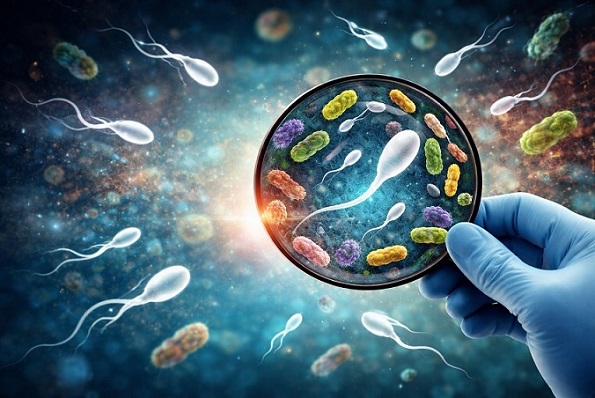 Bacterial communities inside semen may significantly influence sperm health and IVF success
Scientists from the Laboratoire de Biologie de la Reproduction/Cecos Lorraine at CHRU Maternité Régionale in Nancy, the Laboratoire de Microbiologie at CHRU Nancy and Université de Lorraine (including the CNRS-UL LCPME UMR 7564 team), the Laboratoire SIMPA at Université de Lorraine, and the Centre d’AMP Majorelle-Atoutbio in Nancy conducted a large-scale review of existing research. Their findings shed light on how microscopic organisms in semen may influence sperm quality, male fertility, and even the success of assisted reproductive treatments.
What Exactly Is the Sperm Microbiota
For many years, semen was believed to be sterile. Modern genetic testing methods such as 16S rRNA gene sequencing have now proven otherwise. Semen contains a complex mix of bacteria. Some appear beneficial, while others may cause harm when present in high amounts.
The research team analyzed 20 studies involving 3,065 men aged between 20 and 60. They compared bacterial profiles in men with normal sperm parameters to those with reduced sperm count, poor movement (motility), abnormal shape (morphology), or complete absence of sperm.
Good Bacteria Versus Harmful Bacteria
Men with healthy sperm were more likely to have higher levels of Lactobacillus and Bifidobacterium. These bacteria are widely known for their probiotic and anti-inflammatory properties. They produce substances such as lactate and butyrate that help regulate inflammation and protect cells from oxidative stress, which can damage sperm DNA.
In contrast, men with poor sperm quality frequently showed increased levels of bacteria such as Prevotella, Escherichia coli, Pseudomonas, Streptococcus, Enterococcus, and Klebsiella pneumoniae. These microbes are known to trigger inflammation and produce toxins that generate reactive oxygen species. Excess oxidative stress can damage sperm membranes, reduce motility, and fragment sperm DNA.
Some bacteria, including Staphylococcus, Corynebacterium, and Gardnerella, were found in both healthy and abnormal samples. Researchers believe these organisms may only become harmful once they exceed certain concentration thresholds.
Impact on IVF Success
One of the most striking findings was the link between sperm microbiota and assisted reproduction outcomes. Certain bacterial profiles, particularly the presence of Lactobacillus jensenii and Faecalibacterium, w
ere associated with better in vitro fertilization results. Conversely, higher levels of Proteobacteria, Prevotella, and Bacteroides correlated with poorer outcomes.
This
Medical News report highlights that microbial balance in semen could influence not only natural conception but also the success of fertility treatments.
Why Inflammation Matters
When harmful bacteria overgrow, they can trigger local inflammation in the male reproductive tract. This increases white blood cells in semen, a condition known as leukospermia. Inflammatory cells release free radicals, which damage sperm DNA and impair their ability to fertilize an egg.
Some bacteria, such as Escherichia coli, can even cause sperm cells to clump together, making them immobile. Others produce lipopolysaccharides that activate immune responses and worsen oxidative stress.
Study Limitations and Future Directions
Although the review provides strong evidence of association, researchers caution that most studies were small and used different testing methods. Some relied on traditional bacterial cultures, which may miss many microbes. Others used advanced DNA sequencing but analyzed different gene regions, making comparisons difficult.
Conclusions
The findings strongly suggest that the composition of bacteria in semen plays an important role in male fertility. Beneficial bacteria appear to protect sperm from inflammation and oxidative stress, while harmful overgrowth may impair sperm count, movement, and DNA integrity. However, more standardized and large-scale studies are needed to determine whether these microbes directly cause infertility or simply reflect underlying reproductive problems. Understanding this microbial ecosystem could open the door to new treatments, including targeted probiotics, better infection screening, and personalized fertility care strategies.
The study findings were published in the peer reviewed journal: Reproductive Medicine.
https://www.mdpi.com/2673-3897/7/1/8
For the latest on Men’s Health, keep on logging to Thailand
Medical News.
Read Also:
https://www.thailandmedical.news/articles/reproductive-medicine




 Share
Share
 Tweet
Tweet
 Share
Share