South Korean Study Shows That Phytochemicals from Schisandra Chinensis Shows Promise Against Alzheimer’s Disease
Nikhil Prasad Fact checked by:Thailand Medical News Team Dec 02, 2025 10 months, 2 days, 4 hours ago
Medical News: A Traditional Berry Showing Modern Neuroprotective Power
A new study by researchers from the Korea Food Research Institute and Hoseo University offers fresh hope in the fight against Alzheimer’s disease. Their investigation shows that water extracts from Schisandra chinensis—a berry long used in traditional Asian medicine—may help slow the processes that drive memory loss and brain inflammation. This
Medical News report examines the findings in detail and highlights how this natural remedy could contribute to future therapeutic strategies.
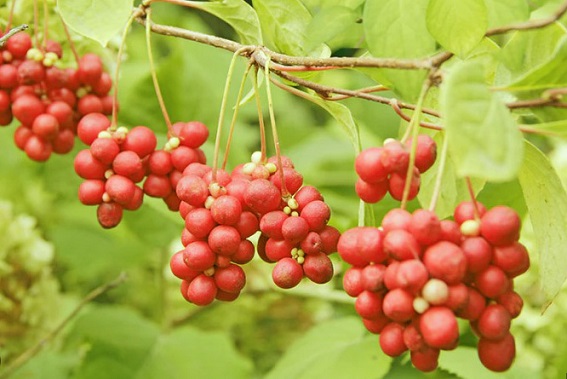 New research shows Schisandra extract may help reduce inflammation and memory loss linked to Alzheimer’s disease
How the Berry Works at the Molecular Level
New research shows Schisandra extract may help reduce inflammation and memory loss linked to Alzheimer’s disease
How the Berry Works at the Molecular Level
The research team combined network pharmacology with animal testing to uncover how Schisandra extract influences pathways linked to Alzheimer’s disease. Network analysis highlighted eight active compounds—including gomisin A, gomisin R, and schisandrin C—which interacted with key Alzheimer-related genes. Two major targets were identified: acetylcholinesterase (AChE), an enzyme that destroys the neurotransmitter acetylcholine, and PTGS2 (also known as COX-2), a gene strongly involved in inflammation.
Computer modeling suggested that Schisandra compounds may support healthier cholinergic signaling in the brain, help moderate inflammation, and protect neurons from stress. These predictions were later validated in a rat model infused with amyloid-β—a toxic protein fragment known to accumulate in Alzheimer’s patients.
Significant Improvements Seen in Memory and Brain Health
Rats that received the extract for seven weeks showed much lower amyloid-β buildup in the hippocampus compared to untreated Alzheimer-model rats. They also performed better in multiple memory tests, including Y-maze, passive avoidance, and water maze challenges. The extract reduced harmful inflammatory cytokines like TNF-α and IL-1β, lowered oxidative stress markers, and significantly decreased AChE activity while helping preserve brain-supportive molecules such as BDNF and CNTF.
Protecting Metabolism and Reducing Brain Lipid Damage
Besides its neurological effects, the Schisandra extract improved glucose control and reduced abnormal lipid accumulation in the hippocampus. This is important because disrupted glucose and fat metabolism in the brain can worsen Alzheimer’s progression. The treated rats showed better insulin responses, healthier cholesterol patterns, and lower hippocampal triglyceride levels, suggesting that the extract supports overall metabolic stability in brain tissue.
Conclusion
The study indicates that Schisandra chinensis extract may act through multiple pathways—reducing inflammation, protecting neurons, regulating the cholinergic system, and improving metabolic balance. These benefits
suggest that this natural extract could be explored further as a complementary strategy for Alzheimer’s disease. However, human clinical trials are still needed to confirm safety, dosage, and effectiveness. By influencing both neurological and metabolic processes, Schisandra may eventually play a role in slowing early brain deterioration and helping preserve memory function for longer periods.
The study findings were published in the peer reviewed journal: Nutrients.
https://www.mdpi.com/2072-6643/16/21/3751
For the latest on Herbs and Phytochemicals, keep on logging to Thailand
Medical News.
Read Also:
https://www.thailandmedical.news/articles/alzheimer,-dementia-
https://www.thailandmedical.news/articles/herbs-and-phytochemicals




 Share
Share
 Tweet
Tweet
 Share
Share

































