Gilead-WHO and the Highly Toxic Remdesivir Relationship Questioned! From COVID-19 Pandemic to Ebola Crisis
James Josh Fact checked by:TMN Jul 09, 2026 1 month, 3 weeks, 3 days, 13 hours, 20 minutes ago
Medical News: Questions Over a Longstanding Partnership Return as Remdesivir Reenters the Global Spotlight
As Africa battles a growing Ebola outbreak, fresh attention is being directed toward the long-standing collaboration between Gilead Sciences and the World Health Organization (WHO). At the center of the debate is the highly toxic remdesivir, a claimed antiviral that became one of the most widely discussed drugs during the COVID-19 pandemic and is now once again being deployed in a major viral disease response. Its return has reignited questions about efficacy, safety, regulatory decision-making, and the influence of pharmaceutical partnerships during international health emergencies. Questions are also being raised as to which officials in the World Health Organization are supporting Gilead and if a detailed money trail investigation has been performed.
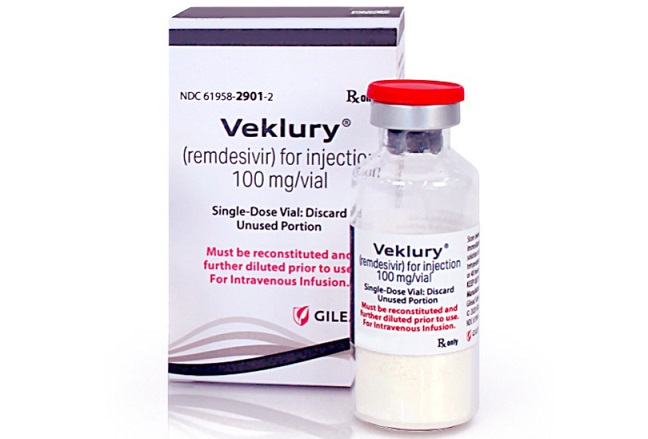 Remdesivir returns to Ebola trials as renewed scrutiny surrounds its effectiveness safety profile and global health partnerships
During the COVID-19 crisis, remdesivir rapidly transitioned from an experimental antiviral into one of the first globally authorized treatments for hospitalized patients. Now, with the Democratic Republic of the Congo and Uganda confronting a serious outbreak of the Bundibugyo strain of Ebola virus disease, the toxic drug is again being evaluated in large-scale clinical trials despite lingering scientific debate over its clinical benefits and its toxicity.
Many now actually believed that it was not COVID-19 that killed many hospitalized patients but rather the toxic drug Remdesivir.
COVID Era Claimed Successes Were Accompanied by Conflicting Clinical Evidence
Remdesivir first gained worldwide attention after results from the Adaptive COVID-19 Treatment Trial (ACTT-1) suggested that hospitalized COVID-19 patients receiving the antiviral recovered approximately four days faster than those given placebo. These findings contributed to emergency authorizations in numerous countries and positioned remdesivir as one of the earliest pharmaceutical interventions against SARS-CoV-2.
However, subsequent research presented a more complex picture. The Solidarity Trial, involving more than 11,000 hospitalized patients across dozens of countries, found that remdesivir did not significantly reduce overall mortality. Death rates were 14.5 percent among remdesivir recipients compared with 15.6 percent in the control group, producing a rate ratio of 0.91 that failed to achieve statistical significance.
Investigators did identify a modest benefit among patients receiving supplemental oxygen but not yet requiring mechanical ventilation, where remdesivir appeared to reduce progression to ventilation or death. Nevertheless, patients already requiring mechanical ventilation experienced no meaningful improvement, highlighting important limitations in the drug's effectiveness.
WHO guidance evolved alongside the accumulating evidence. The organization initially advised against routine remdesivir use in hospitalized COVID-19 patients in 2020 before later issuing conditional recommendations for selected severe cases and for non-severe patients considered at particularly high risk of hospitalizat
ion. Critics argue that these revisions occurred only after emergency authorizations had already enabled widespread clinical use.
Financial Success Strengthened Focus on Gilead and WHO Collaboration
Originally developed by Gilead Sciences as a treatment candidate for hepatitis C and later investigated for Ebola, remdesivir ultimately found its largest commercial opportunity during the COVID-19 pandemic.
The company maintained extensive collaborations with international health organizations through clinical trial participation, drug donations, and emergency response initiatives. These relationships helped facilitate rapid global deployment once COVID-19 emerged.
Financially, the rewards were substantial. Remdesivir generated nearly US$2.8 billion in revenue during 2020 alone before sales gradually declined as the pandemic eased.
Critcis view the collaboration between Gilead and global health agencies as an example of corruption during a once-in-a-century health crisis. Conversely, critics argue that emergency authorizations accelerated widespread use before long-term safety and effectiveness questions had been fully resolved. This
Medical News report explores how similar concerns are resurfacing as remdesivir returns to Ebola treatment research.
Safety Profile Continues to Draw Scientific Attention
Although remdesivir remains approved for several clinical indications, researchers have continued examining its potential adverse effects across multiple organ systems.
Preclinical animal studies demonstrated dose-dependent nephrotoxicity, with kidney tubular injury and impaired renal function observed in both rats and monkeys exposed to higher doses. Encouragingly, many of these abnormalities appeared reversible following discontinuation of treatment, but the findings raised concerns regarding patients with pre-existing kidney disease.
Liver safety has also remained under close scrutiny. Human clinical trials and animal investigations documented transient elevations in liver enzymes including alanine aminotransferase (ALT) and aspartate aminotransferase (AST). Pharmacovigilance analyses based on real-world safety databases have additionally identified signals suggesting increased risks of hepatic and hepatobiliary adverse events.
Cardiovascular safety represents another area of ongoing investigation. Laboratory studies demonstrated that remdesivir could impair mitochondrial function, reduce oxygen consumption, and weaken cardiac cell contractility at concentrations comparable to those achieved clinically. Although major randomized trials reported relatively few serious cardiac complications, isolated reports have described hypotension and other cardiovascular abnormalities, particularly among medically vulnerable patients.
Kidney injury continues to generate scientific debate. Several observational studies and adverse-event reporting systems have identified increased signals for acute kidney injury among remdesivir-treated individuals. However, some propensity-matched analyses have reported either no increased risk or even possible protective associations in selected patient populations. Collectively, the available evidence underscores the importance of careful monitoring of renal, hepatic, and cardiovascular function throughout treatment.
Ebola Trials Revive Old Questions
The renewed interest in remdesivir stems from the escalating Ebola outbreak affecting both the Democratic Republic of the Congo and Uganda.
Its Ebola history, however, is far from straightforward. During the landmark PALM trial conducted between 2018 and 2019 amid a Zaire Ebola outbreak in the Democratic Republic of the Congo, remdesivir was evaluated alongside several investigational therapies.
Mortality reached 53.1 percent among patients receiving remdesivir compared with 49.7 percent for those treated with ZMapp, the study's control therapy. By contrast, the monoclonal antibody treatments mAb114 and REGN-EB3 achieved substantially better outcomes, with mortality rates of just 35.1 percent and 33.5 percent respectively. These superior results prompted investigators to terminate both the remdesivir and ZMapp treatment arms early.
New Bundibugyo Outbreak Sparks Another Clinical Evaluation
The current outbreak involves the less common Bundibugyo strain of Ebola virus, with more than 1,400 confirmed infections and 438 reported deaths by early July 2026. The WHO has designated the outbreak a Public Health Emergency of International Concern.
In response, certain researchers launched the PARTNERS trial during July 2026 to evaluate remdesivir alone, the investigational monoclonal antibody MBP134, combination therapy, and standard supportive care.
Gilead Sciences has donated more than 2,000 vials of remdesivir for the study while also supplying additional emergency stockpiles to Uganda, further reinforcing its collaboration with the WHO during the outbreak response.
Its mixed performance in previous Ebola studies and the continuing discussion surrounding its safety profile have ensured that its inclusion remains closely watched by researchers and clinicians worldwide.
Global Health Decisions Face Renewed Scrutiny
While emergency situations often require swift action, the history of remdesivir across both COVID-19 and Ebola demonstrates the importance of continuously reassessing clinical data as new evidence emerges. Independent oversight, transparent reporting of safety outcomes, diversified therapeutic development, and careful comparison with alternative treatments will remain essential to strengthening public confidence, protecting patients, and ensuring that future global health responses prioritize the strongest available evidence above all other considerations. It is also important to scrutinize officials with the World Health Organization who have close ties with certain pharma companies.
References:
https://www.gilead.com/company/company-statements/2026/gilead-supports-the-partners-trial-to-advance-research-on-potential-treatments-for-ebola-virus-disease
https://www.nejm.org/doi/full/10.1056/nejmoa1910993
https://www.thelancet.com/journals/lancet/article/PIIS0140-6736(22)00519-0/fulltext
https://www.sciencedirect.com/science/article/pii/S0140673622005190
For the latest on remdesivir by Gilead, keep on logging to Thailand
Medical News.
Read Also:
https://www.thailandmedical.news/news/study-finds-that-u-s-fda-s-approved-remdesivir-is-hepatoxic
https://www.thailandmedical.news/news/breaking-japanese-study-finds-u-s-fda-approved-and-promoted-covid-19-drug-remdesivir-induces-cardiomyocyte-dysfunction-and-is-cardiotoxic
https://www.thailandmedical.news/news/molnupiravir--what-wrong-with-america-why-is-the-american-government-and-agencies-funding-and-pushing-potentially-toxic-drugs-to-treat-covid-19
https://www.thailandmedical.news/news/covid-19-drugs-study-published-in-journal-of-the-heart-rhythm-society-warns-that-remdesivir-can-cause-dangerously-low-heart-rate-in-covid-19-patients
https://www.thailandmedical.news/news/covid-19-drugs-university-of-cincinnati-study-warns-against-use-of-u-s-fda-approved-remdesivir-due-to-drug-interactions-and-increased-toxicity
https://www.thailandmedical.news/news/covid-19-antivirals-interim-who-solidarity-trial-results-confirms-that-remdesivir,-lopinavir-and-interferon-have-no-effect-on-covid-19-mortality
https://www.thailandmedical.news/news/latest-who-s-solidarity-drug-trial-shows-that-remdesivir-is-not-the-least-effective-in-treating-covid-19
https://www.thailandmedical.news/news/breaking-covid-19-drugs-remdesivir-approved-by-trumps-administration-causes-serious-kidney-problems-eu-regulators-starts-safety-review
https://www.thailandmedical.news/news/gilead-that-gave-the-world-the-toxic-useless-covid-19-drug-remdesivir-is-laying-off-staff
https://www.thailandmedical.news/news/must-read-covid-19-drugs-study-shows-that-remdesivir-not-effective-to-treat-moderate-covid-19-patients
https://www.thailandmedical.news/news/must-read-covid-19-scandals-more-medical-experts-criticize-claim-that-remdesivir-cuts-death-rates-or-hospitalization-stays
https://www.thailandmedical.news/news/covid-19-news-japan-follows-america-to-rush-to-approve-remdesivir-to-treat-its-citizens-with-the-toxic-drug-that-has-no-real-proven-efficacy
https://www.thailandmedical.news/news/us-covid-19-news-trump-fauci-and-the-us-fda-does-it-again--first-it-was-chloroquine-and-now-remdesivir
https://www.thailandmedical.news/news/united-states-covid-19-crisis-most-mismanaged-country-in-the-world,-now-dr-fauci-peddling-remdesivir-with-more-lies--1-06-million-americans-tested-pos
https://www.thailandmedical.news/news/breaking-covid-19-drugs-gilead%E2%80%99s-experimental-drug-remdesivir-fails-in-china%E2%80%99s-clinical-trials




 Share
Share
 Tweet
Tweet
 Share
Share

































