Nikhil Prasad Fact checked by:Thailand Medical News Team Jun 23, 2026 3 months, 1 week, 3 days, 23 hours, 42 minutes ago
Medical News: A new study has uncovered an intriguing connection between diet and blood vessel health in people suffering from Long COVID, suggesting that the balance of carbohydrates, fats, and overall calorie intake may influence changes in artery function that persist years after a COVID-19 infection.
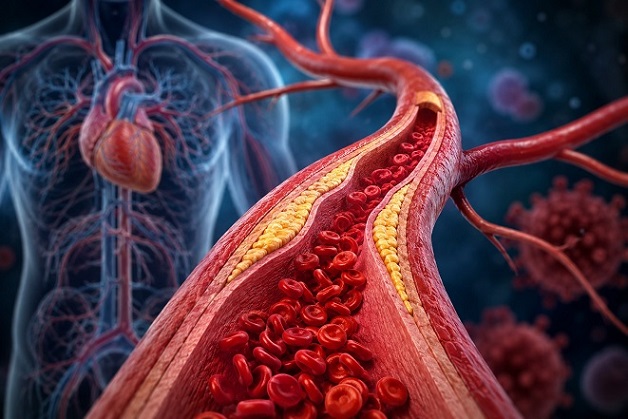 Researchers find that dietary patterns may influence arterial stiffness and vascular health in people living with Long COVID
Researchers from the Primary Care Research Unit of Salamanca (APISAL), the Instituto de Investigación Biomédica de Salamanca (IBSAL), the Department of Medicine at the University of Salamanca, the Castilla y León Regional Health Service (SACYL), the Network for Research on Chronicity, Primary Care and Health Promotion (RICAPPS), Hospital Universitario Marqués de Valdecilla in Santander, and Hospital Universitario La Paz in Madrid conducted the study to investigate whether dietary habits could be linked to vascular abnormalities commonly seen in Long COVID patients.
Long COVID and the Hidden Burden on Blood Vessels
Long COVID has emerged as a major global health challenge, affecting millions of people who continue to experience symptoms months or even years after their initial SARS-CoV-2 infection. While fatigue, brain fog, breathing difficulties, muscle pain, and sleep disturbances are among the most recognized symptoms, scientists are increasingly concerned about the virus’s long-term impact on blood vessels.
Previous research has shown that COVID-19 can damage the endothelium, the delicate inner lining of blood vessels. This damage may trigger chronic inflammation, impaired circulation, increased arterial stiffness, and accelerated vascular aging. Such changes can increase the risk of future cardiovascular complications.
Examining Diet and Vascular Health
To explore whether nutrition plays a role in these vascular abnormalities, the researchers studied 304 adults diagnosed with Long COVID. Participants recorded everything they ate and drank over a seven-day period, allowing investigators to analyze their intake of calories, carbohydrates, proteins, fats, and dietary fiber.
The participants then underwent extensive vascular testing. Researchers measured carotid artery thickness, arterial stiffness, wave reflection within arteries, and indicators of vascular aging using advanced ultrasound and specialized cardiovascular assessment devices.
The average participant was 53 years old, and nearly 68 percent of the study population were women. On average, participants had been living with Long COVID symptoms for approximately 39 months.
Surprising Findings on Calories and Carbohydrates
One of the most unexpected findings was that higher overall calorie intake and higher absolute carbohydrate intake were associated with lower levels of carotid-femoral pulse wave velocity, a key measure of central arterial stiffness.
Arterial stiffness is widely recognized as an important predictor of cardiovascular disease, heart attacks, strokes, and premature mortality. Lower values generally indicate health
ier and more flexible arteries.
The researchers believe this surprising association may not necessarily mean that consuming more calories or carbohydrates directly improves artery health. Instead, lower food intake may reflect poorer overall health, greater disease severity, reduced appetite, chronic fatigue, or nutritional deficiencies that frequently affect Long COVID patients.
This
Medical News report notes that the findings suggest nutritional status itself may play a significant role in the vascular health of individuals living with persistent post-COVID symptoms.
Carbohydrates and Fats Show Opposing Effects
The study also found that the proportion of carbohydrates and fats within the diet appeared to influence vascular function differently.
When carbohydrates accounted for a larger percentage of total daily calories, participants tended to have higher augmentation index values, a marker associated with increased wave reflection and changes in arterial tone. Conversely, a higher percentage of dietary fat was associated with lower augmentation index values.
Importantly, the study did not distinguish between healthy and unhealthy carbohydrates or between different types of fats. As a result, researchers caution against drawing simple conclusions about whether higher carbohydrate or fat consumption is beneficial or harmful.
The quality of food sources likely plays a major role. Refined carbohydrates, processed foods, saturated fats, and healthier unsaturated fats may have very different effects on blood vessel function.
No Major Sex Differences Observed
Although men generally exhibited higher measures of arterial stiffness and vascular aging than women, the relationship between dietary intake and vascular health was similar in both sexes. This suggests that dietary influences on blood vessel function may affect Long COVID patients regardless of gender.
Conclusions
The findings reveal a complex relationship between diet and vascular health in people suffering from Long COVID. Higher calorie and carbohydrate intake were linked to lower central arterial stiffness, while the relative balance of carbohydrates and fats appeared to influence arterial function in different ways. Although the study cannot prove cause and effect because of its observational design, it highlights nutrition as a potentially important and modifiable factor in managing the long-term cardiovascular consequences of Long COVID. Larger longitudinal studies and clinical trials are now needed to determine whether targeted dietary interventions can help improve vascular function and reduce cardiovascular risks in this growing patient population.
The study findings were published in the peer reviewed journal: Nutrients.
https://www.mdpi.com/2072-6643/18/12/2028
For the latest on Long COVID, keep on logging to Thailand
Medical News.
Read Also:
https://www.thailandmedical.news/articles/long-covid




 Share
Share
 Tweet
Tweet
 Share
Share

































