COVID-19 Triggers Dysfunctional Activation of Mast Cells and Macrophages That Leads to Fibrosis
Nikhil Prasad Fact checked by:Thailand Medical News Team May 24, 2026 3 months, 1 week, 2 days, 14 hours, 23 minutes ago
Medical News: A new international study has uncovered how a little-known immune cell called the mast cell may play a major role in the severe lung damage and scarring seen in COVID-19 patients. Researchers found that these cells do far more than trigger allergic reactions. In people who died from severe COVID-19, mast cells appeared to actively reshape lung tissue, fuel inflammation, and help create the conditions for long-term fibrosis.
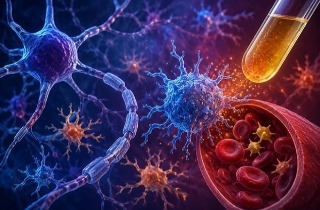
.jpg) Scientists discover that mast cells may play a major role in COVID-19 lung damage and long-term fibrosis
Scientists discover that mast cells may play a major role in COVID-19 lung damage and long-term fibrosis
The research team included scientists from RUDN University, the Research Institute of Experimental Biology and Medicine at Burdenko Voronezh State Medical University, the Gamaleya National Research Center for Epidemiology and Microbiology, Infectious Disease Clinical Hospital No.1 Moscow, the National Medical Research Radiological Centre of the Ministry of Health of the Russian Federation, Sechenov First Moscow State Medical University, Charité–Universitätsmedizin Berlin, the Fraunhofer Institute for Translational Medicine and Pharmacology ITMP, and the Institute for Hematopathology in Hamburg.
Mast Cells Found in Large Numbers in Damaged Lungs
Mast cells are immune cells normally known for releasing histamine during allergies. However, the new study found that in COVID-19 lungs, these cells became highly active and accumulated in unusually large numbers. Researchers examined lung tissue samples from 12 patients who died from COVID-19 and compared them with 12 patients who had ordinary community-acquired pneumonia before the pandemic.
The scientists discovered that COVID-19 lungs contained more than twice the number of mast cells compared to regular pneumonia cases. These cells formed dense clusters inside damaged lung tissue and released large amounts of tryptase, a powerful inflammatory enzyme capable of damaging surrounding structures.
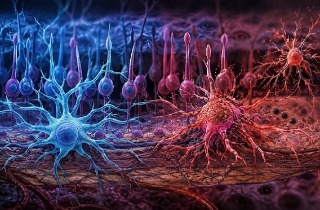
Researchers observed that mast cells were not acting alone. Instead, they closely interacted with killer T-cells, monocytes, macrophages, plasma cells, and blood vessel cells. This intense communication appeared to create a highly inflammatory environment that worsened tissue destruction.
A Dangerous Chain Reaction Inside the Lungs
One of the most striking findings was how mast cells influenced macrophages, another type of immune cell. The study showed that mast cells pushed macrophages toward a “type 2” state, which is strongly linked to tissue remodeling and fibrosis.
Researchers found that mast cells and these macrophages formed long multicellular chains described as a “functional syncytium.” These networks appeared in areas where lung tissue was heavily scarred and structurally damaged. In some cases, mast cells extended long arm-like projections that allowed them to communicate with several nearby cells at once.
The scientists also observed that mast cell enzymes were penetrating directly into neighboring immune cells, even entering their nuclei. This suggests the cells may alter how other immune cells behave at a genetic level.
This
font-size:16px">Medical News report highlights that the researchers believe mast cells may act like central coordinators of inflammation inside COVID-19 lungs, organizing both immune attacks and scar-forming processes simultaneously.
Unexpected Damage to Elastic Lung Fibers
Another important discovery involved the lung’s elastic fibers. These fibers allow the lungs to stretch and recoil during breathing. The study revealed unusually strong interactions between mast cells and these elastic structures in COVID-19 lungs.
Scientists observed mast cells attaching directly to elastic fibers and releasing tryptase onto them. Some fibers became abnormally thick, disorganized, or clustered together. The researchers believe this process may weaken the mechanical stability of the lungs and contribute to the breathing problems experienced by severe COVID-19 patients.
The study also found signs of abnormal blood vessel growth in some damaged lung regions while other areas showed almost no vascular repair. This uneven remodeling may help explain why some COVID-19 survivors later develop chronic breathing difficulties and persistent lung abnormalities.
Findings Could Open Door to New Treatments
The researchers say mast cells may become an important therapeutic target for future COVID-19 treatments. Drugs that block mast cell activation or inhibit tryptase release could potentially reduce excessive inflammation and help prevent permanent lung fibrosis.
The findings also suggest that mast cells may play a wider role in viral lung diseases than previously believed. Scientists now suspect that controlling these cells early during severe infections could limit tissue destruction before irreversible scarring develops.
Conclusion
The study provides some of the clearest evidence yet that mast cells are deeply involved in severe COVID-19 lung injury. Rather than simply participating in inflammation, these cells appear to orchestrate complex interactions between immune cells, connective tissue, and blood vessels that ultimately reshape the lungs. Their ability to drive fibrosis, alter elastic fibers, and form multicellular inflammatory networks may explain why some patients suffer devastating respiratory damage even after the virus itself begins to decline. Targeting mast cells could eventually become a promising strategy for reducing long-term complications and protecting lung function in future coronavirus outbreaks.
The study findings were published in the peer reviewed journal: Scientific Reports.
https://www.nature.com/articles/s41598-026-47864-1
For the latest COVID-19 News, keep on logging to Thailand
Medical News.
Read Also:
https://www.thailandmedical.news/articles/coronavirus
https://www.thailandmedical.news/articles/long-covid




 Share
Share
 Tweet
Tweet
 Share
Share