Nikhil Prasad Fact checked by:Thailand Medical News Team Nov 30, 2025 10 months, 3 days, 22 hours, 56 minutes ago
Medical News: Growing Attention on a Natural Plant Compound
A new study led by scientists from Poznan University of Medical Sciences in Poland and Adam Mickiewicz University is drawing global attention to fisetin, a natural plant flavonoid found in strawberries, apples and onions. Researchers found that this simple dietary molecule may hold powerful anticancer effects against glioblastoma, one of the deadliest and most treatment-resistant brain tumors. According to this
Medical News report, glioblastoma patients typically survive less than a year even with surgery, radiation and chemotherapy, making the discovery of any new therapeutic pathway extremely important.
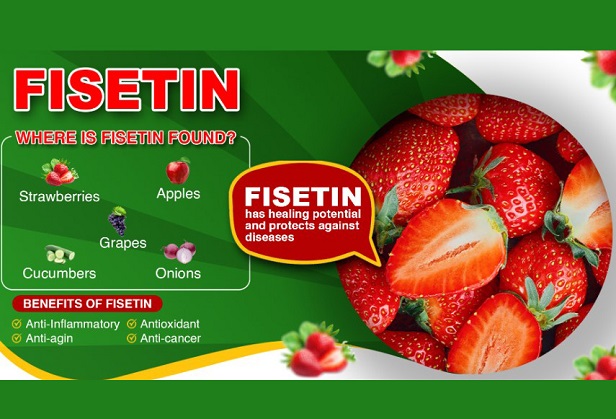 New research shows fisetin may offer a powerful new strategy against aggressive brain tumors
How Fisetin Attacks Glioblastoma Cells
New research shows fisetin may offer a powerful new strategy against aggressive brain tumors
How Fisetin Attacks Glioblastoma Cells
The research team conducted detailed laboratory tests on human U-138 MG glioblastoma cells and revealed that fisetin strongly disrupts cancer cell growth. At higher concentrations, fisetin forced tumor cells into a form of cell cycle arrest, slowing their ability to copy DNA and divide. Even more significantly, fisetin triggered apoptosis, the natural self-destruction pathway that cancer cells often avoid. At just 25 micromolar, fisetin pushed more than 42 percent of glioblastoma cells into apoptosis, and at 50 micromolar nearly three-quarters of the cancer cells were destroyed. These results were stronger than the effects of topotecan, a known chemotherapy drug used as a positive control in the study.
Nanoparticles Improve Delivery and Potency
One of the biggest challenges with fisetin is its poor solubility and instability, which make it difficult to use as a medicine. To overcome this, the researchers developed special PLGA nanoparticles designed to carry fisetin more effectively into the body. The most successful formulation created particles around 330 nanometers in size with high drug-loading efficiency of over 83 percent. Lab tests showed that these fisetin-loaded nanoparticles significantly improved the compound’s cancer-killing effects. At higher doses, tumor cell survival dropped to as low as 9 percent while the empty nanoparticles themselves showed no toxicity.
Fisetin Survives Sterilization and Remains Chemically Stable
Another positive finding came from examining how fisetin behaves during radiation sterilization, a requirement for injectable medicines. Even after being exposed to standard sterilization levels, fisetin maintained its chemical integrity. While very high radiation doses caused temporary molecular changes, no permanent structural damage or harmful by-products were detected. This indicates that fisetin can be safely prepared for medical use without losing its therapeutic properties.
Outlook for Future Treatments
The study highlights fisetin as a strong candidate for future glioblastoma therapy, especially when delivered using advanced nanoparticles that enhance its stability and effectiveness. Although these results are early and limited to laboratory cell models,
they suggest that fisetin could one day be developed into an injectable treatment that complements or strengthens existing chemotherapy options.
Continued research exploring how these nanoparticles move through the body, cross the blood-brain barrier and interact with tumor tissue will be essential. If future animal and clinical studies confirm these effects, fisetin could offer new hope for patients facing a cancer that currently has few effective long-term treatments.
The study findings were published in the peer reviewed journal: Polymers.
https://www.mdpi.com/2073-4360/17/22/3074
For the latest on Brain Cancer, keep on logging to Thailand
Medical News.
Read Also:
https://www.thailandmedical.news/articles/cancer
https://www.thailandmedical.news/articles/herbs-and-phytochemicals




 Share
Share
 Tweet
Tweet
 Share
Share

































