Nikhil Prasad Fact checked by:Thailand Medical News Team Feb 19, 2026 6 months, 1 week, 4 days, 14 hours, 25 minutes ago
Medical News: A groundbreaking new study has revealed that the virus responsible for COVID-19 can directly infect brain tumors and alter their immune environment, potentially influencing disease progression and patient outcomes. Scientists discovered that SARS-CoV-2, the virus behind COVID-19, was present in brain tumor tissues and triggered significant immune changes inside these tumors. The findings raise new concerns about the long-term neurological effects of COVID-19, especially among cancer patients.
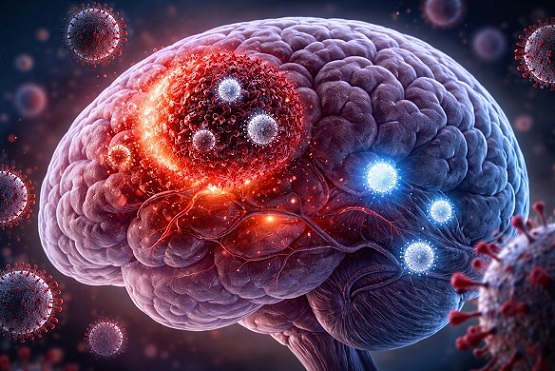 Scientists discover SARS-CoV-2 infects brain tumors and alters their immune environment, raising new
concerns for cancer patients
Researchers from the Department of Neurosurgery and State Key Laboratory of Oncology in South China at Sun Yat-sen University Cancer Center, the Institute of Precision Medicine and The First Affiliated Hospital of Sun Yat-sen University in Guangzhou, and the Department of Neurosurgery at Northeast Yunnan Central Hospital conducted the study, analyzing brain tumor samples collected during the COVID-19 Omicron BA.5 wave in China. This
Medical News report highlights how the virus may not only infect the brain but also alter tumor biology in ways that were previously unknown.
Virus Detected Inside Multiple Brain Tumor Types
The research team examined 99 tissue samples from 72 patients diagnosed with brain tumors who were also infected with COVID-19. Using highly sensitive molecular tests, they detected SARS-CoV-2 genetic material in approximately 11 percent of brain tumor samples.
The virus was found in several tumor types, including gliomas, meningiomas, pituitary neuroendocrine tumors, and craniopharyngiomas. In addition to detecting viral RNA, scientists also identified viral proteins directly inside tumor cells and surrounding blood vessel cells, confirming that the virus was actively present rather than simply circulating nearby.
Interestingly, the virus appeared to enter tumor cells using alternative pathways involving proteins called CD147 and NRP1 rather than the traditional ACE2 receptor commonly associated with COVID-19 infection. This suggests that brain tumors may have unique vulnerabilities that allow SARS-CoV-2 to infect them more easily.
COVID-19 Infection Changes Tumor Immune Behavior
One of the most important discoveries was that SARS-CoV-2 infection significantly altered the immune environment inside brain tumors. Brain tumors are typically considered immunologically “cold,” meaning they contain few immune cells. However, infected tumors showed a noticeable increase in immune activity.
The researchers found a sharp rise in immune cells known as macrophages and CD8+ T cells inside infected tumors. These immune cells are normally responsible for attacking infected or abnormal cells, but their presence inside tumors can also lead to complex effects, including inflammation and changes in tumor growth patterns.
Further molecular analysis showed that the virus activated something known as the complement cascade, a powerful
immune system mechanism involved in inflammation and immune defense. Activation of this pathway can reshape the tumor’s immune environment, potentially affecting tumor growth, immune escape, and treatment response.
The study also revealed that infected tumors contained more active immune cells capable of producing interferon-gamma, a key immune signaling molecule. At the same time, there were fewer exhausted immune cells, suggesting that viral infection may partially reactivate immune responses inside tumors.
Implications for Cancer Patients and Long COVID
These findings provide strong evidence that SARS-CoV-2 can directly infect brain tumor cells and modify their biological behavior. This could help explain why some COVID-19 patients experience persistent neurological symptoms or worsening neurological conditions after infection.
The discovery also raises important questions about whether COVID-19 infection could influence brain tumor progression, treatment outcomes, or response to immunotherapy. Since immune system behavior plays a critical role in cancer treatment success, virus-induced immune changes could either help or hinder therapy effectiveness depending on the circumstances.
Additionally, the presence of viral reservoirs inside brain tumors suggests that the virus may persist in certain parts of the body long after initial infection, potentially contributing to long COVID symptoms.
Conclusion
The study provides compelling evidence that SARS-CoV-2 is capable of infecting brain tumors and altering their immune microenvironment in meaningful ways. This interaction between viral infection and tumor biology represents a critical new frontier in understanding both COVID-19 and brain cancer. These findings underscore the importance of monitoring neurological health in cancer patients who contract COVID-19 and highlight the need for further research into how viral infections influence cancer progression, immune responses, and treatment outcomes. Understanding this relationship may eventually help doctors develop more effective and personalized therapies for affected patients.
The study findings were published in the peer reviewed journal: Cancer Biology and Medicine.
https://www.cancerbiomed.org/content/early/2026/02/16/j.issn.2095-3941.2025.0468
For the latest COVID-19 news, keep on logging to Thailand
Medical News.
Read Also:
https://www.thailandmedical.news/articles/coronavirus
https://www.thailandmedical.news/articles/long-covid




 Share
Share
 Tweet
Tweet
 Share
Share

































